Your Cart is Empty




A bra that looked fine ten years ago can suddenly feel like the longest part of your day. Straps slip, bands roll, underwires poke, and the back of a favorite blouse reveals lines you never asked for. The best bras for mature women address those everyday frustrations with thoughtful support, comfortable coverage, and a smoother fit under clothes.
This is not about dressing for a number on a birthday cake. It is about recognizing that bodies change, preferences become clearer, and comfort should never mean settling for less support. A well-designed bra can help clothing lie better, reduce the constant urge to adjust, and let you move through your day feeling held, not restricted.
Many women notice shifts in breast shape, skin elasticity, shoulder comfort, or back and side fullness over the years. Weight changes, menopause, pregnancy, surgery, and simply life can all affect how a bra fits. The size on the tag may still be familiar, but the style that once worked may no longer give you the shape, comfort, or coverage you want.
That is why cup size alone is not the whole story. A supportive bra needs to work as a system: the band should anchor comfortably around the torso, the cups should contain breast tissue without cutting in, and the straps should help fine-tune the fit rather than carry all the weight.
If you are tightening straps every few hours, experiencing cup spillover, or finding deep marks from a narrow band, the issue may be the bra’s construction rather than your body. Your body is not the problem. The bra may simply not be built for what you need now.
The right style depends on your bust shape, wardrobe, mobility, and personal comfort preferences. Still, a few details make a meaningful difference for many mature women.
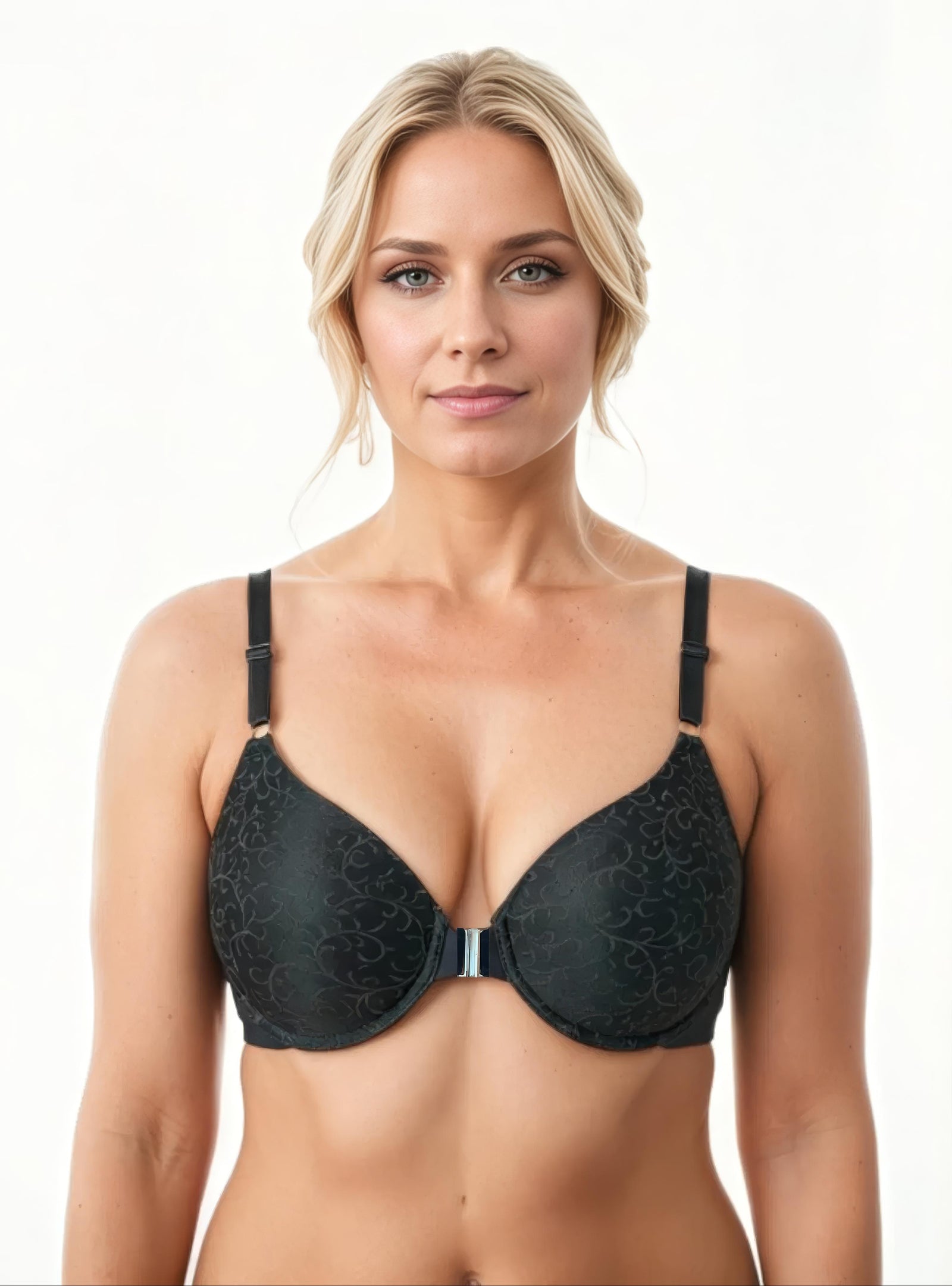
Full-coverage cups are often a strong choice when you want secure containment and a smooth line under sweaters, T-shirts, button-downs, and dresses. They can help reduce top or side spillover without compressing the bust into a flat shape. Look for cups that fully surround the breast tissue and a neckline that feels secure when you bend or reach.
Full coverage does not have to mean bulky. A thoughtfully shaped cup can provide a natural, lifted silhouette while giving you the confidence to move freely.
Most bra support comes from the band, not the straps. A wider band spreads pressure across more of the torso, which can feel more comfortable than a narrow strip that digs into the back. It can also create a more polished look beneath fitted clothing.
For women concerned about back bulge, loose skin, or visible bra lines, smoothing construction matters. A band that is wider but stiff or overly tight is not the answer. The goal is flexible support that stays put without pinching, rolling, or creating new lines.
Side panels and higher underarm coverage can help guide breast tissue forward and smooth the area near the underarms. This is especially helpful if you have ever put on a bra, looked in the mirror, and felt that your cups fit but the overall silhouette did not.
The trade-off is that higher coverage can feel too restrictive if the armhole is cut too high or the fabric lacks stretch. Raise and rotate your arms when trying on a bra. You should feel supported, not boxed in.
Wider straps can distribute pressure more gently across the shoulders, especially for fuller busts. Adjustable straps remain useful because torso length and shoulder slope vary from woman to woman. But straps should not be your main source of lift.
If your shoulders ache or your straps leave pronounced grooves, first check the band. A band that has stretched out or rides up your back shifts too much work to the straps.
A bra can fit beautifully and still be a poor choice if getting dressed becomes a struggle. Front-closure designs can be easier to put on and remove for women with limited shoulder mobility, arthritis, or simply a dislike of reaching behind their backs. A front closure also creates a clean, uninterrupted back.
Traditional back closures allow more band adjustability, so they may be preferable if your size fluctuates. There is no universally better closure. Choose the one that makes you more likely to reach for the bra every morning.
Underwire bras can provide defined lift and separation, particularly for fuller breasts. The best underwires sit around the breast tissue rather than on it, with a center panel that rests comfortably against the chest. If wire pressure has made you swear off underwires, the issue may be an incorrect size, cup shape, or wire width.
Wire-free bras and bralettes offer a softer feel and can be wonderful for lounging, travel, casual days, or anyone who prefers less structure. However, wire-free does not automatically mean supportive. Look for engineered support through shaped cups, strong but flexible fabric, wider bands, and interior construction that keeps the bust comfortably contained.
Longline bras add coverage below the bust and can provide more smoothing through the back and sides. They are an excellent option under dresses or fitted tops when you want bra support and light shapewear benefits in one piece. The fit must be right, though. A longline style should lie flat instead of rolling up at the hem.
Shapeez built its patented back-smoothing bra category around this practical need: support that helps create a smoother silhouette without asking women to layer multiple garments.
Try a new bra on the loosest hook setting. As the elastic naturally relaxes with wear, you will have room to adjust the band inward. The band should sit level around your torso, not climb up your back. You should be able to breathe comfortably, but it should feel secure enough that it does not shift every time you move.
Next, use the scoop-and-swoop method: gently guide breast tissue into the cups from the sides and underneath. Check that the cup edge lies flat, with no gaping, cutting in, or overflow. If there is excess space at the top of the cup, a different cup shape may work better than simply sizing down.
Then take a few real-life movements. Sit down. Reach for a shelf. Twist at the waist. Put on the type of top you wear most often. A bra is not truly comfortable only when you stand still in a fitting room. It needs to support your actual day.
One dependable bra rarely handles every outfit and occasion. A smooth, full-coverage everyday bra is a foundation piece for knit tops and workwear. A wire-free style may be the one you want for errands, travel, or quiet evenings. A longline or smoothing bra can be the confidence piece for a special dress, a wedding outfit, or any look where you want fewer visible lines.
Color matters, too. A bra close to your skin tone tends to disappear under light clothing more effectively than white. Save black, rich neutrals, or pretty colors for darker garments and the days when you simply want to enjoy them.
Bras are hardworking garments. Elastic stretches, cups lose resilience, and support fades with regular wear. Rotating several bras helps each one recover between wears and gives you options for different outfits and comfort needs.
More importantly, give yourself permission to move on from bras that demand constant adjustment. The right bra should not make you brace for the end of the day. It should let you forget about it for a while, then catch a glimpse of your smoother, more supported shape and remember exactly why you chose it.