Your Cart is Empty




If you are constantly scooping breast tissue back into your cups by lunchtime, you are not imagining the problem - and you are not alone. Finding the best minimizer bra for side spillage is less about making your bust look smaller at all costs and more about getting the right combination of side coverage, support, and smoothing so your bra finally works with your body instead of fighting it.
Side spillage usually shows up when cups are too narrow, wings are too low, or the bra is trying to lift without actually containing breast tissue. It can also happen when a bra technically fits in the cup but is built for a different breast shape. That is why so many women try sizing up, sizing down, tightening straps, or blaming their tops when the real issue is the bra’s construction.
A true minimizer does more than compress. The best styles redistribute breast tissue in a flattering way so the bust looks smoother and sits more centered under clothing. When side spillage is part of the equation, that redistribution needs to happen without cutting into the underarm area or creating new bulges along the sides and back.
The first feature to look for is higher side coverage. This is one of the biggest differences between a bra that merely supports and one that helps contain side tissue. A higher side panel gives breast tissue a place to go. Instead of being pushed outward, it is guided inward and forward, which creates a smoother line under knit tops, button-downs, and dresses.
Fuller coverage cups matter too. Many women dealing with side spillage are wearing cups that seem fine from the front but are too open or too shallow along the outer edge. A fuller cup helps prevent overflow near the armhole, especially when you move through the day.
Then there is the band and wing design. If the side and back of the bra are made with thin elastic and little structure, tissue gets displaced and emphasized. A wider, smoothing wing creates a more even silhouette. This is especially helpful for women who notice both side spillage and back bulge at the same time, which is very common.
A lot of traditional bras are designed around uplift first and containment second. That can be fine for some body types, but if you have fuller breasts, softer tissue, post-weight-loss looseness, or volume that sits more toward the sides, those designs often miss the mark.
Low-cut cups are a frequent culprit. They may look pretty on the hanger, but they can leave the outer breast unsupported. Narrow underwires can create the same issue by sitting on tissue instead of around it. And if the straps are doing too much of the work, the bra may pull upward while the sides spill outward.
This is also why simply tightening the band or straps rarely fixes the problem. You might get a temporary feeling of control, but you often end up with digging, discomfort, and even more noticeable lines under clothing. The better fix is a bra that is engineered to smooth and support across a broader area.
The right minimizer should feel secure, not restrictive. You should be able to scoop and settle breast tissue into the cups, then go about your day without needing constant readjustment. If tissue escapes near the underarm after an hour or two, that is a sign the bra is not containing you properly.
The center front should lie comfortably against the body if the style is designed for that kind of tack, and the band should stay level without riding up. Straps should support without digging trenches into your shoulders. Most importantly, the outer edge of the cup should lie smooth rather than cutting into tissue.
A minimizer that fits well will usually make your clothes look better in a quiet, immediate way. Buttons pull less. T-shirts skim instead of cling. The bust appears more balanced and centered rather than widened. You should not look flattened into a shelf. You should look supported, smoother, and more comfortable.
If side spillage is your main frustration, some features deserve more attention than others. High side panels and full coverage are at the top of the list, but fabric and closure design matter too.
Look for smoothing construction that extends beyond the cups. This helps manage the transition from bust to side to back, rather than treating each area separately. A wider back can make a major difference if your current bras leave visible lines under tops.
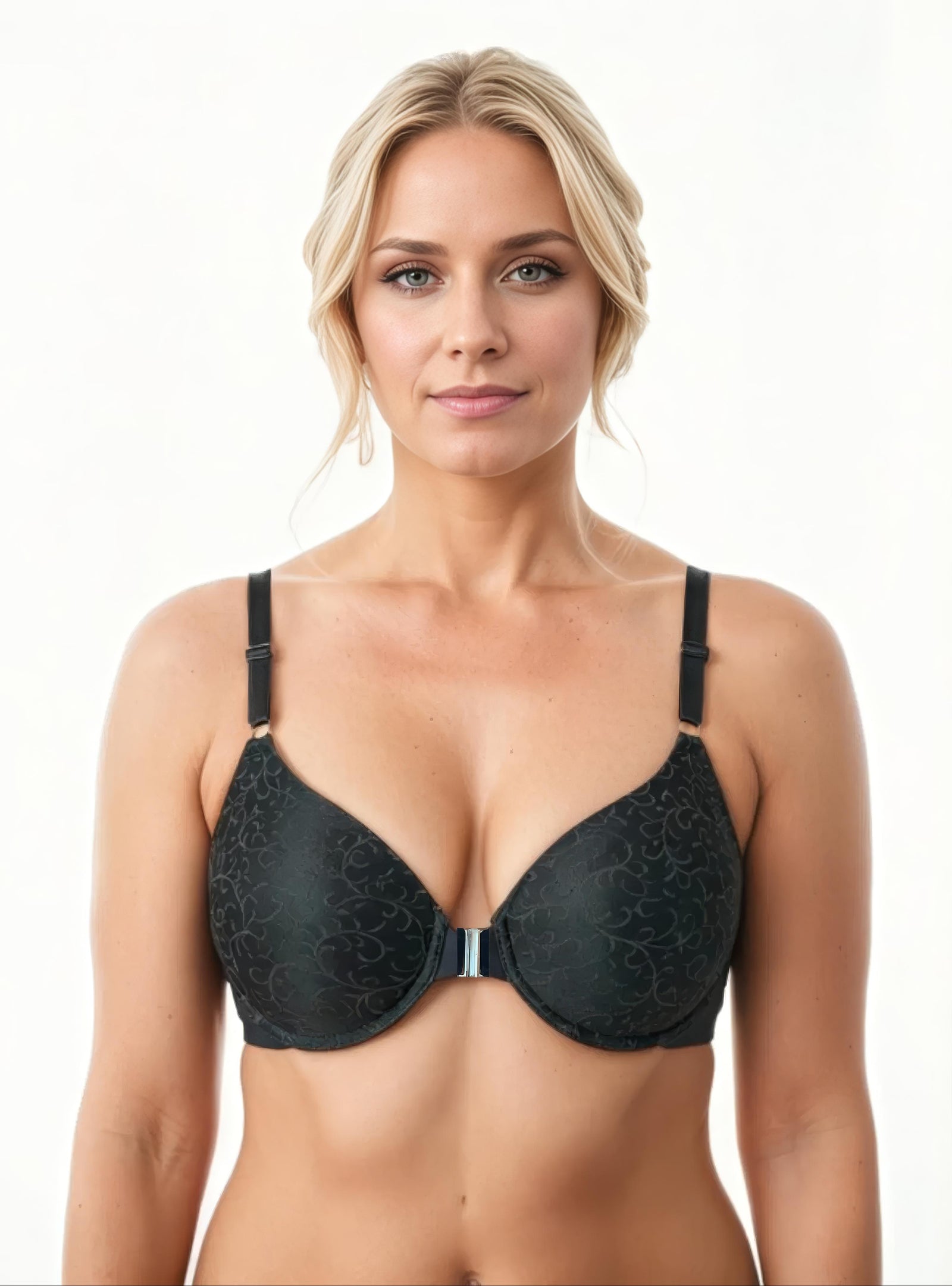
Front-closure styles can also help, depending on the design. They often create a smoother back and can make the bra easier to put on, which many women appreciate. But the real benefit is not the closure itself - it is whether the bra uses that design to support a broader smoothing panel across the sides and back.
Wire-free can be another smart option if underwires tend to poke, sit on tissue, or exaggerate side overflow. A well-engineered wire-free minimizer can still shape and support beautifully when it uses strategic seaming, supportive fabric, and thoughtful coverage. On the other hand, if you need more lift or definition, an underwire style with wider wires and better side containment may work better. It depends on your breast shape, sensitivity, and what feels best over a full day of wear.
Minimizing and smoothing are often treated as separate goals, but for many women they should go together. If a bra minimizes the bust but creates lumps at the sides or back, it is not solving the full problem. It is just moving it.
That is where allover smoothing construction stands out. A bra designed to address side and back bulges as part of the overall fit can create a more flattering result than a standard minimizer alone. Instead of compressing the bust in isolation, it supports the body more evenly.
This approach is especially helpful under fitted tops, dresses, and lightweight fabrics where every seam and ridge tends to show. It can also improve comfort because the pressure is distributed over a larger area instead of concentrated in a narrow band or wire.
For women who want support without the usual digging, a patented back-smoothing design like the kind Shapeez is known for can be a strong solution. It addresses the issue many minimizers miss - side spillage is rarely just a cup problem. It is often part of a bigger fit issue that includes the back, underarm area, and the way clothing lays over the bra.
One of the most common mistakes is assuming side spillage means you need a bigger cup and nothing else. Sometimes that is true, but not always. If the cup gets larger without improving side coverage or wing height, you may still have the same issue in a slightly different shape.
Another mistake is choosing a bra based only on how it looks from the front in the fitting room. Raise your arms. Sit down. Twist side to side. If tissue shifts out or the outer cup cuts in, that bra is not giving you enough containment for real life.
It is also easy to confuse compression with support. A bra that simply presses everything down may seem effective at first, especially under loose clothing, but it can feel tiring by the end of the day. The better choice is support that lifts, centers, and smooths without pinching.
When you find the right minimizer, you stop thinking about your bra so much. You are not tugging at the sides, adjusting straps, or changing outfits because one top suddenly looks wrong. You feel held in, but still like yourself.
The best minimizer bra for side spillage should reduce overflow near the underarm, create a smoother profile under clothing, and feel comfortable from morning to evening. It should also respect the fact that support and confidence are connected. When your bra fits well, your clothes fit better, your posture often improves, and your attention can go back to your day instead of your discomfort.
If you have been settling for bras that almost work, this is your reminder that almost is not good enough. The right bra should do more than contain. It should smooth, support, and help you feel beautifully put together every time you get dressed.