Your Cart is Empty





A bra can be completely wire-free and still have a traditional hook-and-eye closure. So, do wireless bras have hooks? Some do, some do not, and the closure makes a real difference in how the bra feels, fits, and looks under clothing.
The key is knowing that “wireless” describes the support system inside the bra, not how it fastens. A wire-free bra may close in the back with hooks, fasten in the front, zip up, or pull on over the head. The best choice depends on your mobility, bust size, the level of smoothing you want, and what makes getting dressed feel easier.
Many wire-free bras use the same back hook-and-eye closure found on underwire bras. The difference is that their support comes from thoughtful construction instead of a rigid wire beneath the cups. A supportive underband, full-coverage cups, strategic shaping panels, wider straps, and smoothing fabric can all help hold the bust comfortably in place.
Back hooks allow you to adjust the band fit. Most bras have several rows of eyes, so you can begin on the loosest setting and move inward as the band naturally relaxes with wear. That adjustability is especially helpful if your size fluctuates, you prefer a secure fit around the ribcage, or you want one bra to work across a full day.
For women who have been disappointed by flimsy pull-on bralettes, a hook-back wireless bra can be the middle ground: softer than an underwire bra, but more structured than a light lounge bra. It can offer the coverage and dependable hold you want without putting a wire against your body.
Hooks are not automatically less comfortable. When the band is properly sized and the closure is well made, hooks help distribute tension around the body rather than forcing you to stretch a bra over your shoulders and bust every time you put it on.
They can also make a bra easier to put on for anyone who does not enjoy overhead dressing. If shoulder mobility, arthritis, recovery, or simply the morning rush makes a pull-on style frustrating, a closure can be a practical comfort feature. The trade-off is that a traditional back closure may be harder to reach than a front closure.
A pull-on wireless bra has no hooks, snaps, or zipper. It is designed to stretch over the head or be stepped into and pulled up. These styles are often popular for sleeping, relaxing, low-impact movement, and days when you want minimal hardware against your skin.
Because there is no closure, a pull-on bra can create a very clean back. There is no hook panel to press into the skin or show beneath a thin top. Soft, wide bands may feel especially appealing for women who are sensitive to hardware or want an easy layer under casual clothing.
Still, no hooks does not always mean better support. The fabric must be stretchy enough to get on and off, which can limit how firmly the band can anchor the bra. Some pull-on styles provide excellent light-to-medium support, while others may not give a fuller bust the lift, separation, or long-day stability it needs.
A pull-on style can also be challenging if you have limited shoulder movement or if the band rolls as you pull it into place. If you find yourself wrestling with your bra before you have even left the house, the style is not delivering the ease it promised.
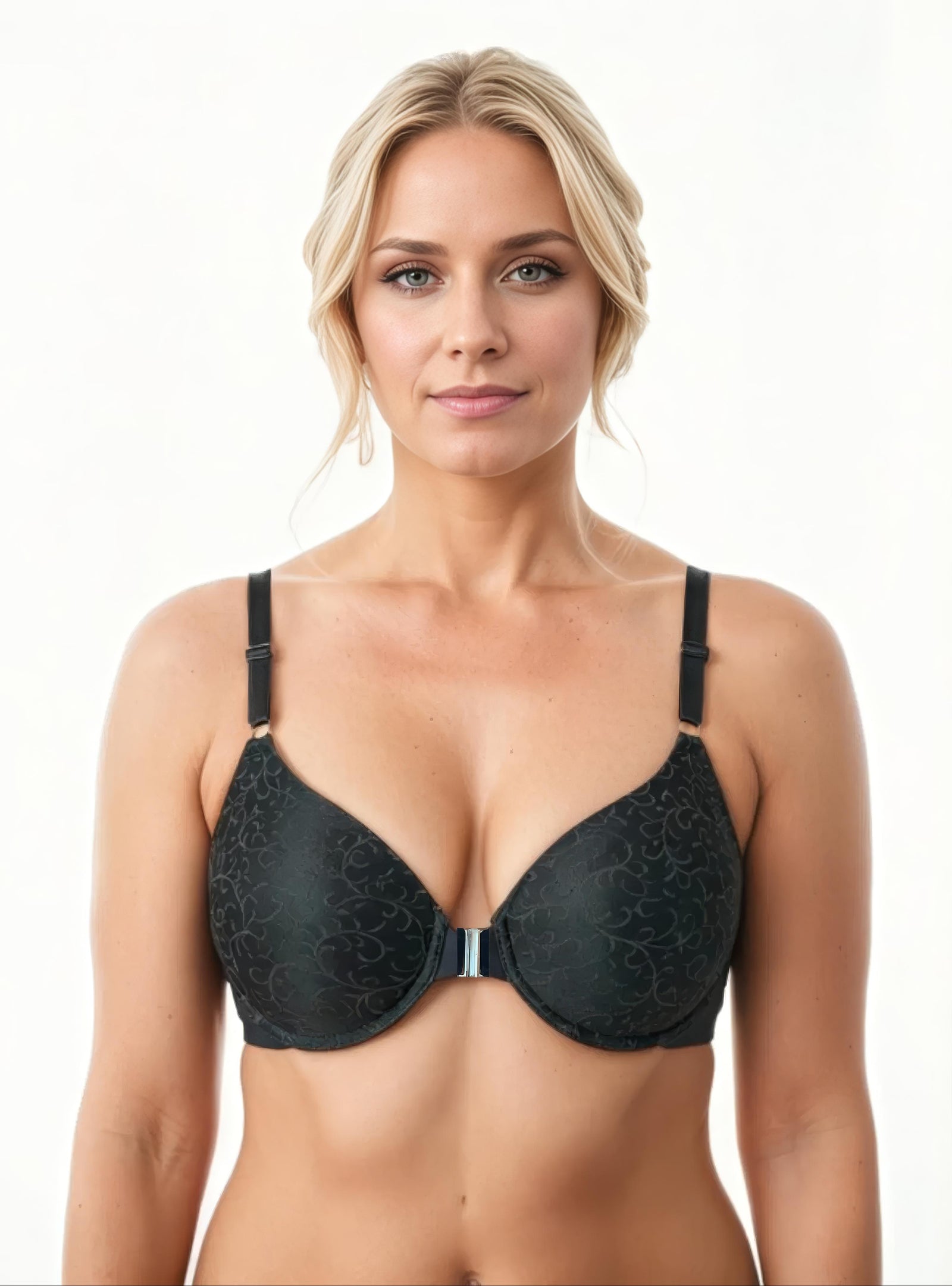
A front-closure wireless bra may use hooks, a clasp, or a zipper at the center front. This option gives you the adjustability and structure of a closure without requiring you to reach behind your back. For many women, that is a meaningful everyday upgrade.
Front closures can be especially useful when getting dressed has become uncomfortable due to shoulder stiffness, hand dexterity concerns, or post-surgery sensitivity. They also make it easier to see what you are doing and confirm that the closure is fully secure.
The construction matters here. A front closure should lie flat, stay centered, and feel protected from the skin. It should not create a bulky spot under your top or pull apart when you move. In a well-designed wire-free bra, the front closure is simply one part of a supportive system that includes a stable underband, comfortable straps, and enough coverage to help you feel held, not squeezed.
The closure choice affects more than dressing convenience. It can change the smoothness of your silhouette, particularly across the back and sides.
Traditional bras with narrow bands and small hook panels can create pressure points. When the band is too tight, too thin, or not wide enough to distribute tension, it may cut into soft tissue and create visible lines beneath clothing. That is not a body problem. It is often a design and fit problem.
A wireless bra with hooks can still provide a beautifully smooth look when it uses a wider back, flexible smoothing fabric, and a band that stays in place without digging. A pull-on bra can look smooth too, but only if the fabric has enough recovery to avoid rolling or creeping upward. Front-closure styles can offer a polished back because the fastening is moved away from that area.
This is why the best option is not simply “hooks” versus “no hooks.” Look at the whole bra. Consider the width of the back, the placement of seams, the stretch and recovery of the fabric, and whether the underband stays level around your body.
Start with the moment that bothers you most. If you dislike reaching behind your back, a front closure may be the most comfortable answer. If you want a familiar fit that you can fine-tune over time, a hook-back wireless bra can be a dependable choice. If you prioritize softness and dislike all hardware, a pull-on style may suit lounging or lighter-support days.
Then think about the support you actually need. A larger bust, a fuller cup, or a long workday often calls for more structure than a very stretchy bralette can provide. That does not mean you need an underwire. It means you may benefit from features such as full-coverage cups, a broad underband, adjustable straps, and shaping built into the body of the bra.
Finally, test the fit honestly. The band should feel secure on the loosest hook when new, sit parallel to the floor, and stay put when you raise your arms. Cups should contain breast tissue without spilling, gaping, or flattening uncomfortably. If a bra leaves deep marks, rolls, rides up, or makes you eager to take it off after an hour, a different size or construction may serve you better.
Wire-free does not have to mean unsupported, and hooks do not have to mean uncomfortable. The right bra should help your clothes skim more smoothly, reduce the distraction of digging bands or shifting straps, and let you move through your day with more ease.
Shapeez built its back-smoothing approach around that real-world need: support and coverage can work with comfort when the bra is engineered to distribute, smooth, and stay in place rather than pinch. Whether you choose hooks in the back, a front closure, or a pull-on style, choose the option that makes your body feel supported and your day feel simpler.