Your Cart is Empty




A bra can fit well in the cups and still leave you tugging at your top, adjusting your band, or noticing lines across your back. That is where a guide to longline bra benefits becomes useful. A longline style is designed to extend farther down the torso than a traditional bra, creating a wider foundation for support, smoothing, and a more secure feel under clothing.
For many women, the appeal is not about changing their body. It is about wearing a bra that works with it. Whether you want more coverage, a smoother look beneath a fitted knit, or relief from a narrow band that tends to roll or dig, the right longline bra can make getting dressed feel much easier.
A longline bra has an extended underband that reaches below the bust, often toward the mid-rib area. Instead of concentrating all the tension in one narrow strip around the torso, it spreads that support over a wider area. Some styles resemble a cropped camisole or a supportive tank, while others look more like a familiar bra with a deeper, smoother base.
The extra fabric is not simply decorative. In a well-designed longline bra, the longer silhouette helps stabilize the garment and creates a more continuous transition from the bust to the back and sides. That can be especially welcome if traditional hook-and-eye bands create a visible ridge, pinch after a few hours, or shift when you move.
Not every longline bra performs the same way. The fabric, cup construction, closure placement, and finish at the hem all affect comfort. A longline silhouette should feel secure without feeling restrictive, and it should stay in place without rolling upward.
The most noticeable benefit is often a smoother foundation beneath clothing. A wider back and side panel can help diffuse the appearance of bra lines and minimize the compressed look that a narrow band can create. This is not about hiding your shape. It is about avoiding the sharp interruptions that can make a blouse, tee, or dress feel less polished than it should.
In any supportive bra, the band does much of the work. When that work is distributed across a wider area, the pressure may feel less concentrated around the rib cage. For women who find that a conventional bra leaves deep marks or feels increasingly uncomfortable by late afternoon, this can be a meaningful difference.
A wider base can also offer a steadier fit for fuller busts. Rather than relying heavily on straps to hold the cups in place, a supportive longline design anchors from below and around the torso. Straps should help fine-tune the fit, not do all the lifting.
Back and side smoothing is a practical wardrobe benefit. Thin fabrics, fitted tops, occasion dresses, and lightweight sweaters often reveal where a traditional bra band ends. A longline bra gives the fabric of your clothing a smoother surface to skim over.
This is particularly helpful for women dealing with back bulge, side fullness, or looser skin after weight changes. The goal is not to squeeze or flatten. A comfort-first smoothing design should gently contain and support while allowing you to breathe, sit, bend, and go about your day.
A bra that creeps upward in back is often telling you something about fit, but a broader band can also add stability. Longline designs have more surface area against the body, which can reduce shifting during everyday movement. That matters when you are reaching, driving, carrying groceries, or spending long hours at a desk.
For some women, the added stability also makes a longline bra a smart choice for travel, busy workdays, or special events when frequent bra adjustments are the last thing you want to think about.
Longline bras are not one-size-fits-all, but they solve several common frustrations especially well. If you want full coverage without the bulky feeling of layering a bra under a shaping camisole, a longline design can combine those functions in one piece.
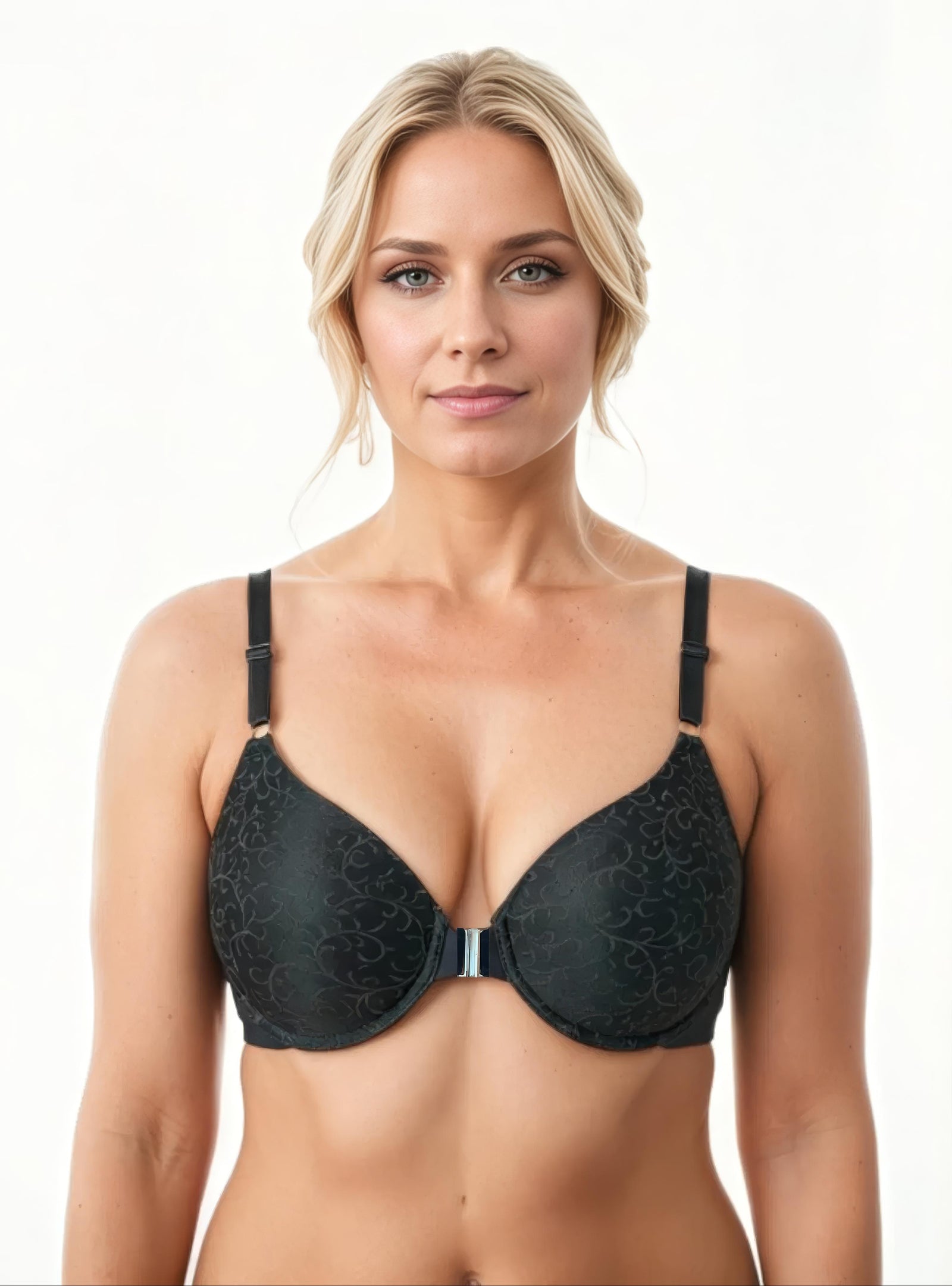
They can also be a welcome alternative if back hooks are difficult to manage. Many longline bras are available with front closures, which can make dressing easier for women with limited shoulder mobility, arthritis, or simply a strong preference for a simpler routine. A front closure should lie flat and feel secure, with enough structure through the back to maintain smoothing and support.
Women with fuller busts may appreciate the additional anchoring of a longline band, while smaller-bust women may enjoy the polished coverage and gentle shaping. The benefit depends less on cup size alone and more on how your current bras feel on your body and under your clothes.
The right outfit can make the advantages of a longline bra even more apparent. Under a smooth, fitted top, the extended back helps reduce the look of a horizontal band line. Under a button-front shirt, fuller coverage can help clothing lay more evenly across the bust. Under a dress, a bra-and-shapewear hybrid may eliminate the need for an additional smoothing layer.
That said, longer is not automatically better for every garment. A longline bra may be visible beneath a very cropped top, low-back dress, or sheer fabric if the color and neckline are not matched thoughtfully. It can also feel warmer than a shorter bra in hot weather, especially when the fabric is thick or highly compressive.
For daily wear, look for breathable materials, soft seams, and a hem designed to stay flat. Features such as moisture-wicking fabric and no-roll finishes are more than product details. They can determine whether a bra feels comfortable at 8 a.m. and still feels good at 8 p.m.
Longline bras need a little more attention to fit because more of the garment contacts your torso. Start with the band. It should feel firm and supportive on the loosest comfortable setting, but you should still be able to take a full breath without feeling compressed. If the hem rolls, pinches, or rides up, the size, shape, or construction may not be right for you.
The cups should fully contain the breast tissue without gaping, cutting in, or pushing tissue out at the sides. Check the center front as well. Depending on the style, it may rest close to the body or float slightly, but it should not painfully press into your chest.
Pay attention to where the longer band ends. Every torso is different. Some women prefer a deeper tank-style silhouette for maximum smoothing, while others feel best in a shorter longline that ends above the natural waist. If you are petite or have a shorter torso, too much length can bunch when you sit. If you have a longer torso, a deeper style may provide the coverage you have been missing.
It also helps to try on a longline bra with the clothes you wear most. Raise your arms, sit down, twist from side to side, and look at the back in a mirror. You are looking for a bra that supports you without demanding your attention.
This is a personal comfort decision, not a rule. An underwire longline bra can provide defined lift and separation, particularly for fuller busts or women who prefer a more structured shape. The extended band can make that support feel balanced rather than overly rigid.
A wire-free longline bra may be ideal if your priority is flexible comfort, gentle shaping, or relaxed all-day wear. Modern wire-free construction can still provide meaningful support through molded cups, engineered fabric, wide straps, and a well-built underband. It may not create the same lifted profile as an underwire style, but many women prefer the freedom it offers.
Shapeez designs smoothing bras around this real-life balance: support where you need it, comfort where you feel it, and a smoother result under the clothes you already love.
A longline bra is not meant to make you tolerate more compression in the name of looking smooth. Its best benefit is the opposite: it can replace the tugging, digging, and visible lines of an unsupportive bra with a broader, more comfortable foundation. When your bra stays in place, supports your bust, and lets your clothing fall the way you want it to, confidence has room to show up naturally.