
Your Cart is Empty


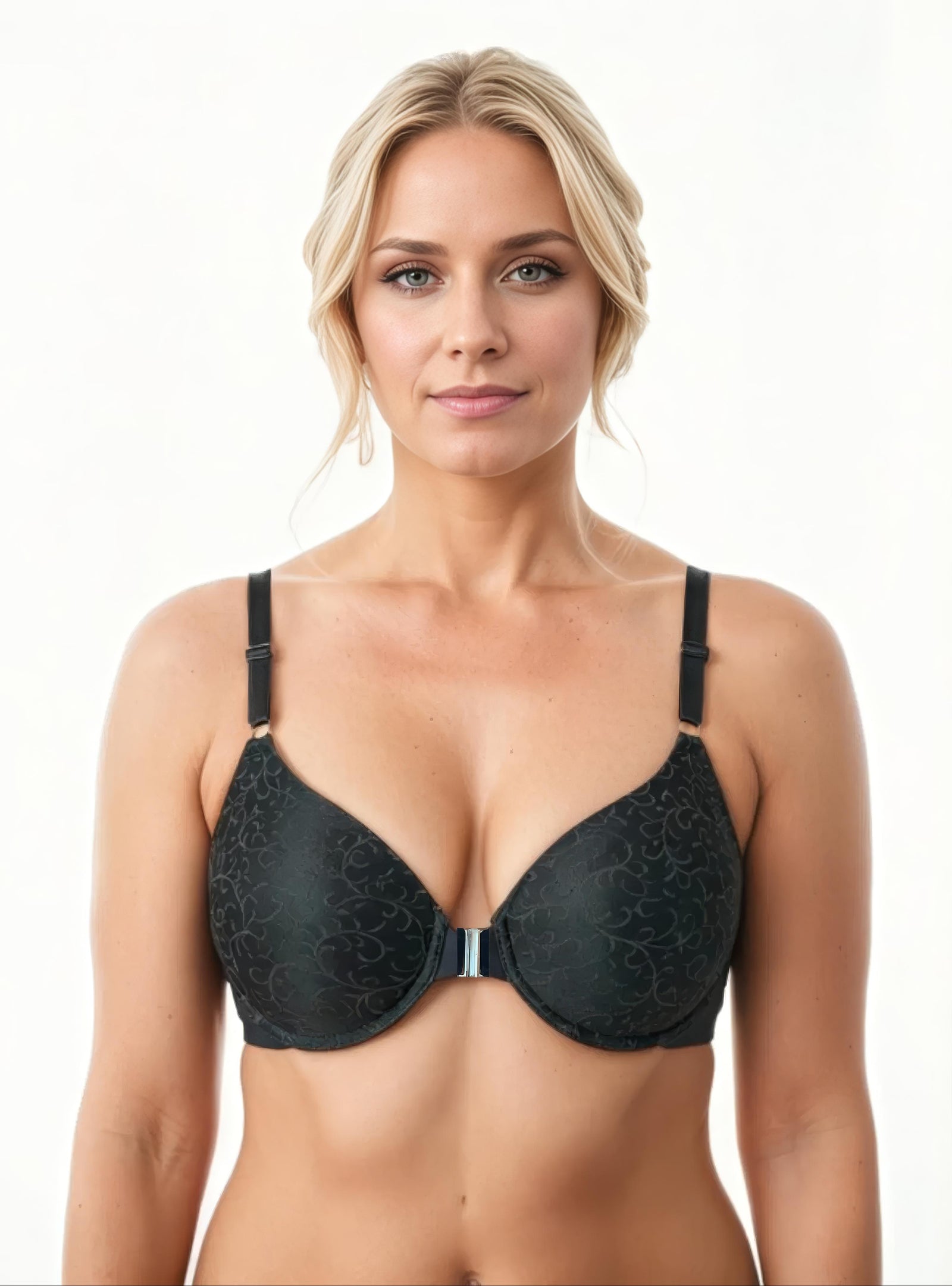




Is Your Bra Band Too Loose or Your Cup Too Small?
Tell a too-loose band apart from a too-small cup using falling straps, riding bands and cup overflow, then measure for the Shapeez body size and cup that fixes it.

Key Takeaways
- A band you can pull away from your back rides up, shifts during wear, and makes straps carry support that should come from the ribcage.
- Undersized cups commonly cause neckline or side spillage, underwires on breast tissue, a center gore that will not sit flat, and a compressed shape.
- For an accurate starting size, measure snugly and level directly under the bust after exhaling, then confirm the result by how the cup fits, not by the label.
- Drop a band and add a cup letter to keep the same volume; for example, a loose 36C may fit more securely as a 34D.
- A well-fitted bra sits level, encloses breast tissue after a scoop and swoop, and lets the band, rather than overtightened straps, provide most support.
Finding your true bra size comes down to identifying whether fit issues stem from an unstable band or undersized cups. A supportive fit anchors firmly around the ribcage to lift and separate tissue without digging, creating smooth lines and balanced support throughout the day.
Why Does the Right Bra Fit Start with the Band?
Most of the support in a bra comes from the part that wraps your ribcage, not from the straps: the straps only steady the cups. When that band goes slack, support collapses and the straps are left carrying the load.
What the Band Does
Our co-founder Staci Berner has been fitting women for twenty years, and this is what she tells every one of them: the band acts as the structural foundation of your bra. When a band lacks proper tension against the torso, straps dig painfully into shoulders, visible bra lines form, and falling straps become a constant nuisance. Bra fit research keeps finding the same thing: in one study of 309 women assessed against professional fit criteria, only 10% were wearing a bra that fitted correctly overall. A snug, stable band anchors the garment, preventing it from sliding upward and ensuring weight is distributed evenly across your back and ribcage rather than pulling down on your neck and shoulders.
Why a Size Label Is Only a Starting Point
Relying purely on a tag number often leads to fitting errors because cup volume is dynamic rather than fixed. When researchers assessed those 309 women against professional fit criteria, most failed on more than one part of the bra at once, which is why a single number on a tag tells you so little. An oversized band masks undersized cups by letting breast tissue escape underneath or out the sides. Treating your measurement as a starting baseline rather than a permanent rule helps you evaluate actual containment, lift, and all-day comfort.
A Loose Band and Too-Small Cups Leave Different Clues
A loose band rides upward across the shoulder blades and loses anchor, whereas undersized cups cause overflow, compress tissue, or force the center gore to float away from the sternum.
| Symptom | Likely Cause | Quick Check | Next Sizing Move |
|---|---|---|---|
| Band rides up toward shoulder blades | Band is too loose | Place fingers under band; if more than two fingers fit, band is too large | Decrease band size by one step |
| Straps dig in or slip off shoulders | Loose band shifting load to straps | Loosen straps slightly; check if front cups sag downward | One band down, one cup up |
| Breast spillage at neckline or underarms | Cup volume is too small | Check for visible bulges or double-bust outline under a fitted t-shirt | Increase cup size by one letter |
| Underwire rests directly on breast tissue | Cup wire radius is too narrow | Press gently along wire; ensure wire rests on ribcage, not tissue | Increase cup size for wider wire arch |
| Center gore lifts away from breastbone | Cups are too shallow or small | Slide a finger behind gore; it should rest completely flat against sternum | Increase cup size until gore tacks flat |
| Flattened bust profile | Cup compression without encapsulation | Assess side profile in mirror for natural rounded projection | Step up cup size for full encapsulation |
Signs Your Band Is Too Loose
A band that has gone slack shifts freely during normal movement. The most obvious indicator is the see-saw effect: the back band arches up toward the neck while the front cups tilt downward, eliminating upward lift. You may also notice falling straps or find yourself over-tightening strap adjusters until they gouge your shoulders. If you can pull the back band several inches away from your spine with ease, the band cannot provide the anchoring support your bust requires.
Signs Your Cups Are Too Small
Undersized cups restrict tissue rather than supporting it. Look for neckline spillage, side spillage near the armpits, or underwires sitting directly on sensitive breast tissue rather than flush against the ribcage. Another key sign is a floating center gore that hovers away from your sternum because the cups lack sufficient depth. When a cup runs out of room, it pushes tissue outward and downward, creating an uncomfortable compressed profile instead of gentle separation and lift.
When Both Problems Happen Together
The combination of an oversized band and undersized cups is the most frequent bra mistake. An oversized band creates artificial slack, allowing small cups to sit against the body without immediately feeling tight, while the cups force breast tissue into the underarms or back. This creates back rolls, muffin top bulges, and strap slippage. Correcting both issues at once restores proper posture, eliminates back bulges, and secures the bust in balanced comfort.
How Can You Measure Your True Bra Size at Home?
Measure your ribcage directly under the bust snugly and level on a normal exhalation, then confirm your starting size through a comprehensive fit check.
- Measure your underbust: Wrap a soft measuring tape directly underneath your bust along the ribcage. Keep the tape parallel to the floor, exhale normally, and pull the tape snug against your skin. Avoid outdated '+4' formulas that inflate band sizing and leave you with a loose, unsupportive band.
- Take the Shapeez measurement too: Our sizing works differently. Stand topless in front of a mirror, run the tape high around your upper back and under your arms, and pull it TIGHT above your breasts at the top of your cleavage. Enter that upper chest measurement in our sizing guide and we will give you your Shapeez body size, XS through 1X, paired with a cup from AA through DDD/F.
- Put on your bra properly: Lean forward slightly and fasten the bra, positioning the underwires directly beneath your breast crease against the chest wall.
- Perform the scoop and swoop: Reach into each cup from the side and gently scoop breast tissue from under the armpits toward the center, ensuring the underwires enclose the entire breast root.
- Assess band, cup, and gore placement: Check that the band sits level around your torso with only two fingers of ease, the cups hold your bust without spillage or wrinkling, and the center gore rests flat against your sternum.
How Do Sister Sizes Solve a Loose-Band Fit Without Shrinking the Cup?
When a band feels loose but the cups hold your bust well, move down one band size and up one cup size to maintain equivalent cup volume with a firmer anchor.
The One-Band-Down, One-Cup-Up Rule
Bra cup letters are proportional to band dimensions, meaning a 34C holds less volume than a 36C. If you wear a 36C and the band rides up while the cup containment feels right, simply tightening your shoulder straps will not fix the issue. Instead, applying the sister-size rule means stepping down to a 34 band and going up to a D cup (34D). This adjustment maintains the exact same cup capacity while shortening the band circumference by two inches. The result is a firmer ribcage anchor that prevents shifting and restores lift without pinching your bust. Our own sizing works differently, and that is deliberate: because our bras have no elastic band and no closure, the old way of measuring will not land you in the right Shapeez size. Use your numeric size to understand the problem, then use our upper chest measurement to pick the Shapeez body size and cup that solves it.
When to Remeasure Instead of Sister Size
Sister sizing works when you need a minor band adjustment of one step. However, if your body has undergone weight changes, pregnancy, nursing, or hormonal shifts like perimenopause or post-menopause, tissue density and ribcage dimensions change substantially. In these cases, shifting across multiple sister sizes often distorts underwire curvature and cup placement. Remeasure once a year so your baseline reflects the body you have now, not the one you had two years ago.
Which Bra Construction Supports a Smooth, Secure Everyday Fit?
A secure, comfortable bra pairs precise sizing with a broad anchoring surface and cup construction that encapsulates and smooths breast tissue without pinching.
Choose Coverage for Your Silhouette
We built our bras to reduce back bulges, back rolls, and the bra lines that show under fitted tops, and our patented smooth-back design is how we do it. Traditional narrow bands concentrate tension across a small area, cutting into soft tissue. We use a broad, seamless back panel in breathable, moisture-wicking Cool Tex Lycra instead, to deliver 360° smoothing and support. For everyday wear in a style that stops at the ribcage, standard styles like the Shortee and Tankee Short provide seamless back smoothing. For apple-shaped figures or full torso smoothing over the midriff and waist, explore longline bras with underwire such as the Tankee Long and Silkee Long.
Choose Your Closure and Comfort Preference
Your closure style shapes both how the bra fits and how it looks under clothing. Our pull-on back-smoothing bras and bralettes have no back hooks or elastic band at all, so nothing prints through a clingy knit. If you prefer effortless dressing, the Front-Closure Tankee Short allows simple front fastening while preserving an uninterrupted, continuous back-smoothing panel that prevents band ride-up and stays smooth all day.
Choose Cup Support for a Full Bust
For women with a full bust (C to DDD/F), encapsulation construction in a full-coverage t-shirt bra separates and shapes each breast individually. Pure compression bras flatten tissue into a single mass, which can strain bands and trigger spillage. Encapsulated cups lift naturally and distribute weight evenly across the torso.
- Fabric: Breathable, moisture-wicking Cool Tex Lycra for cool, all-day comfort.
- Support Options: Underwire encapsulation or soft wirefree shaping.
- Size Architecture: Over 40 sizes covering body sizes XS-1X and cup sizes AA-DDD/F.
- Heritage & Quality: Co-founded by Staci Berner in 2005, with 20+ years of fit expertise behind every style, proudly manufactured in Canada.
What Should You Do After Identifying Your Fit Issue?
Remeasure your underbust, test band and cup fit independently, and select a style with broad back smoothing that matches your daily wardrobe needs.
- Remeasure your ribcage: Take a fresh, snug underbust measurement on an exhale to verify your baseline band size.
- Apply sister sizing if needed: If your cups fit comfortably but your band rides up, take one band down and one cup up.
- Scoop every bit of tissue in: Pull all breast tissue into the cups so underwires rest completely on the ribcage.
- Confirm level band and gore contact: Ensure the band sits straight across your back and the center bridge sits flush against your breastbone.
- Test with normal movement: Raise your arms, bend forward, and put on a fitted top to verify that straps stay secure, the band remains stationary, and back lines remain smooth.
Finding your true fit transforms your daily silhouette and posture. Our Tankee Short holds over 535 reviews with a 93% five-star rating, delivering proven, comfortable confidence. Take the upper chest measurement, check it against our sizing guide, and browse our collection of best back-smoothing bras to find your ideal fit.