Your Cart is Empty




A bra can feel wonderfully soft in the fitting room and still leave you adjusting by lunchtime. That is why the real question is not simply, “Are seamless bras supportive enough?” It is whether the bra has the structure, fit, and coverage your body needs for the way you move through your day.
For many women, a smooth-knit bra is a welcome break from poking wires, bulky hardware, and back bands that create visible lines under clothing. But softness alone does not equal support. The best styles pair a comfortable feel with thoughtful engineering: a secure band, properly shaped cups, wide enough straps, and fabric that holds its recovery instead of stretching out after a few wears.
A smooth, wire-free bra can absolutely provide dependable everyday support. The level of support, however, varies widely from one style to the next. A light pull-on bralette made for lounging will not perform like a full-coverage bra with structured knit zones, a supportive underband, and shaping built into the cup.
Think of support as a team effort. The band does most of the lifting, while the cups guide breast tissue forward and upward. Straps help fine-tune the fit, but they should not be carrying the entire load. When a bra relies mainly on narrow, tight straps to create lift, it can lead to shoulder grooves, neck tension, and that familiar urge to take it off the moment you get home.
For fuller busts, this distinction matters even more. Look for designs with a wider underband, higher side coverage, and a stable fabric that feels substantial without feeling stiff. A longer torso silhouette can also distribute pressure more comfortably and help the bra stay in place throughout the day.
Support does not have to mean rigid. It means the bra stays where it belongs, keeps you comfortably contained, and helps your clothes fall more smoothly over your shape. Several details make the difference.
Your underband should feel secure around the rib cage without pinching, rolling, or making it hard to breathe. If it rides up in the back, the band is often too large or has lost its recovery. If it digs painfully, the size, shape, or fabric may not be right for your body.
A wide underband is especially helpful when you want a more even, held-in feel. Instead of concentrating pressure in one narrow strip, it spreads support across a broader area. That can make a meaningful difference during long workdays, travel, or any time you are sitting and moving frequently.
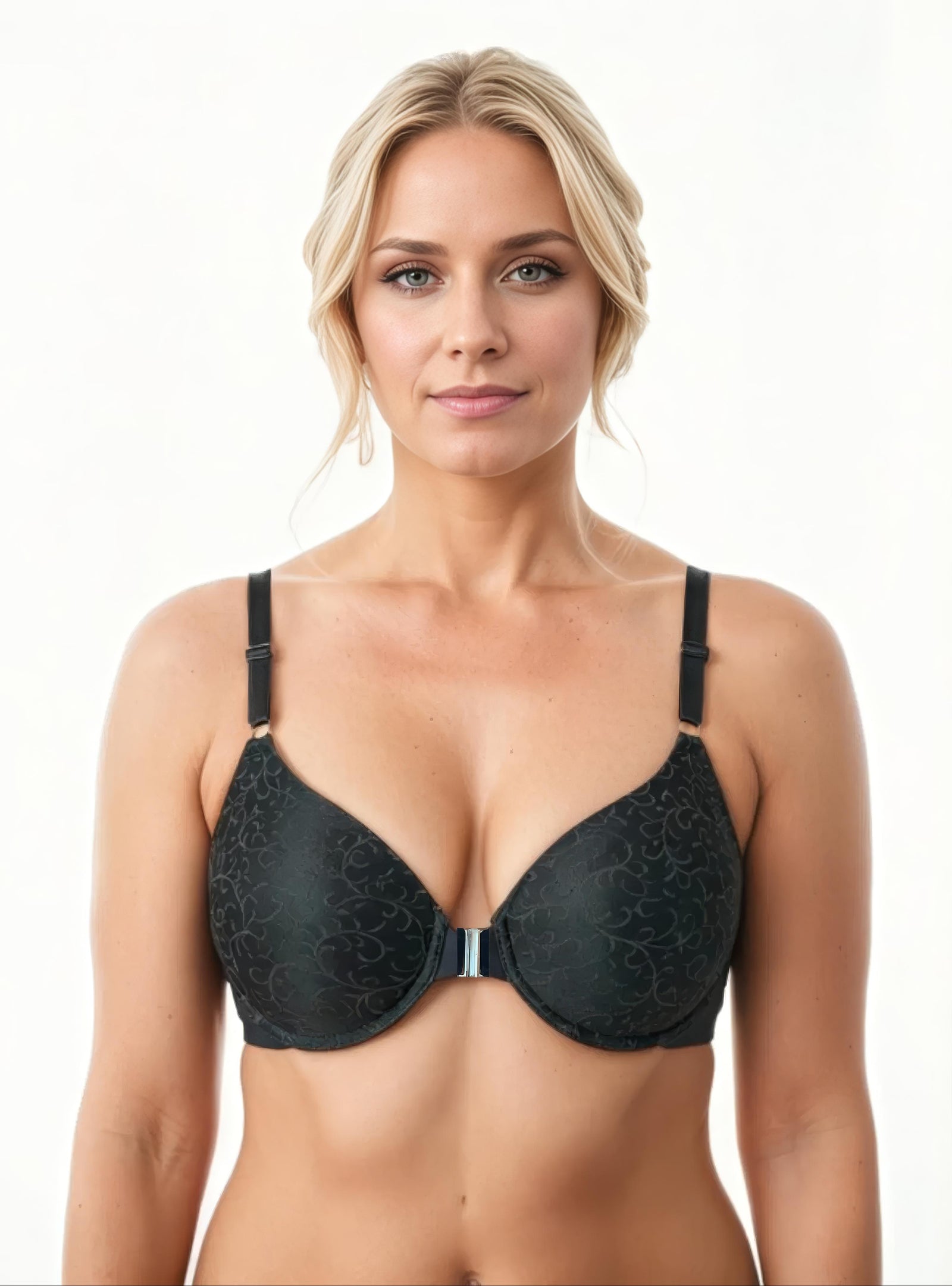
Supportive cups should hold breast tissue without creating spillage at the top, sides, or underarm area. For some women, lightly lined or molded cups provide the shape and modesty they prefer under T-shirts and fitted tops. Others prefer unlined cups with more natural flexibility.
Neither option is automatically better. What matters is that the cup has enough depth and coverage for your breast shape. If the cups flatten you more than you like, look for a style with more defined shaping. If you see gaping, the cup may be too large, too tall, or simply not suited to your shape.
A bra can fit well from the front but still create a line across the back or push soft tissue over the band at the sides. That is not a body problem. It is often a construction problem.
Bras with a wider back panel and supportive side coverage can create a more polished look under clothing while helping the band remain stable. Shapeez built its patented back-smoothing approach around this everyday frustration: women deserve support that does not leave them feeling squeezed, segmented, or distracted by their bra all day.
Straps should feel supportive, not punishing. Wider straps generally distribute weight more comfortably, particularly for larger busts. Adjustable straps are useful because breast position, torso length, and shoulder shape vary from woman to woman.
If your straps constantly slide down, tightening them may not solve the issue. The band could be too loose, or the straps may be set too wide for your shoulders. A better-fitting frame usually works better than pulling the straps tighter and tighter.
A soft pull-on style may be perfect for sleeping, relaxing, running errands, or working from home. It may not be the best choice for high-impact exercise, a very full bust, or days when you want more lift and definition under tailored clothing.
That does not mean you must return to an uncomfortable underwire. It means matching the bra to the job. A supportive wire-free style with reinforced knit zones, fuller coverage, and a stable underband can be an excellent everyday choice. For running, jumping, or intense training, choose a sports bra designed specifically to reduce movement.
Your needs may also shift from day to day. Hormonal changes, weight changes, recovery after surgery, pregnancy, breastfeeding, and aging can all affect sensitivity and fit. A bra that felt perfect a year ago may not be the bra your body needs now. Reassessing your size and preferred level of coverage is practical self-care, not a failure of the garment or your body.
The mirror can help, but comfort over several hours tells the fuller story. A supportive bra should sit level across your back, remain anchored under the bust, and keep breast tissue contained without painful digging. You should be able to take a full breath, reach overhead, sit down, and go about your routine without constant readjustment.
Pay attention to what happens after an hour or two. Does the band roll? Do the cups shift? Are you pulling the sides down, tucking tissue back in, or counting the minutes until you can change clothes? Those are useful fit signals.
A few red flags are worth addressing:
A supportive bra should help you feel held, not held back. It should smooth where you want smoothing, stay comfortable through real movement, and let your clothes fit the way you hoped they would when you put them on.
Give yourself permission to expect both comfort and support. The right bra is not the one you tolerate because it looks good for ten minutes. It is the one that helps you move through your day with less adjusting, less digging, and more confidence in how you feel.