Your Cart is Empty





A band that rides up your back, leaves painful marks, or makes you count the minutes until you can take your bra off is not doing its job. Learning how to choose bra band size is one of the most useful things you can do for better support, a smoother silhouette, and genuine everyday comfort. The band carries most of your bra’s support, so getting it right changes far more than the number on the tag.
Many women assume the straps do the heavy lifting. In a well-fitting bra, they should not. Straps help stabilize the cups and fine-tune the fit, but the band should provide the foundation. When it is too loose, the band creeps upward and your breasts may sit lower than you want. You may tighten the straps to compensate, which can lead to shoulder grooves and tension.
When the band is too tight, it can dig, pinch, roll, or make you feel restricted after a long day. A too-tight band can also create more visible indentation at the back and sides, especially under a fitted top. That does not mean your body is the problem. It means the bra’s construction, size, or both are not working with your shape.
The goal is secure, even support around your torso - not squeezing, not slipping, and not requiring constant adjustment.
Start by measuring directly underneath your bust, where the bra band sits. Wear a thin, unpadded bra or measure against bare skin, and keep the tape measure level all the way around your rib cage. It should feel snug but not pulled as tightly as possible. You want the measurement of your body, not a smaller number you hope to fit into.
Use your measurement as a starting point, then consult the brand’s size chart. Bra sizing is not perfectly universal. One brand’s 38 may feel firmer or stretchier than another’s, and longline styles, front-closure bras, and smoothing bras may fit differently from a traditional back-hook bra.
If your underbust measurement falls between sizes, your choice depends on the garment and how you like to feel. A softer, stretchier fabric may let you choose the lower band size comfortably. A firm compression-style fabric, a longline silhouette, or a day when your body feels more sensitive may call for the larger size. Comfort is not a compromise. It is part of proper fit.
For bras with a row of hooks, a new bra should typically fit on the loosest hook. Over time, fabric naturally relaxes with wear and washing. Starting on the loosest setting gives you room to tighten the band later and extend the life of the bra.
This rule does not apply in exactly the same way to every design. A front-closure bra has a fixed closure, while a pull-on bralette relies on fabric recovery and its size range rather than adjustable hooks. In those cases, focus on how the garment feels once it is in place: secure around the rib cage, smooth at the edges, and comfortable enough to breathe and move normally.
A measuring tape gets you close. Your body tells you whether the band is truly right. Once the bra is on, stand naturally and look at where the band sits. It should run parallel to the floor around your torso, not climb toward your shoulder blades.
Then move through a few normal motions. Raise your arms, sit down, twist gently from side to side, and take a full breath. A good band may feel supportive, but it should not slide up, painfully press into your ribs, or fold under itself.
Pay attention to these signs:
This is where many women have been given unhelpful advice. A bra band needs enough tension to support the bust, so some compression of soft tissue is normal. Trying to avoid every trace of skin displacement by choosing an overly loose band usually leads to less lift, more riding up, and a less secure fit.
At the same time, a traditional narrow band can create a pronounced line across the back, even when its size is technically correct. This is not a sizing failure and it is not something you need to “fix” about your body. It may simply mean you would feel better in a bra designed with more coverage and a wider smoothing back.
That is the advantage of a smoothing bra that distributes tension across a larger area rather than concentrating it in a narrow strip. Shapeez created the patented back-smoothing bra category for women who want real support without the familiar hooks, lines, and back bulge that can show through clothing. The right construction can make a correct band size feel more comfortable and look smoother under your favorite tops.
Band size and cup size work together. If you go down a band size, you generally need to go up a cup letter to maintain a similar cup volume. If you go up a band size, you generally need to go down a cup letter.
For example, if a 38D band feels loose but the cup fits well, trying a 36DD may give you a more secure band with similar cup capacity. If a 36DD feels too firm around the ribs while the cups are right, a 38D may be a more comfortable alternative.
Sister sizing is useful for troubleshooting, not a reason to chase a particular number. The best size is the one that supports you without digging, stays in place through normal movement, and lets your clothes fall smoothly over it.
Sometimes a band feels too tight because the cups are too small. When breast tissue does not have enough room in the cups, it pushes outward and makes the entire bra feel more restrictive. Signs include spilling at the top or sides, underwires sitting on breast tissue, or a center panel that will not rest close to the chest in an underwire style.
Before deciding to size up in the band, check whether you need more cup volume instead. A larger cup on the same band may solve the pressure without sacrificing support.
There is no single “best” band style for every woman. A short band may feel familiar and work beautifully under many outfits. A wider back or longline bra can be especially helpful if you want more smoothing through the sides and back, prefer a more secure feel, or find that narrower bands roll.
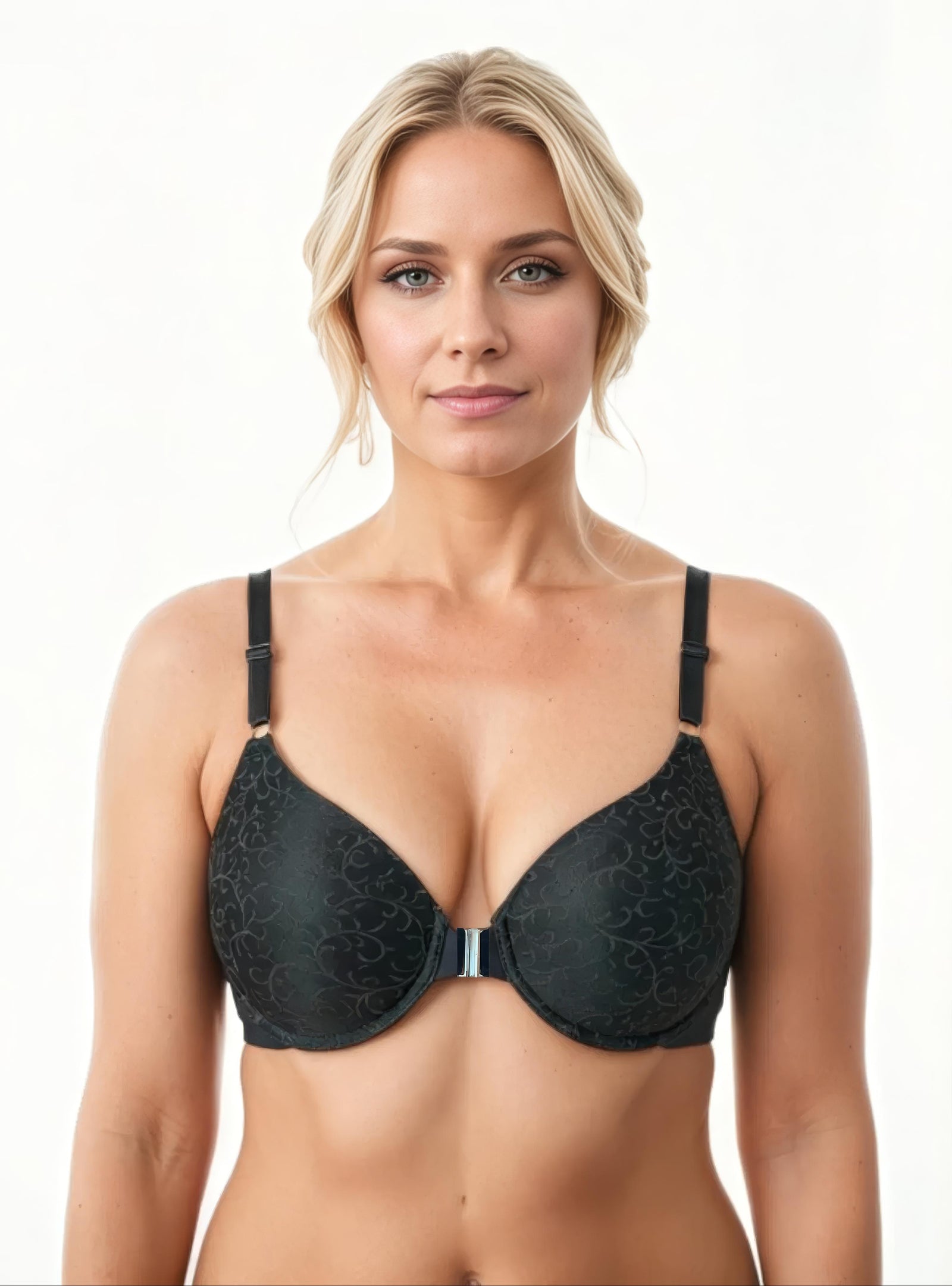
Front closures can be a welcome choice for women who dislike reaching behind their backs or managing multiple hooks. Wire-free styles can offer a softer feel for lounging, travel, recovery days, or anyone who simply prefers less structure. Underwire styles may provide more defined lift and separation. Neither is automatically better - the best option is the one that matches your support needs and how you want to feel from morning to night.
Also consider fabric. Moisture-wicking, breathable materials can make a close-fitting band far more comfortable in warm weather or during busy days. A no-roll hem can help the lower edge stay flat. These details matter because a bra is not just tried on in front of a mirror. It is worn while driving, working, lifting groceries, sitting through dinner, and sleeping on the couch.
Try a new bra on for at least 10 to 15 minutes indoors before removing tags or committing to it. Wear a lightweight T-shirt over it if a smooth finish under clothes is part of your goal. Notice whether you forget about the band or become more aware of it as the minutes pass.
If you are between sizes, test both when possible. The smaller size may feel supportive at first but become uncomfortable after sitting down. The larger size may feel easy initially but start to travel upward as you move. Your best fit is usually the one that stays level, holds its position, and supports without demanding attention.
Your body can change with weight fluctuations, hormonal shifts, aging, medication, and life after surgery or pregnancy. Rechecking your band fit is not a sign that you got it wrong before. It is a practical way to keep choosing comfort, support, and a silhouette that helps you feel like yourself.