Your Cart is Empty





A bra can look beautiful on a hanger and still create the exact problem you were trying to solve by lunchtime: straps that dig, a band that rolls, side spill, and lines across your back under a favorite top. Future smoothing lingerie is moving beyond the old idea that support must feel restrictive. The better standard is lingerie that works with your body, smooths where you want it to, and stays comfortable through a real day.
For women who have spent years adjusting conventional bras, that shift matters. The future is not about squeezing into a smaller-looking silhouette. It is about thoughtful construction that gives you full coverage, dependable support, and a polished fit without adding another uncomfortable layer.
Smoothing lingerie should do more than flatten fabric against the skin. It should address the common fit frustrations that show up under clothing: visible back bands, side bulges, uneven lines, cups that shift, and closures that are difficult to manage. When a garment solves only one of these concerns, it may still leave you tugging, pulling, or layering your way through the day.
The most useful designs combine bra support and smoothing coverage in one piece. Rather than relying on a narrow back band that presses into the skin, they use a broader, more continuous construction to distribute support. The result can be a smoother appearance from the front, side, and back, while helping clothing skim instead of cling.
That does not mean every woman needs the same level of coverage. A lightweight bralette may be the right choice for a relaxed day at home, while a full-coverage underwire style may feel best under workwear or special-occasion clothing. The goal is not maximum compression. It is choosing support that feels secure and looks smooth for the way you live.
Traditional bras were largely designed around the front: cup shape, lift, and cleavage. But many women notice the back first when they catch their reflection in a fitted knit, a T-shirt, or a dress. A narrow band can create a visible line even when the bra technically fits, especially as the body changes with age, weight fluctuation, pregnancy, surgery, or everyday life.
A back-smoothing design takes a wider view. It considers how the garment sits around the torso, where the fabric ends, how the edges lie against the body, and whether the support is concentrated in one tight strip or shared more comfortably. This is where longline silhouettes, smooth stretch panels, wider side coverage, and no-roll hems can make a meaningful difference.
Shapeez helped define this category with its patented back-smoothing bra construction. That type of invention-led design matters because it starts with a real wardrobe frustration, not a runway trend. When your bra creates fewer lines, you can wear the top you like without planning your outfit around what the band might show.
This distinction is worth keeping in mind. Heavy compression can create a temporarily sleek look, but it may also cause rolling, digging, heat, or a feeling of being bound up. For everyday lingerie, comfort is part of performance. If you cannot breathe comfortably, sit at your desk, reach overhead, or wear the garment for several hours, the design is not doing enough for you.
Effective smoothing comes from fit, fabric recovery, and construction. Soft yet supportive materials should return to shape without constantly tightening. The garment should stay in place without requiring you to pull it down or reposition the cups. And the edges should lie flat instead of cutting into the skin.
Future-focused lingerie is not necessarily packed with gimmicks. It is often defined by practical details that make getting dressed easier and help you feel better in your clothes.
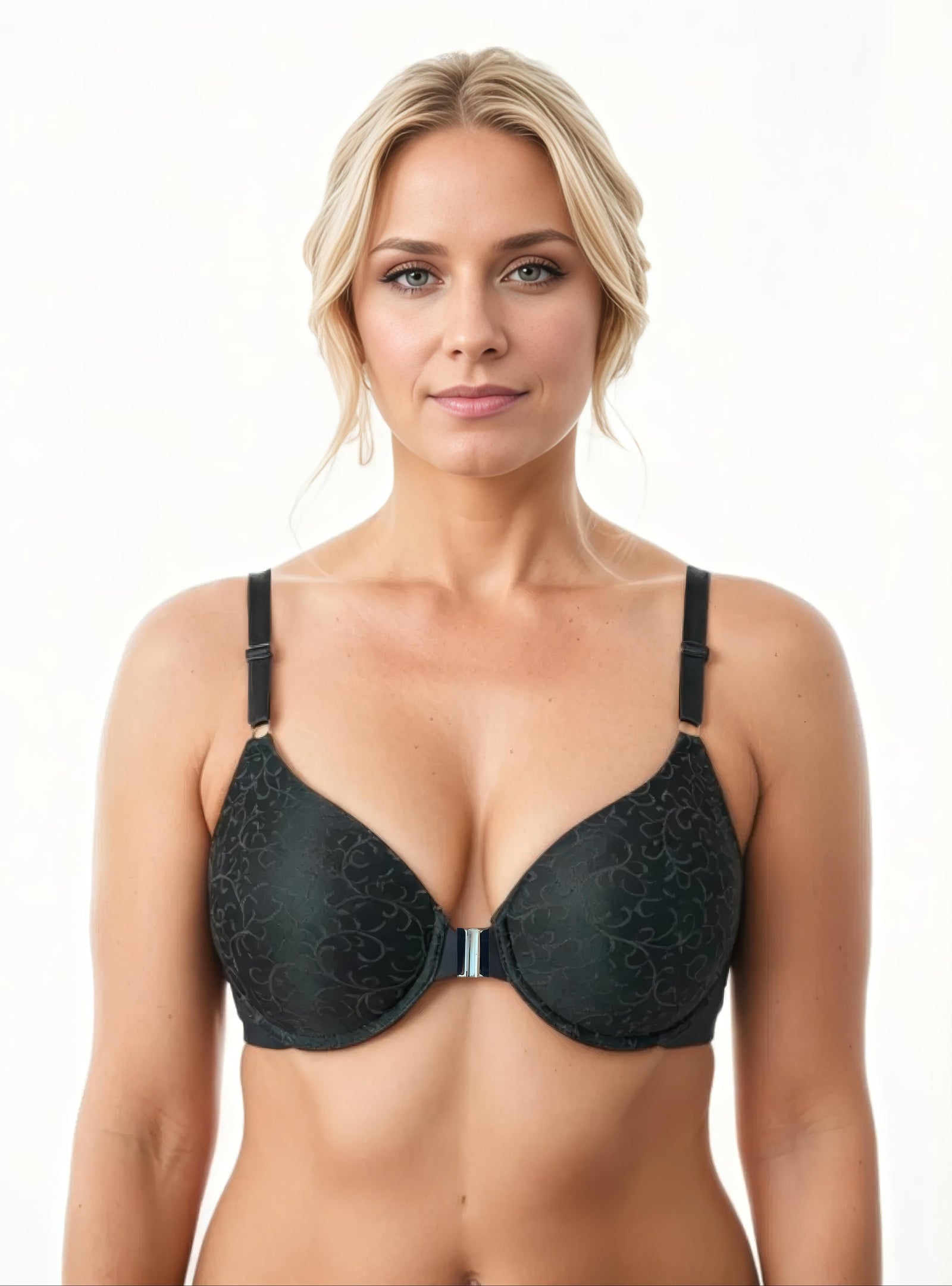
Front closures, for example, can be a welcome alternative for women who struggle with traditional back hooks because of limited shoulder mobility, arthritis, or simply a preference for convenience. A front closure also allows the back to remain smooth and uninterrupted. That can be especially helpful under thin tops and close-fitting dresses.
Full-coverage cups are another important feature for women who want less spillover at the top and sides. Coverage does not have to mean a bulky or dated look. A well-designed cup can provide a secure, flattering shape while creating a cleaner line beneath a blouse, sweater, or T-shirt.
Wire-free styles deserve a place in the conversation, too. Underwire can offer excellent lift and separation for many women, particularly in fuller bust sizes. But wire-free bras have improved substantially when they are engineered with supportive bands, molded cups, strategically placed panels, and stable fabrics. The best choice depends on your shape, activity level, and what comfort means to you.
Moisture-wicking fabrics can also make a difference during warm weather, travel, busy days, or menopause-related temperature shifts. A smoothing garment that traps heat will not become an everyday favorite, no matter how good it looks under clothing. Breathability and softness are not extras. They are part of a wearable solution.
Start with the outfits you wear most often. If you reach for soft T-shirts and knit tops, look for a bra with a smooth back, clean edges, and cups that do not show through lightweight fabric. If button-front shirts tend to pull or gape, a fuller-coverage style with stable support may help your clothes sit better at the bust.
For dresses, consider where the fabric is most fitted. A bra-and-slip hybrid or longer smoothing silhouette can be useful when you want a more continuous look through the torso. For casual days, sleep, or travel, a wire-free bralette with gentle smoothing may give you enough support without the structure of a traditional bra.
Your size is only one part of the decision. Pay attention to where you prefer more coverage, whether straps tend to slip, and how sensitive you are to pressure around the rib cage. Women with fuller busts may prioritize lift and side support. Women experiencing post-weight-loss loose skin may appreciate wider back coverage that lies smoothly. Someone who dislikes hooks may make a front closure nonnegotiable. There is no single “best” style, only a better match for your needs.
Do not judge a bra only while standing still in a fitting room. Raise your arms, twist at the waist, sit down, and take a few deep breaths. Notice whether the band rides up, the cups gap, the sides shift, or the bottom edge begins to roll.
A supportive smoothing bra should feel comfortably secure from the first wear. It may have a more substantial feel than a delicate fashion bra, especially if it includes extended back coverage, but it should not pinch or make you count the minutes until you take it off. Give the fabric a few minutes to settle, then trust what your body tells you.
There is a reason women are looking for alternatives to bras that leave marks, create bulges, or demand constant adjustment. Lingerie has a job to do. It should support the body you have now, make your clothing feel easier to wear, and help you move through the day without a second thought about your back, sides, or straps.
The most promising direction for smoothing lingerie is not more pressure or more complicated layers. It is smarter design: wider coverage where it helps, comfortable support where you need it, and fabrics that stay smooth without asking you to sacrifice comfort. Bye bye bulge is not about changing your body. It is about choosing pieces designed to let you feel beautiful and supported in it.
When you find a bra that disappears under your clothes and stays comfortable long after you leave the house, keep it close. That is not a small wardrobe win. It is the kind of everyday ease that changes how you feel in everything you wear.