Your Cart is Empty




A bra can technically be your size and still make you feel like it is fighting your body by lunchtime. Cups that gap, straps that slide, underwires that poke, and bands that create visible lines are often fit issues, not flaws in your shape. This guide to breast shape bras is here to make bra shopping less frustrating and more useful: start with the shape and support you prefer, then choose construction that helps your clothes sit smoothly and your body feel comfortable.
Every breast shape is normal, and no bra needs to “fix” it. The right bra simply meets you where you are, offering the coverage, lift, smoothing, and ease that make you feel supported in your own skin.
Breast shape is less about a perfect category and more about noticing where your fullness sits, how your breasts rest in a bra, and what tends to go wrong with the styles you have tried. You may have more fullness at the bottom, at the top, toward the center, or toward the outer sides. Your breasts may be close-set, wide-set, shallow, projected, fuller on one side, or simply different from each other. Most women are a combination.
Instead of trying to identify one exact shape, look for clues in the mirror and in your current bras. Do cup edges cut in at the top? You may need more cup depth, a stretchier upper cup, or a fuller-coverage silhouette. Do cups wrinkle or stand away from the breast? The cup may be too large, too tall, or shaped for more projection than you have. Does breast tissue escape at the sides? A wider wing, a higher side panel, or more complete coverage can make a meaningful difference.
Your breast shape can also change. Weight changes, pregnancy, nursing, menopause, aging, and hormonal shifts may affect fullness and skin elasticity. That does not mean you need a drawer full of complicated bras. It means it is worth reassessing what feels good now rather than forcing yourself into a style that worked years ago.
The best bra choice usually begins with your most important daily need. For some women, that is lift. For others, it is a smooth back under a fitted top, easy dressing, or enough coverage to move through the day without adjusting.
A bra with a supportive lower cup and a flexible upper cup can follow your natural shape without leaving empty space near the neckline. Lightly lined cups, stretch fabric, and full-coverage styles often work well. A balconette can be beautiful on some fuller-on-bottom shapes, but a very open cup may gap if it does not have enough structure at the top.
If you want a rounder look under knits or T-shirts, molded foam cups can add a smooth finish. The trade-off is that molded cups are less forgiving if your two breasts differ in size or fullness. Soft cups tend to adapt more naturally, while foam cups create a more uniform outline.
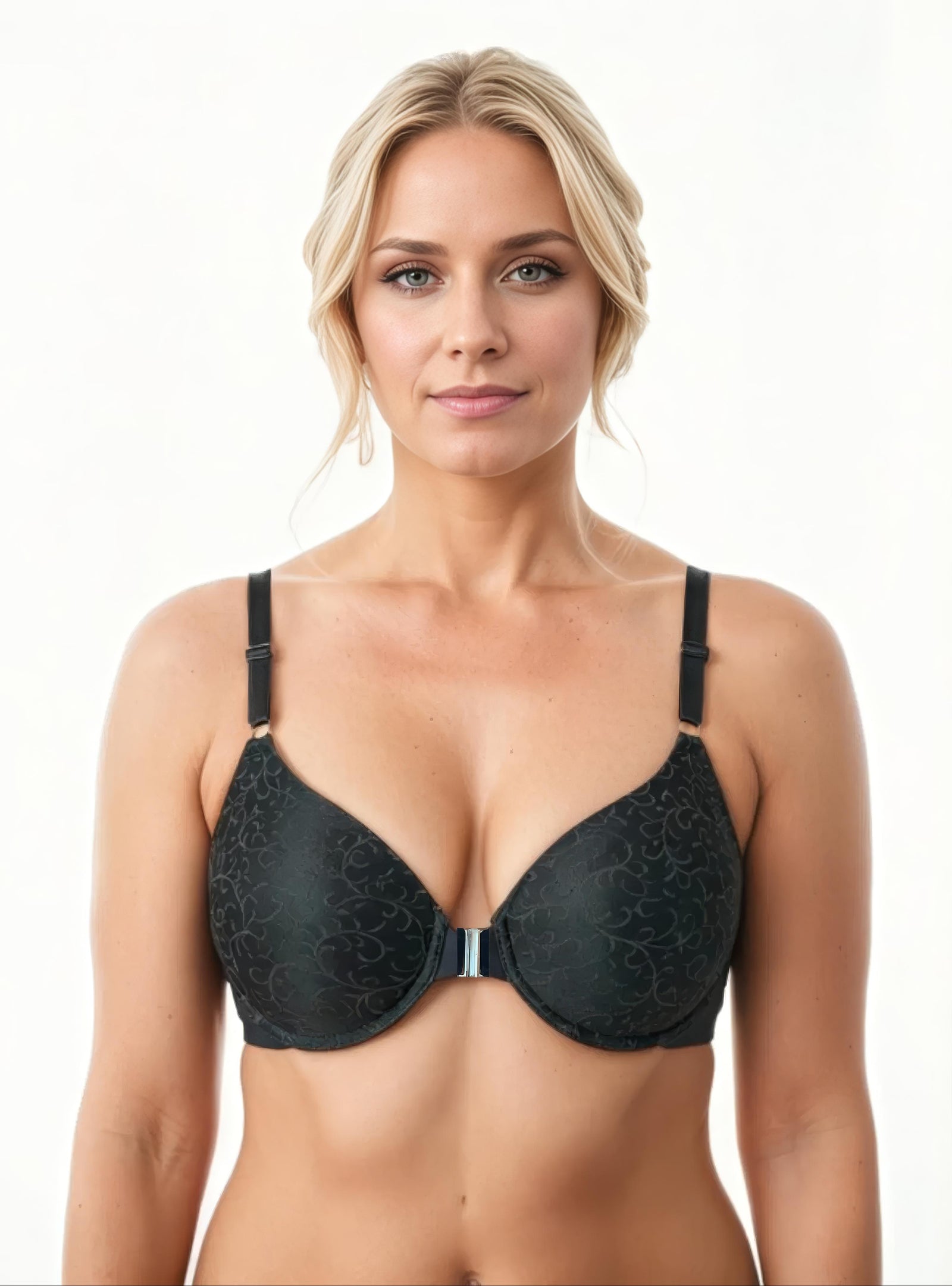
Look for cups with enough height and a secure neckline. A bra that is too shallow or low-cut can create spilling at the top, even when the band feels correct. Full-coverage cups, stretch lace or stretch fabric along the upper edge, and center-front styles with thoughtful containment are often comfortable choices.
For everyday wear, a higher neckline can be especially helpful under button-front shirts, thin sweaters, and fitted tees. You should not have to choose between feeling supported and feeling covered.
Side support matters. Bras with wide wings, side-smoothing panels, and cups designed to guide tissue forward can help create a more centered silhouette without feeling restrictive. This is also where the back of the bra matters as much as the cups. A narrow band with tight elastic may hold breasts up, but it can still pinch at the sides and create a line across the back.
A smoothing bra with a longer back and side design distributes support across a broader area. That can feel more comfortable for women who have dealt with side bulge, loose skin after weight loss, or the familiar back-band squeeze of traditional bras. Shapeez built its patented back-smoothing bra category around this very concern: support should not come with unwanted lines and digging.
Shallow breasts tend to have more width across the chest and less forward projection. Bras with a shallower cup shape, demi coverage, or flexible non-molded fabric may sit more naturally than deep, narrow molded cups. If you often see wrinkling at the bottom or tip of the cup, the bra may be too projected for you, even if the size on the label seems right.
Wire-free bras can be an excellent choice when they have a supportive underband and well-designed cups. They can provide gentle shaping without asking your body to fit the fixed curve of an underwire cup.
Projection means your breast tissue extends farther forward from the chest wall. You may need deeper cups, more room at the wire, and a cup shape that does not flatten you. A bra can be the correct volume but still feel too small if its depth is in the wrong place.
Look for full-coverage bras, soft cups with shaping seams, or stretch cup materials that accommodate your natural projection. A supportive wire-free style can work too, but the band and cup construction need enough strength to provide lift rather than simply compressing.
When a bra feels uncomfortable, straps often get blamed first. But the band provides much of the support. It should sit level around your torso, stay in place when you raise your arms, and feel firm without being painful. If the back rides up, the band may be too loose. If it rolls, pinches sharply, or leaves you counting the minutes until you can take it off, the style may be too tight or too narrow for your comfort.
A wider back can change the entire experience. It spreads pressure, helps reduce visible lines, and offers a smoother finish under clothing. That is particularly valuable with lightweight tops, dresses, and fitted layers where a conventional bra band can show through.
Do not confuse deep impressions with proof of support. Some temporary marks can happen with close-fitting garments, but pain, numbness, chafing, or deep grooves are signals to reassess the fit. Comfort is not a bonus feature. It is part of a bra doing its job.
Full coverage is often misunderstood as bulky. In reality, it can be one of the most practical choices for a smooth, secure fit. A well-designed full-coverage bra helps contain tissue at the top and sides, minimizes adjusting, and creates a clean foundation beneath clothing.
That said, the best coverage level depends on what you wear and how you want to feel. A lower neckline may suit certain outfits. A front-closure bra may be easier to put on if reaching behind your back is uncomfortable. A tank-style bra can replace the bra-plus-camisole combination when you want extra smoothing through the back and sides. A bra-and-slip hybrid can simplify dressing under dresses while reducing layers.
For casual days, sleep, or travel, a wire-free bralette may be enough. For longer workdays, events, or outfits that call for a more defined shape, you may prefer firmer support or foam cups. There is no prize for wearing underwire if you hate it, and no rule that wire-free has to mean unsupported.
Once you put on a bra, fasten it on the loosest hooks if it has a hook closure. New bras should have room to tighten as the band naturally relaxes with wear. Lean forward and gently settle breast tissue into the cups, then stand upright and assess the fit.
The center front should sit comfortably against the chest when the style is designed to do so. The cup should hold the breast without gaping, cutting in, or pushing tissue out at the sides. Straps should stay put without carrying all the weight. Finally, put on a top you wear often. The real test is not only how the bra looks in a fitting room. It is whether you can sit, reach, breathe, and move through your day without thinking about it every ten minutes.
If you are between sizes, consider what feels tight or loose. If the cup fits but the band is too firm, a larger band with a smaller cup letter may preserve similar cup volume. If the band feels secure but the cup cuts in, you may need more cup volume rather than a looser band. Fit is connected, which is why one small adjustment can solve several problems at once.
The bra you reach for most should make getting dressed feel easier, not like a negotiation with your body. Choose the shape and construction that support your life, smooth where you want smoothing, and let you forget about your bra until it is time to take it off.