Your Cart is Empty





A bra can feel fine when you first put it on, then show a noticeable gap at the top of the cup as soon as you move. If you are trying to fix bra gaping, the answer is rarely to simply tighten the straps. Gaping is a fit signal, and once you know what it is telling you, you can choose support that sits closer, feels better, and gives your clothes the smooth foundation they deserve.
A well-fitting bra should follow your shape without pinching, floating, or creating extra bulk. That does not mean every cup must stay perfectly still through every reach, bend, and breath. It does mean the bra should feel secure in your everyday posture and look smooth under the clothes you actually wear.
Bra gaping happens when there is more space in the cup than your breast fills at that point. The gap may appear along the neckline, near the armhole, or across the entire top of the cup. Sometimes it is obvious only in a fitted T-shirt. Other times, you may see a cup wrinkle or shift forward when you look down.
The most common cause is a cup that is too large, but cup size is not the whole story. Bra sizing is a relationship between band and cup. A 36C and a 38C do not hold the same cup volume, so changing only one part of the size can create a new fit issue.
Cup shape matters just as much. Many women have breasts that are fuller at the bottom, softer after weight loss, or less full at the top following hormonal changes, pregnancy, breastfeeding, or menopause. A tall, rigid cup may gap at the neckline even when its overall volume seems right. In that case, a lower-cut cup, a more flexible cup edge, or a style designed to gently contain rather than force a shape can make a meaningful difference.
A loose band can also be the hidden culprit. When the band rides up or shifts during the day, the cups lose their anchor against the body. They may pull away at the top, especially if the straps are doing too much of the work.
Before you change cup sizes, check the band. It should sit level around your torso, firm enough to stay in place but comfortable enough to breathe and move. If it creeps up your back, rotates around your body, or needs to be worn on the tightest setting when new, it may be too loose.
Try this fit check while standing naturally. Fasten the bra on the loosest hook setting, then lift your arms, twist gently, and sit down. The band should remain mostly parallel to the floor. If it rises in back, the bra cannot keep the cups close to the chest.
When you go down a band size, you may need to adjust the cup letter to keep a similar cup volume. For example, if a 38D band feels loose, a 36DD may provide a firmer foundation while preserving roughly the same cup capacity. This is often called sister sizing, and it can be useful, but it is not a substitute for trying the bra on. Different brands and silhouettes can fit very differently.
For women who want less digging and fewer visible back lines, a smoothing, longer-back design can offer another advantage: it distributes support over a broader area instead of concentrating pressure in a narrow band. A secure, comfortable foundation makes it easier for cups to stay where they belong.
Overtightened straps can temporarily pull a gaping cup closer to the body, but they may also create shoulder grooves, lift the band in back, and make the fit less stable. Adjust straps so they feel supportive, with enough room to slide one or two fingers underneath. The band should provide most of the support.
If you loosen the straps and the cup immediately floats away, revisit the band and cup fit. That small test often reveals whether the bra is balanced or simply being held in place by tension.
Put the bra on, lean forward slightly, and guide breast tissue fully into each cup from the side and underneath. This is sometimes called the scoop-and-swoop method. Then stand up straight and assess the fit again. Tissue that has been sitting outside the cup can make a bra appear to gap when the real problem is incomplete coverage or a cup shape mismatch.
Next, look for clues. If the cup gaps but the wire sits flat against the breastbone, there is no spilling at the sides or top, and the band is firm, the cup may simply be too tall or too open for your shape. Consider a style with a softer upper cup, a lower neckline, or less structured foam.
If the cup gaps and the wire also sits away from the chest, the cup may be too small, too shallow, or the band may be too loose. This surprises many women. Breast tissue can push a too-small cup outward, causing the top edge to tilt or stand away rather than visibly spill over.
A molded foam cup creates a round shape even when you are not fully filling every part of it. That can be helpful under thin knits, but it can also make a small top gap more noticeable for women with softer tissue or less upper fullness. A non-foam cup or a lightly lined style may conform more naturally. On the other hand, if nipple coverage and a polished outline are priorities, a flexible foam cup may still be the better everyday choice. The right option depends on what feels comfortable and looks best under your wardrobe.
The same size can fit beautifully in one bra and poorly in another. Full-coverage bras generally provide more containment, while balconette, plunge, and demi styles have different cup heights and angles. None is automatically better. The goal is to match the bra’s construction to your body and your clothing.
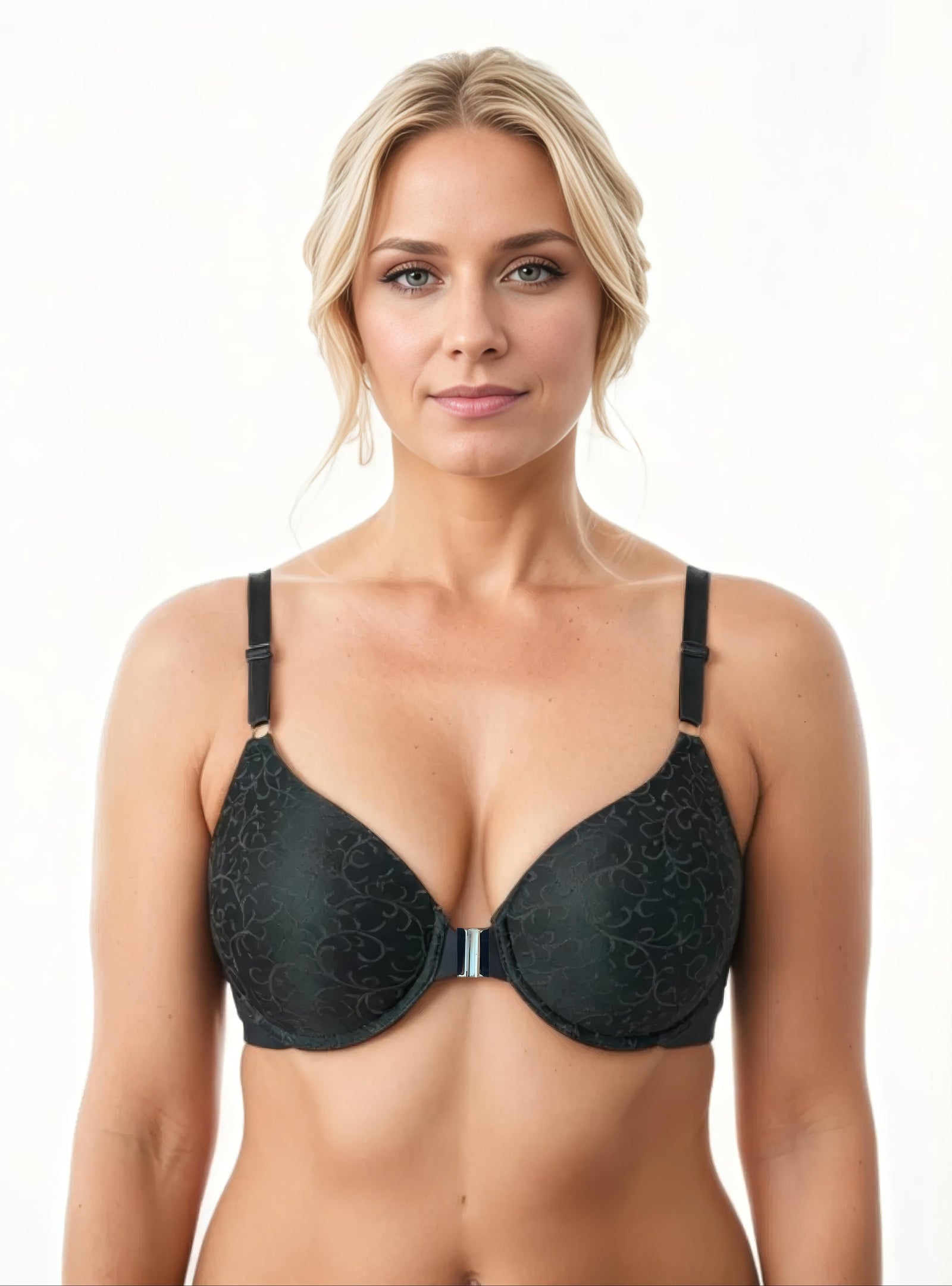
If you regularly see gaping at the top, look for features that work with changing breast shape: stretch or flexible upper panels, cups with a lower profile, and designs that offer full coverage without excessive cup height. A front-closure bra can be especially convenient for easy dressing, but make sure it is secure around the torso because you cannot fine-tune the fit with multiple back hooks.
Wire-free bras and bralettes can be a welcome relief if underwires feel restrictive. They are often more forgiving at the neckline because their cups move with the body. The trade-off is that some wire-free styles provide less separation or lift than an underwire bra, particularly for fuller busts. Look for wide underbands, supportive inner construction, and thoughtful coverage rather than assuming every soft bra will solve the problem.
Shapeez designs smoothing bras with support spread across the back and sides, which can be especially helpful when a narrow traditional band rolls, rides up, or creates visible lines. The goal is not to squeeze your body into a shape. It is to help your bra stay steady so your silhouette feels smoother and your support feels dependable.
Bras change over time. Elastic relaxes with wear, washing, body changes, and long days of movement. A bra that once fit perfectly may begin to gap because its band no longer has enough recovery. Rotate your bras rather than wearing the same one day after day, and start new bras on the loosest closure so you have room to adjust as the fabric relaxes.
Your outfit can also affect what you notice. A cup that looks smooth under a sweater may show a slight edge under a thin, close-fitting tee. Test a new bra under the tops and dresses you wear most often. Raise your arms, sit, reach forward, and look at the cup line from the side. Comfort and appearance should work together, not compete.
If gaping is new and persistent after a major body change, it may be worth getting a fresh fitting instead of trying to make an older size work. Your best bra size is not a permanent label. It is the size and style that support you comfortably right now.
A small gap does not mean there is anything wrong with your body. It simply means your bra is asking for a better match. Give yourself permission to choose the band, cup shape, and coverage that let you move through the day with less adjusting and more confidence.