Your Cart is Empty



That little bit of fullness that appears at the sides, back, or just above your waistband can change how a favorite top feels. The right bras for muffin top concerns will not change your body - nor should they have to. They can help create a smoother transition under clothing, stay comfortably in place, and give you the support that makes getting dressed feel easier.
The key is looking beyond cup size. A bra may fit your bust while still creating pressure points at the band, under the arms, or across the back. When a band is narrow, too tight, or prone to rolling, it can divide soft tissue rather than gently support it. A better bra works with your shape, not against it.
“Muffin top” is often used to describe fullness above the waistband of pants or skirts. A bra cannot directly smooth the waist or lower stomach. But many women use the phrase when they are really frustrated by side bulge, back bulge, underarm fullness, or a visible line where a traditional bra band presses into the body.
Those are legitimate fit concerns, and they are usually less about your body than about the construction of the bra. Conventional bras often rely on narrow back wings, firm elastic edges, and multiple hook closures. On some bodies, those features can dig in, shift through the day, or create a line that shows under knits and fitted tops.
If the fullness you notice is at your natural waist, a high-rise bottom, smoothing brief, or shaping slip may be the more direct solution. If it begins around the bra line, focus on a bra with wider, smoothing coverage through the sides and back.
A smoother silhouette starts with distribution of support. Instead of concentrating tension in one thin band, look for a design that spreads it across a broader area of fabric. This is especially helpful if you have soft skin after weight loss, a fuller bust, or simply prefer more coverage around your back and sides.
A wide back is one of the most useful features for reducing visible bra lines. More fabric coverage creates a gentler transition from bra to skin, rather than stopping abruptly at a narrow elastic edge. Side panels matter, too. They help contain underarm fullness and keep breast tissue comfortably directed into the cups.
Smoothing should never mean squeezing. A supportive back panel feels secure but flexible, allowing you to breathe, bend, and sit without feeling restricted.
The band provides most of a bra’s support, so it should sit level around your torso. If it rides up your back, the band may be too loose. If it leaves deep marks, rolls, or makes you eager to take it off by lunchtime, it may be too tight or too narrow for your comfort.
A longer, no-roll base can be a welcome alternative to a thin band. Longline styles are particularly helpful under dresses, sweaters, and smooth-fitting tops because they distribute pressure over more of the torso. The trade-off is that they cover more skin, which may not be your first choice in very warm weather or under a low-back outfit.
Cup fit affects side smoothing more than many women realize. When cups are too small or too shallow, breast tissue can spill over the top or sides. When they are too large, gaping can show through clothing and reduce support.
A full-coverage cup can hold the bust comfortably while reducing the need to constantly adjust. If you prefer a rounded, lightly contoured look under T-shirts, foam cups can offer modesty and shape. If you want a lighter feel and a more natural outline, non-foam cups may be the better fit. Neither is universally better - the best choice depends on your breast shape, sensitivity, and everyday wardrobe.
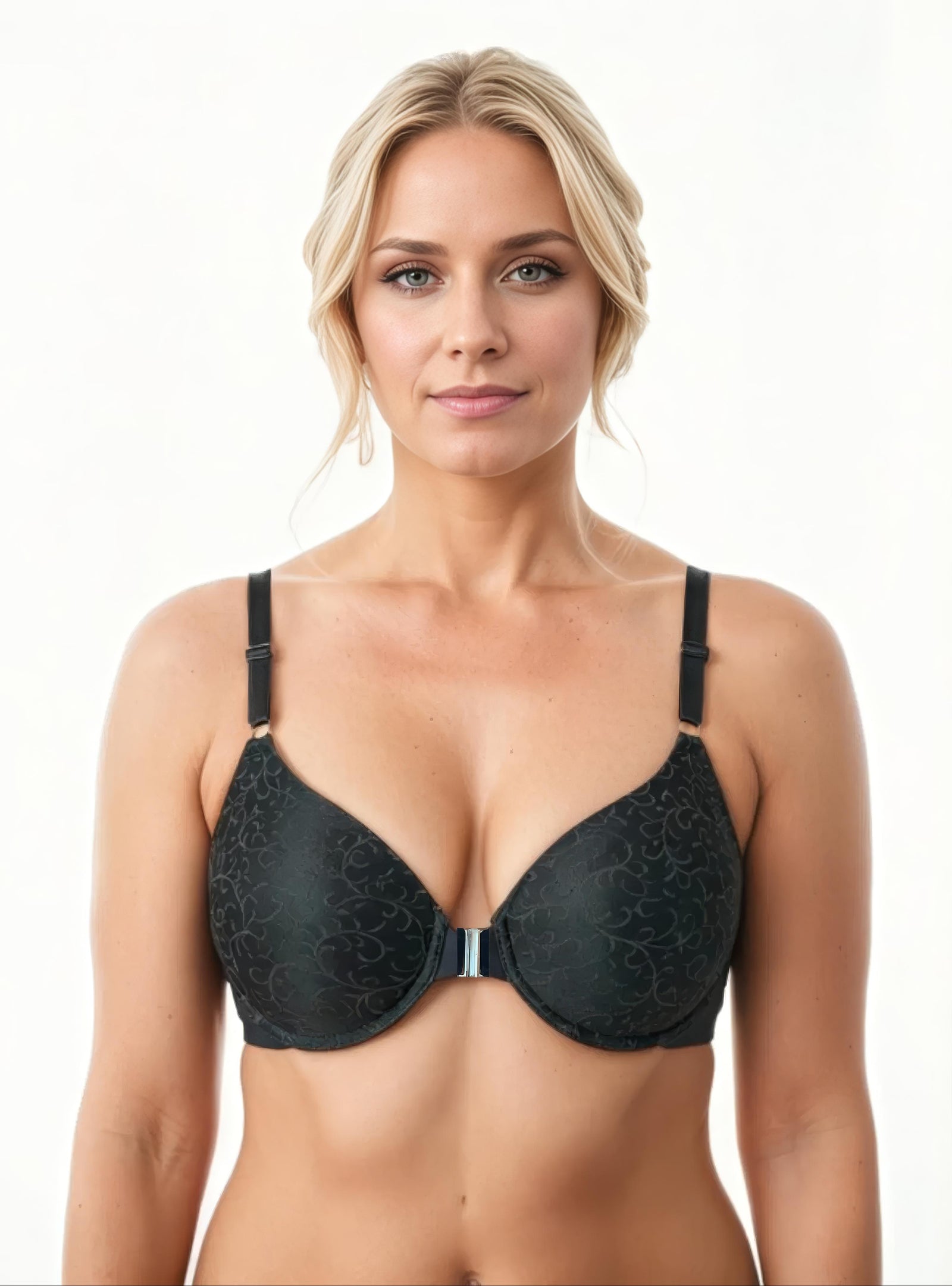
Traditional back hooks are not wrong, but they are not the only option. Front-closure bras can be easier to put on, particularly for women with shoulder discomfort or limited mobility. A front closure also leaves the back uninterrupted, which can improve the smooth look under clothing when paired with a supportive back panel.
Straps should feel secure without carrying the full weight of your bust. If they dig into your shoulders, first check the band and cup fit before tightening them further. A well-fitted band does the heavy lifting.
Not every day calls for the same bra. The goal is not maximum compression at all times. It is dependable support that suits what you are wearing and how you want to feel.
For an everyday T-shirt or blouse, a back-smoothing bra with full cups and a flexible wide band is often the most versatile choice. Under a fitted dress, a bra-and-slip hybrid can smooth from bust through the torso without piling separate layers at the waist. For casual days, a wire-free bralette or tank-style bra can provide gentle shaping with less structure.
Underwire can offer excellent lift and separation, especially for fuller busts, but it must be fitted correctly. The wire should sit around the breast tissue, not on it, and should not poke at the underarm. If underwire has never felt good to you, do not assume all support is off the table. Modern wire-free designs can provide meaningful lift through supportive fabric, strategic seaming, and a thoughtfully engineered band.
Shapeez built its patented 360° smoothing approach around this very frustration: women should not have to choose between a bra that supports the bust and a garment that helps the back and sides look smooth. A bra designed as both supportwear and shapewear can reduce the need to layer a separate bra under a tight camisole or smoothing garment.
Before deciding that every bra causes bulge, try a quick fit check. Put on your bra and look at it from the side and back in a fitted top. The band should be level, the cups should fully contain your breast tissue, and the center front should rest comfortably against the chest if the style is designed to tack there.
You should be able to fit about two fingers beneath the band without pulling it far away from your body. Start a new bra on the loosest hook, if it has hooks, so you have room to tighten it as the fabric naturally relaxes with wear.
Pay attention to where discomfort begins. If it is only at the outer edges of the back, you may benefit from wider wings. If you see spillage near the underarm, a more generous cup or side-smoothing panel may help. If the bottom edge rolls upward, consider a longer base or a size adjustment. Small fit changes can make a surprisingly visible difference.
Even a beautifully fitting bra will interact differently with different fabrics. Thin, clingy knits reveal more texture than a woven blouse or a structured jacket. That does not mean you need to avoid body-skimming clothes. It simply means that a smooth, wider-backed bra is especially valuable when your top is lightweight, fitted, or tucked in.
For outfits where your waistband is the concern, avoid stacking several tight elastic edges in the same area. A bra ending at the ribcage, a camisole ending at the waist, and a snug pant waistband can create more lines than any one garment would alone. A longer bra silhouette or a single bra-and-slip solution may feel cleaner and more comfortable.
Your body is allowed to be soft, strong, changing, and completely yours. Choose a bra that lets you move through the day without the pull, pinch, and constant adjusting that steals your attention. When your support feels right, your clothes get to be the finishing touch - not a test you have to pass.