Your Cart is Empty




That little spillover near the underarm can change how an entire outfit looks and feels. If you’ve been wondering how to stop side bra bulge, the answer usually is not your body - it’s the bra. Side bulge is often a fit issue, a coverage issue, or a construction issue, and once you know which one you’re dealing with, it becomes much easier to fix.
The good news is that side bra bulge is common, especially in full-busted sizes, on mature bodies, and after weight changes. It can also show up when a bra is technically “your size” but still not built to contain and smooth tissue comfortably. A better solution starts with understanding what causes it.
Side bra bulge usually appears when breast tissue or soft tissue near the underarm is being displaced instead of supported. A bra with cups that are too small may push tissue outward. A band that is too tight can compress the body and create a more noticeable line at the side. At the same time, a band that is too loose can let the bra shift, which changes where the tissue sits and often makes side spillage worse.
Cup shape matters too. Some bras cut inward at the top or side, which can look flattering on the hanger but create a harsh edge on the body. Narrow wings, low side panels, and stretchy fabrics without enough structure tend to offer less side containment. If you’ve ever put on a bra that felt fine standing still but created bulging the moment you moved your arms, that’s often a design problem rather than a sizing mistake.
There’s also a simple reality many women know well - bodies are soft, dynamic, and not perfectly symmetrical. Skin texture changes with age. Weight loss can leave looser tissue at the sides and back. Hormonal changes can affect fullness. None of that means something is wrong. It just means your bra has to do more than lift. It has to smooth.
The fastest way to improve side bulge is to reassess fit with fresh eyes. Many women stay in the same bra size for years, even when their shape has changed. If side tissue is escaping the cup, cutting over the top edge, or pooling near the underarm, your cup may be too small or too shallow.
A good starting point is the scoop-and-swoop test. After fastening the bra, lean forward slightly and gently pull breast tissue from the side into the cup. Then stand up and adjust the cup so everything is sitting inside the wire or cup edge. If tissue keeps escaping after that, the cup likely does not have enough capacity or side coverage.
The band should feel secure but not punishing. If it digs hard into the sides and creates a deep ridge, going up a band size may help, though you may need to adjust the cup accordingly. If the band rides up in back, it is probably too loose, and that can throw off support everywhere else.
Straps matter, but they are not the main fix. Tightening straps too much might seem like a quick solution, but it usually pulls the bra upward instead of inward and can make side tissue look more pronounced. Straps should support, not overcompensate for a poor fit.
If you notice any of these, your bra may be working against you: side spillage near the underarm, underwire sitting on breast tissue, a sharp line where the cup ends, or visible compression under fitted tops. Even if the bra feels wearable, those signs point to a mismatch between your body and the bra’s structure.
If you want to know how to stop side bra bulge long term, look beyond size and focus on construction. The best smoothing bras are designed to distribute tissue, not squeeze it into one narrow area.
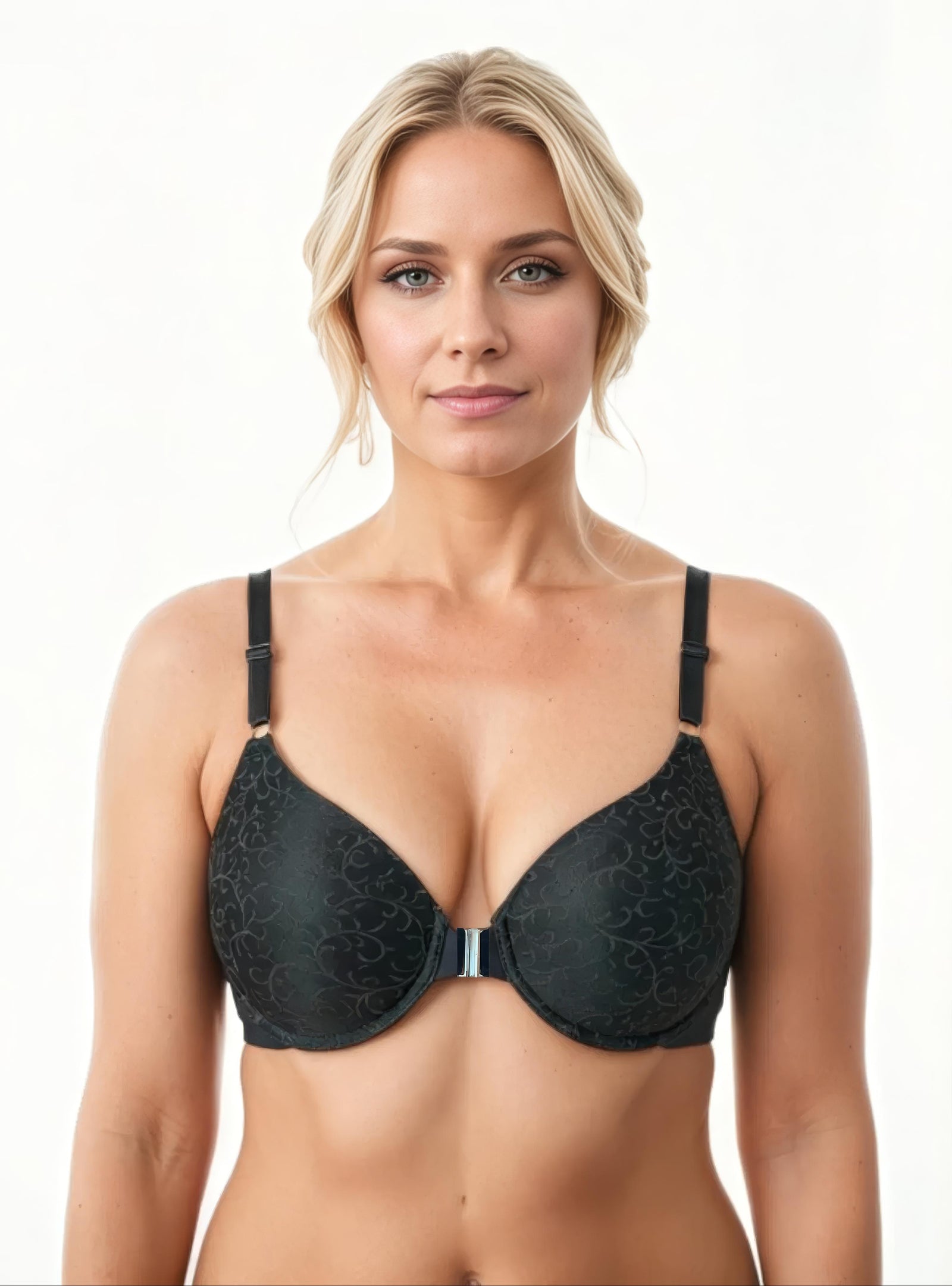
Higher side panels are one of the most helpful features. They catch and support tissue near the underarm instead of letting it spill over. Wider wings also create a smoother transition from cup to band, which reduces visible lines under clothing.
Fuller coverage cups make a difference as well, especially if you’ve had trouble with cutting or overflow. This does not mean you need a heavy, bulky bra. It means the cup should contain tissue comfortably and follow your natural shape rather than fighting it.
Fabric plays a bigger role than many women expect. Thin, flimsy bands can roll or dig. Stretchy lace without enough support may look pretty but often does little for smoothing. A bra with supportive stretch, stable side construction, and enough coverage through the back and sides will usually create a cleaner silhouette.
This is where a smoothing bra can outperform a traditional bra. Shapeez built its patented 360-degree smoothing construction specifically to address the bulges and lines that standard bras often leave behind. For women who are tired of layering shapewear over a bra or settling for visible side spillover, that kind of all-in-one design can be a real shift.
Sometimes side bulge is mostly breast tissue escaping the cup. Sometimes it is soft tissue from the side of the torso being compressed by a narrow band. Sometimes it is a little of both. That’s why the right solution depends on what you’re seeing in the mirror.
If the bulge sits right at the cup edge near the underarm, start with cup size, cup shape, and side coverage. If the bulge sits farther back along the band, pay attention to wing height, back smoothing, and band width. If the issue shows up most under thin knit tops but not under sweaters or jackets, fabric and finish matter as much as fit.
There can also be a trade-off between a very minimal bra and a very smoothing bra. A lighter bra may feel cooler or less structured, but it may not offer the side support needed for a smooth line. A more engineered bra can give better shaping and coverage, though some women need a little time to adjust if they are used to barely-there styles. Comfort still matters, but real comfort often comes from support that stays in place.
Even the right bra can struggle under the wrong top. Tight armholes, clingy jersey fabrics, and sleeveless styles that cut close to the body tend to spotlight side fullness. That does not mean you need to change your wardrobe. It just helps to know that some fabrics reveal every seam and edge.
If side bulge bothers you most in specific outfits, try the bra on with those clothes, not just by itself. A bra that looks acceptable under a loose blouse may not be the best choice for a fitted tee or dress. Smooth finishes, wider side coverage, and back-smoothing construction tend to disappear better under clothing.
A few simple changes can improve the look of side bulge without a full lingerie overhaul. First, fasten a new bra on the loosest hook so the band can do its job without overcompressing. Second, make sure the underwire or cup edge sits behind all breast tissue, not on top of it. Third, adjust straps evenly and resist the urge to overtighten.
It can also help to retire bras that have stretched out or lost their structure. Once the elastic weakens, the bra stops distributing tissue properly and starts creating lines in all the wrong places. If one bra seems to cause bulge while another does not, that comparison tells you a lot.
If you are fuller busted, have softer tissue near the underarm, or simply want a smoother look under clothes, more coverage is usually your friend. That can mean a higher side panel, a longer line through the back, a tank-style bra, or a bra-and-shapewear hybrid that smooths beyond the cup area.
Women often assume more coverage will feel restrictive. In reality, the right design can feel more comfortable because it holds tissue gently over a larger area instead of creating pressure in one small spot. Less digging often means less bulging.
No bra can erase the fact that human bodies have softness, movement, and curves. The goal is not to create a rigid, unnatural shape. The goal is to support the body well enough that clothes fit better, lines look smoother, and you feel more comfortable wearing what you already own.
If you’ve been trying to fix side bulge by sizing down, tightening straps, or choosing skimpier bras, it may be time to go in the opposite direction. Better containment, smarter construction, and real smoothing support usually deliver far better results than compression alone.
A bra should work with your body, not ask your body to change. Once you find one that truly supports and smooths at the sides, getting dressed feels a lot easier - and a lot more flattering.