Your Cart is Empty




A bra can fit your band size and cup size yet still leave you wondering why button-down shirts pull, why your bust feels more prominent than you want, or why the back of your favorite top shows lines. The minimizer bra vs full coverage question is really about what you want your bra to do for your shape, your clothing, and your comfort.
Both styles can offer substantial support, and many women benefit from having both in their drawer. The key difference is not simply how much breast tissue the bra covers. It is whether the bra is designed to redistribute your bust for a more streamlined profile or to contain and support your natural shape with a higher, more secure cup.
A minimizer bra is designed to make the bust look less projected from the front and side. It does not remove volume or change your body. Instead, it gently redistributes breast tissue across the chest, creating the appearance of a smaller, more balanced bustline under clothing. Depending on the design and your shape, a minimizer may reduce your bust projection by as much as one cup size visually.
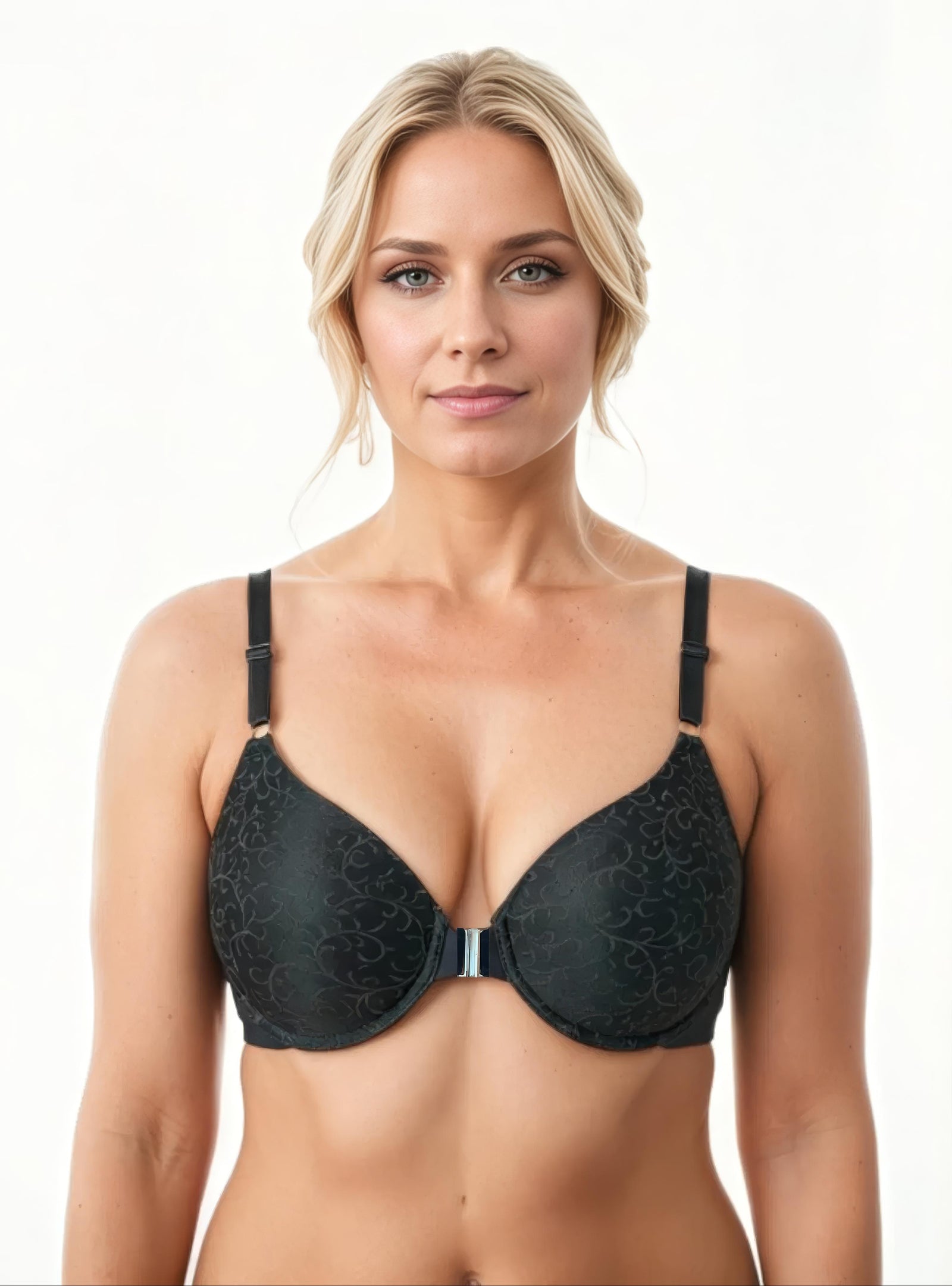
A full coverage bra is designed to encompass more of the breast, usually with a higher cup edge and more complete coverage at the top and sides. Its primary job is security and support. It helps keep breast tissue comfortably contained, which can be especially welcome for fuller busts, softer tissue, and anyone who is tired of spillover at the neckline.
The two categories can overlap. A minimizer can be full coverage, and a full coverage bra may offer a subtly smoothing effect. Still, their design priorities are different. Minimizers focus on a less prominent silhouette. Full coverage bras focus on secure containment, lift, and dependable everyday support.
Minimizer bras are often the answer when your clothes fit through the waist and shoulders but feel tight or strained across the chest. A well-fitting minimizer spreads breast tissue more evenly, so the bustline does not project as far forward. That can make tailored shirts lie flatter, reduce gaping between buttons, and give knits a cleaner line.
This style can also be helpful if you prefer a more proportional look in fitted dresses, blazers, or high-neck tops. The goal is not to flatten your shape. A good minimizer should preserve a rounded, natural look while reducing the forward projection that can make clothing feel restrictive.
There is a trade-off. Because a minimizer distributes tissue across a wider area, it may create a slightly broader profile than a bra that concentrates the bust toward the center. If you love very pronounced cleavage or a strongly lifted, forward shape, a minimizer may not be your first choice for that outfit.
Comfort depends on construction. Look for cups that distribute pressure evenly, supportive side panels, straps that stay in place, and a band that remains level without digging. If the cups compress painfully, create a quad-boob effect, or push tissue out at the sides, the issue is likely fit, not the idea of a minimizer itself.
Full coverage bras are made for the days when you want to get dressed and forget about your bra. Higher-cut cups help contain breast tissue at the top, while side coverage can help guide tissue forward and reduce the chance of side spill. For many women with a fuller bust, that reliable hold is the difference between constantly adjusting and moving through the day comfortably.
This style is especially useful under T-shirts, sweaters, workwear, and tops with more coverage at the neckline. It can create a smooth, supported shape without asking your bust to fit into a narrow, low-cut cup. Full coverage is also a smart choice if your breast tissue is softer, if you notice gaping in smaller cup styles, or if you simply prefer the reassurance of more coverage.
Still, full coverage does not automatically mean bulky. The best full coverage bras support without adding unnecessary padding, heavy seams, or excess fabric. A smooth cup and thoughtful side construction can look polished under clothing while giving you the coverage you want.
It is also worth separating cup coverage from back coverage. A bra may fully cover the bust but still have narrow wings, a tight elastic edge, or traditional hook-and-eye hardware that creates visible back lines. Women looking for a smoother all-around result should consider how the bra is built beyond the cups.
If your main frustration is that your bust makes certain tops feel too tight, a minimizer is likely the better starting point. It is designed to create a more streamlined profile, particularly under button-down shirts, fitted dresses, and structured layers.
If you are dealing with top spillage, side spillage, shifting cups, or a feeling that your bust is not fully supported, full coverage is usually the stronger choice. The extra cup height and side containment can offer the secure fit that lower-cut styles cannot.
For women who want both a less projected silhouette and more complete containment, seek out a full coverage minimizer. This combination can be particularly helpful for larger busts, mature breast tissue, or anyone who wants clothing to skim rather than cling. The right design should feel supportive, not restrictive.
Your outfit matters, too. A soft, drapey blouse may look beautiful with a full coverage bra that provides natural shaping. A crisp woven shirt may benefit more from the redistributed profile of a minimizer. Neither choice is more flattering in every situation. Flattering means your bra supports the look and feeling you want that day.
A bra labeled minimizer or full coverage cannot perform well if the fit is off. Start with the band. It should sit straight across your back, feel firm but breathable, and stay in place when you raise your arms. If it rides upward, the band may be too large. If it pinches deeply or makes it hard to breathe, it may be too small or the style may not suit your torso.
Then check the cups. Breast tissue should be fully inside the cup with no overflow at the top or sides. Gaping can mean the cup is too large, but it can also mean the cup shape is too tall, too wide, or too shallow for your breast shape. Underwires should sit around the breast tissue rather than on it, while wire-free styles should provide stable support without rolling or folding under the bust.
Pay attention to the sides and back as carefully as you do the front. A smooth silhouette often comes from a wider, more supportive back design, not from overtightening the band. Shapeez was built around this principle, with patented 360° smoothing construction that helps reduce visible lines and side or back bulge while providing full-coverage support.
Front closures can be useful for easier dressing, especially if reaching behind your back is uncomfortable. However, front-close bras generally offer less opportunity to adjust the band over time, so precise sizing matters. Longline styles may add stability and smoothing through the torso, while shorter silhouettes can feel lighter for everyday wear. The best choice is the one you will actually want to put on again tomorrow.
Many wardrobes call for more than one solution. A full coverage bra can be your dependable foundation for long workdays, travel, errands, and relaxed tops. A minimizer can be the piece you reach for when a shirt pulls across the bust or when you want a more understated profile in tailored clothing.
You do not have to choose between feeling supported and feeling like yourself. The right bra should work with your body, not ask your body to conform to a single silhouette. Start with the clothing challenge you notice most, prioritize a fit that feels secure without digging, and let comfort be the standard that guides the final choice.