Your Cart is Empty



You look in the mirror, and there it is: a space between the top of your bra cup and your breast. If you have ever asked, “why does my bra gap?” you are not alone. Cup gaping is one of the most common bra-fit frustrations, and it can make even a beautiful bra feel less supportive, less smooth, and less comfortable under clothing.
The good news is that gaping does not automatically mean your bra is too big. It can happen for several reasons, from cup shape and strap tension to breast asymmetry and the way your body moves throughout the day. The right answer is usually not to tighten everything and hope for the best. It is to identify what your bra is telling you.
A bra gaps when the cup is not resting closely against the breast. That extra space may show up at the top edge, along the sides, or across the entire cup. Sometimes it is obvious only when you stand still; other times it appears when you bend, reach, or sit down.
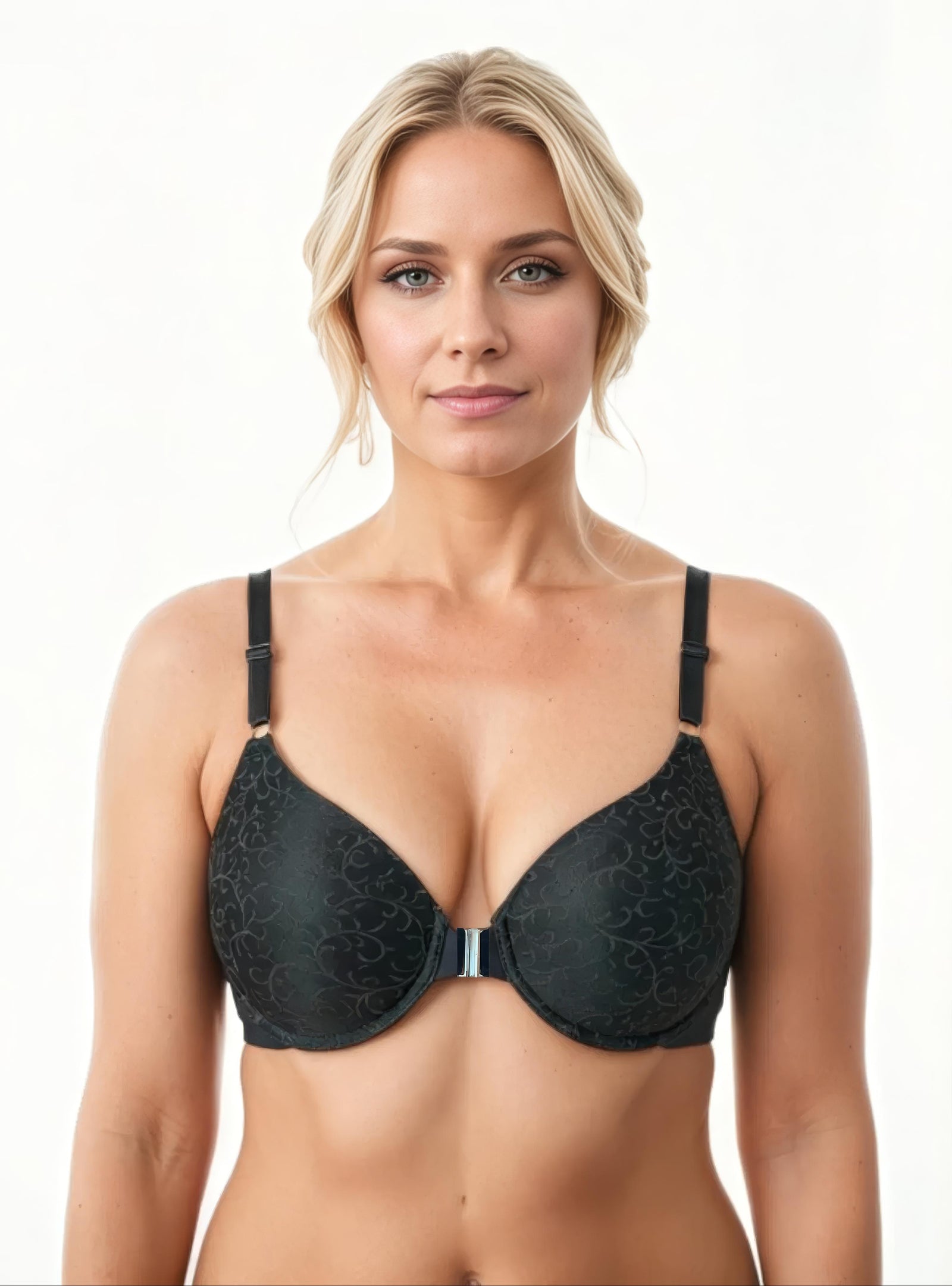
The most common reason is a mismatch between the cup’s shape and your natural breast shape. Bras are not just sized by volume. A cup can technically have enough volume but still leave space if it is too tall, too wide, too shallow, or too open across the top for you.
For example, a molded foam cup holds its own rounded shape. If your breast tissue is softer, less full at the top, or more projected than the cup, the cup may not conform closely to your body. A flexible, unlined cup may hug you better, while another woman may prefer the structure of foam. There is no one “right” bra style, only the one that gives you a secure, comfortable fit.
A cup that is genuinely too large can create visible wrinkling or an empty pocket at the top. Before going down a cup size, though, check the band. An overly loose band can allow the cups to sit too low, creating a gap that looks like a cup-size problem.
Try lifting the cups into place and gently scooping all breast tissue forward from the sides. If the cup fills after you adjust but the gap returns quickly, the issue may be the band, cup shape, or straps rather than cup volume alone.
This sounds backward, but it happens often. When a cup is too small, breast tissue can push the bra away from the body, causing the top edge to tilt or stand away. You may see gaping near the neckline while also noticing spillage at the sides, underarm area, or center of the bra.
Look for other clues: Does the center panel between the cups float away from your chest? Do the wires sit on breast tissue? Does your breast feel compressed or escape when you move? If so, you may need a larger cup, a different cup shape, or both.
Your band does most of the supporting work. When it is too loose, it rides up your back and lets the front of the bra drop down. Once the cups sit lower than they should, the top edge can gap even if the cup size is correct.
A supportive band should sit level around your torso and feel firm, not painful. You should generally be able to slide two fingers underneath it, but it should not climb upward between your shoulder blades. Start a new bra on the loosest hook or closure setting so you have room to adjust as the fabric relaxes with wear.
If traditional hook-and-eye bras leave you with digging, shifting, or visible back lines, a smoothing, longer-line design can distribute support more comfortably. Shapeez bras are designed to smooth the back and sides while providing full-coverage support, helping the garment stay anchored instead of constantly needing readjustment.
Straps matter, but they cannot fix a band that does not fit. Over-tightened straps can pull the cup upward and away from the breast, especially if you have softer tissue or a shorter torso. Loose straps allow the cup to shift and lose contact as you move.
Adjust your straps so they feel secure without digging into your shoulders. A simple check: you should be able to slide a finger underneath the strap with mild resistance. If you must tighten straps dramatically to get support, your band is likely too loose.
Bra sizing gives you a starting point, not a complete fit diagnosis. Two women can wear the same size and need completely different bras because their breast shapes, tissue density, shoulder placement, and torso length are different.
If you are fuller on the bottom and less full on top, tall cups or very open balconette styles may gap at the neckline. A full-coverage bra with a more closed upper edge, a stretch-lace panel, or a soft cup can offer a closer fit. If you have fuller breasts with more projection, shallow molded cups may sit away from your body even when the listed size seems right.
Breast asymmetry can also create gaping on one side. It is completely normal for one breast to be larger than the other. Fit the bra to your fuller side, then adjust the smaller side with a removable pad if your bra allows it, or choose a cup with flexible material that can accommodate the difference without showing an obvious gap.
Weight changes, pregnancy, breastfeeding, menopause, hormonal shifts, and aging can change breast tissue over time. A bra style that fit beautifully two years ago may no longer give you the same support or smooth silhouette. That is not a body problem. It is a sign that your fit needs have changed.
Put on your bra, lean forward slightly, and use your opposite hand to scoop breast tissue into each cup from the side and underneath. Then stand upright and assess the fit before adjusting the straps.
The center panel should lie comfortably against your chest if you are wearing an underwire bra. The band should stay level. The cup should contain your breast without cutting in, wrinkling, or standing away. Move your arms, sit down, and take a deep breath. A bra that looks fine for ten seconds but shifts when you move is not giving you dependable support.
Pay attention to where the gaping occurs. A small gap at the top of a structured cup may point to a shape mismatch. Gaping throughout the entire cup often suggests too much cup volume or a loose band. Gaping combined with overflow or a floating center panel can mean the cup is too small.
If your bra gaps, begin with one change at a time. Try tightening the band by moving to a firmer closure setting if the bra is still in good condition. If that does not help, test a sister size: go down one band size and up one cup size to maintain similar cup volume, or go up one band size and down one cup size if the band is uncomfortably tight.
Then consider construction. Softer, wire-free bras and bralettes can be especially comfortable when your breast shape does not match a rigid molded cup. Full-coverage styles often provide a more stable fit for fuller busts, while stretch fabrics can adapt to natural asymmetry and day-to-day changes in breast fullness.
For smooth clothing, look beyond the cups. A bra that stays put across the back and sides can make a meaningful difference in how you feel in a fitted top or dress. Wide, supportive bands, no-roll hems, and smoothing fabric help reduce shifting and create a more polished line without asking you to squeeze into a restrictive garment.
Not every tiny space means your bra has failed. A small amount of room can appear when you raise your arms, sit in a particular position, or wear a firm molded cup. Breasts move. Bodies bend. The goal is not to make your bra behave like a vacuum seal.
What matters is how it feels and functions through a normal day. If the bra stays in place, supports you comfortably, lies smooth under clothing, and does not leave you constantly tugging at the cups, a minor shift with movement may be perfectly acceptable.
Your bra should support your life, not turn getting dressed into a daily fit test. When the band is secure, the cups match your shape, and the fabric feels good against your skin, that frustrating gap becomes much easier to leave behind.