Your Cart is Empty





That moment when you take your bra off and feel immediate relief is not something you should have to accept as normal. A thoughtful bra fit assessment can reveal why your straps dig, your cups gap, or your back looks less smooth than you want under clothing. The right bra should support your shape without demanding your attention all day.
For many women, the issue is not simply choosing a different size. Traditional bras can create pressure at the band, side bulge near the underarm, visible lines across the back, and a silhouette that feels at odds with the rest of your outfit. A better fit starts with looking at the whole garment, not just the letter on the tag.
A bra size is a useful starting point, but it cannot tell the full story. Bodies change with age, hormones, weight fluctuations, pregnancy, activity levels, and even the time of month. Different bra constructions also fit differently. A full-coverage cup, a minimizer, a wire-free bralette, and a front-closure smoothing bra may not all feel best in the same size.
A proper fit assessment looks at how the bra works with your body in motion. It considers band support, cup coverage, strap placement, side coverage, breast shape, and how the back lies under clothing. Comfort matters just as much as appearance. If a bra leaves you counting down the minutes until you can take it off, it is not delivering the support you deserve.
The goal is not to force your body into a number. The goal is to find a bra that feels secure, creates a smoother look when that is what you want, and lets you move through your day with more confidence.
Many fit frustrations begin at the band. Your band should sit level around your torso, feeling comfortably firm without pinching, rolling, or riding up your back. If it lifts toward your shoulder blades, the band is likely too loose or has lost its recovery over time. When the band rides up, your straps often take over the work, which can lead to shoulder grooves and discomfort.
A band that is too tight can be just as frustrating. It may create pronounced lines, dig into soft tissue, or make breathing feel restricted after a meal or during a long day. Do not mistake excessive tightness for support. Real support comes from thoughtful construction and a stable fit, not from feeling squeezed.
For women concerned about back bulge or visible bra lines, the width and structure of the back matter. A narrow band with traditional hook closures can concentrate pressure in one area. A wider, smoothing design helps distribute support across a larger surface area and can create a more polished look beneath knits, fitted tops, and dresses. Shapeez was built around this very idea, with patented back-smoothing construction designed to bring bra support and shapewear benefits together.
Your cups should contain your breast tissue without cutting in, spilling over, or leaving empty space. Look at the top, sides, and bottom of each cup. If tissue escapes at the neckline or near the underarm, you may need more cup volume, a fuller-coverage style, or a shape that better matches your breasts.
Gapping does not always mean your cup is too large. It can happen when a molded cup is too tall, too shallow, or simply the wrong shape for your body. It can also happen when the band is too loose and the cups are not held close enough to the chest. Try adjusting the straps and settling your breast tissue into the cups before deciding a bra is not right.
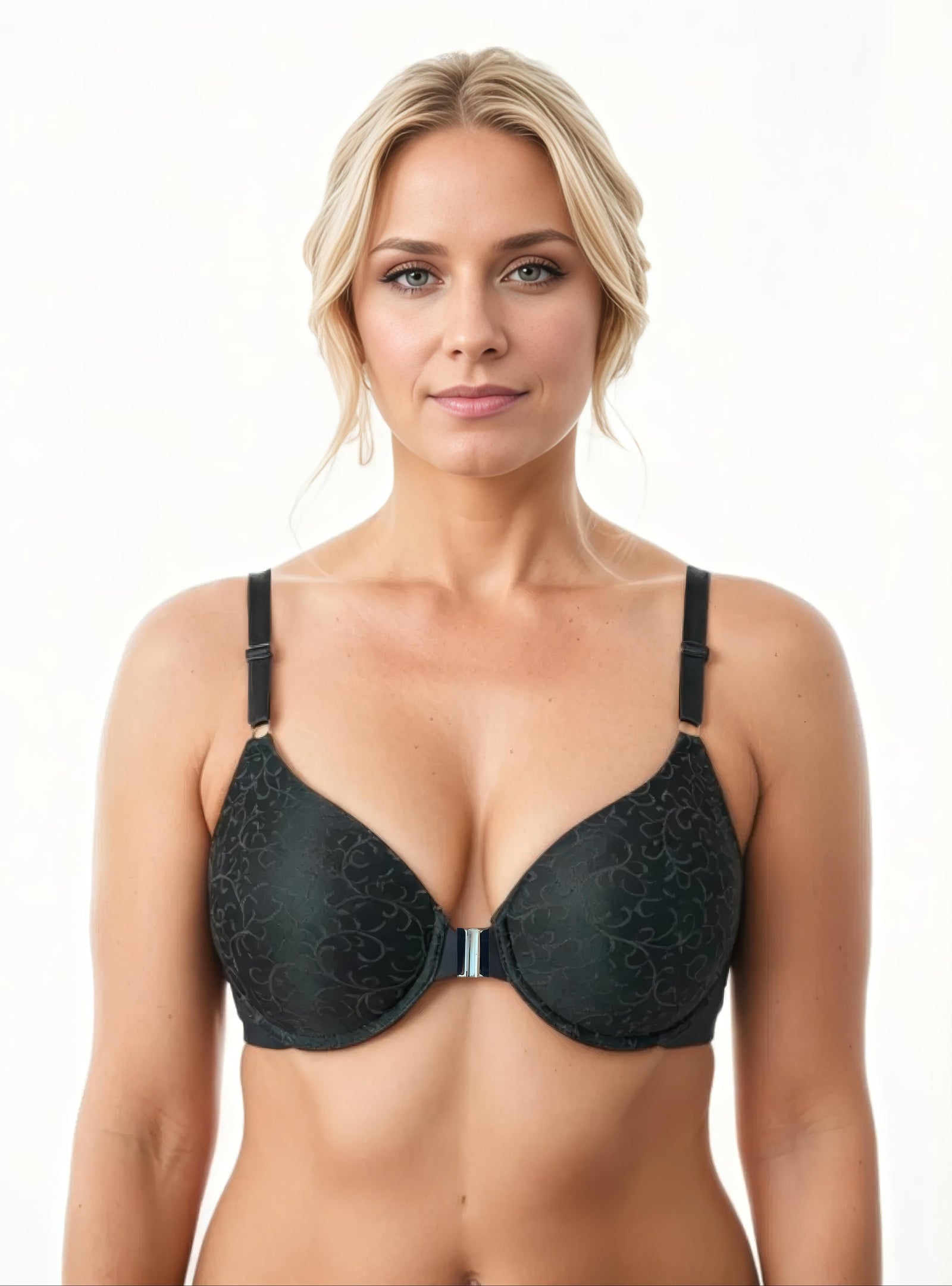
The center front of an underwire bra should usually rest close to your breastbone without painful pressure. However, bodies vary, and not every breast shape will feel comfortable in a traditional underwire style. If the center panel presses, pokes, or never sits comfortably, a wire-free option or a different cup construction may be the better answer. Comfort is not a compromise. It is part of a good fit.
After putting on your bra, lean forward slightly and use your opposite hand to guide breast tissue from the side and underneath into the cup. Then stand upright and smooth the cup into place. This simple step helps you assess the actual fit rather than judging a cup that has not been properly positioned.
If you find yourself repeatedly adjusting throughout the day, pay attention. A bra that needs constant pulling, lifting, or repositioning is giving you useful information.
Straps should feel supportive but relaxed enough that you can slide a finger beneath them. Tightening straps may seem like a quick fix for a loose cup or rising band, but it often creates more discomfort without correcting the real issue. If your straps are doing all the lifting, reassess the band first.
Next, look at the sides of the bra. Do the wings lie smoothly, or do they roll and bunch? Does breast tissue feel pushed toward the underarm? Side coverage can make a meaningful difference for women who want a smoother transition from bust to back, especially under sleeveless tops or close-fitting fabrics.
The underarm area deserves special attention because it is where many conventional bras fall short. A style may technically fit in the cups yet feel uncomfortable if its side panels are too narrow, too rigid, or cut too low for your needs. More coverage is not automatically better, but the right amount can prevent rubbing and give you a more secure, contained feel.
Standing still in front of a mirror only tells part of the story. Your bra should work when you sit at a desk, reach for a shelf, drive, bend down, and take a deep breath. Move through a few of those positions during your bra fit assessment.
Notice whether the band stays in place when you raise your arms. Check whether the cups wrinkle when you sit, whether the underwire shifts, and whether the front closure or straps remain comfortable against your skin. If you wear your bra for several hours, look for deep red marks, chafing, or pressure points. Light temporary marks can happen, but lasting soreness or pain is a sign to try a different fit or style.
Also consider the clothes you wear most. A bra that feels fine under a loose sweater may show lines beneath a lightweight T-shirt. A smoothing, longer-line silhouette can be especially helpful under clingy fabrics, while a lighter wire-free style may be your favorite for errands, travel, or relaxing at home. There is no rule that says one bra has to do every job.
A bra does not need to be falling apart before it stops serving you well. Elastic gradually relaxes, cups can lose their shape, and your body may change even when your weight does not. If you are fastening a bra on its tightest hooks from the beginning, it may be time for a replacement. New bras generally fit best when started on the loosest setting, giving you room to adjust as the fabric relaxes.
Reassess your bras if you notice regular slipping straps, a back band that creeps upward, underwire discomfort, overflow, cup gapping, rolling edges, or new back and side lines under clothing. Changes in posture, breast shape, and skin sensitivity can all affect what feels good.
It also helps to separate a fit issue from a style issue. A correctly sized plunge bra may still not provide enough coverage for your comfort. A full-coverage bra may fit beautifully but feel too structured for lounging. The best choice depends on your needs that day, not on a single definition of the perfect bra.
The most flattering bra is not necessarily the smallest-looking or most restrictive one. It is the one that supports you, complements your clothing, and allows you to forget about it for hours at a time. Smoothness, lift, coverage, and softness can coexist when the fit and construction are right.
Take a few minutes to check your current favorites honestly. The bra you reach for again and again is offering clues about what your body values. Let that comfort guide your next choice, because feeling supported should never come at the expense of feeling like yourself.