Your Cart is Empty




A good wireless minimizer bra review should answer more than one question: Does it make the bust look less prominent? It should also ask whether the bra stays comfortable through a full day, smooths the back and sides, and works under the clothes you actually wear. For many women, a minimizer that feels restrictive or leaves visible lines is not a solution at all.
The right wire-free minimizer can create a more balanced silhouette without asking you to tolerate poking wires, digging bands, or straps that demand constant adjusting. But the category varies widely. Some styles minimize by compressing too aggressively, while others offer a gentler shaping effect with the coverage and support needed for everyday confidence.
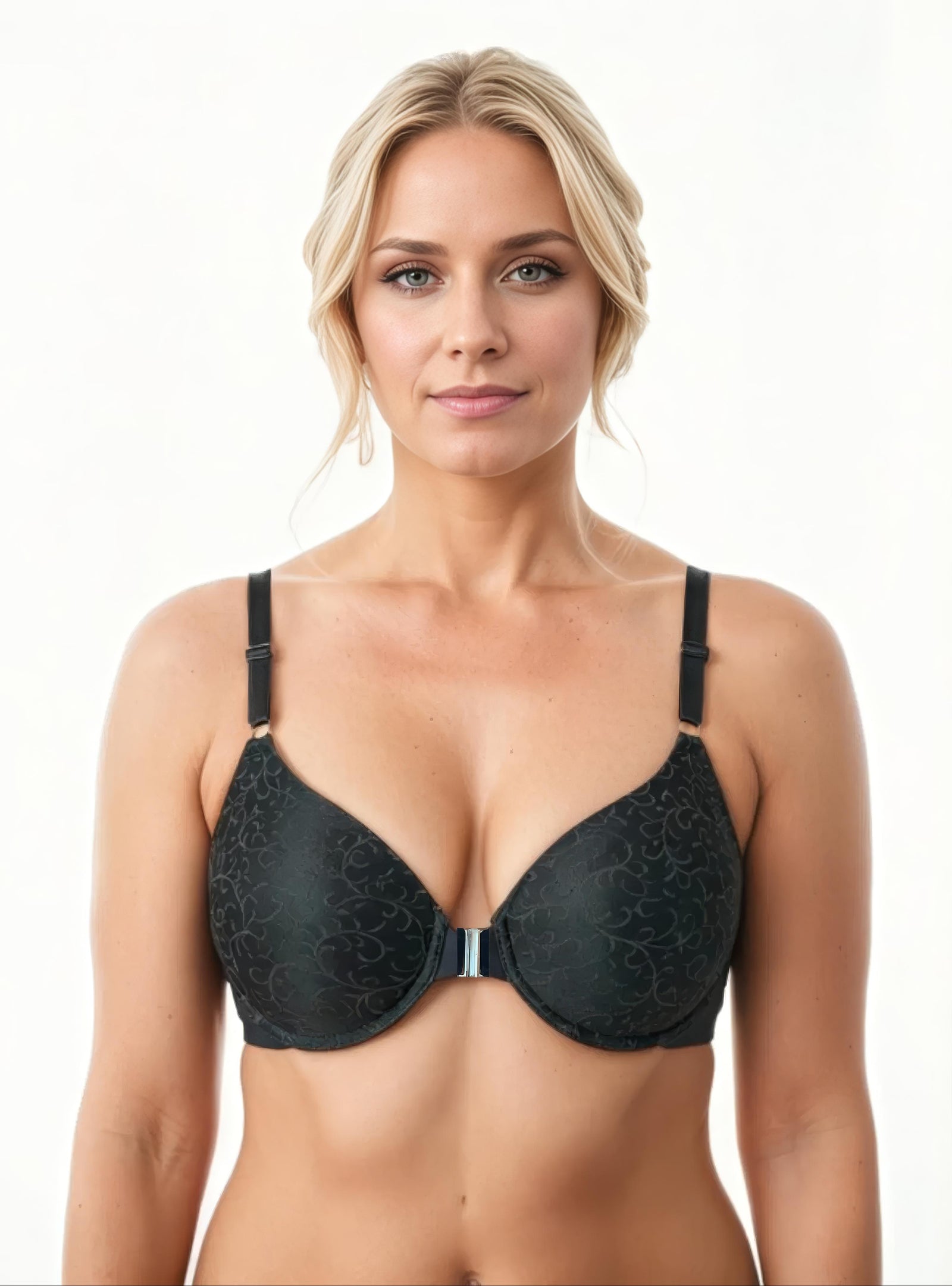
A minimizer bra is designed to redistribute breast tissue across the chest rather than push it forward into a more projected shape. The visual result is typically a smoother, more streamlined bustline that can make button-front shirts lie flatter and help fitted dresses feel easier to wear.
A wireless version removes the rigid underwire from that equation. Instead of relying on a wire for lift and structure, it uses thoughtful cup construction, supportive fabric, a secure underband, wider straps, and strategic coverage. When those elements work together, the bra can feel far more forgiving than a traditional underwire style.
It is worth setting realistic expectations. A wireless minimizer is not meant to flatten your shape or make a fuller bust disappear. Its job is to offer a less projected profile while keeping you supported, covered, and comfortable. The amount of visible minimization depends on breast shape, cup size, tissue density, and the garment worn over it.
The best test of a wireless minimizer is not the first five minutes in front of the mirror. It is how it performs after sitting at a desk, reaching for groceries, driving, and moving through a busy day. Comfort needs to last, and smoothing should not come at the cost of breathing room.
Without an underwire, the band becomes especially important. It should feel anchored around the rib cage without rolling, pinching, or creeping upward. A wide, well-finished underband usually distributes pressure better than a narrow elastic edge, particularly for fuller busts.
Look for cups that offer real structure rather than simply stretching over the bust. Molded foam cups can create a rounded, modest silhouette and help prevent show-through. Non-foam cups may feel lighter and more flexible, but they need supportive seams or layered fabric to avoid a compressed, unsupported look.
Straps matter, too. Wider straps can be more comfortable because they spread weight across the shoulders. That said, straps cannot fix a loose band. If the band is riding up in back, the bra is not providing its intended support, no matter how substantial the straps appear.
Many women shop for a minimizer because they want their tops to skim rather than cling. A bra can minimize the bust but still create lines at the back, under the arms, or along the band. That is why the side and back design deserves as much attention as the cup.
A wider back panel can help distribute tissue more smoothly and reduce the sharp indentation caused by narrow closures. Soft, flexible fabric at the sides can also make a noticeable difference under knit tops, blouses, and dresses. The goal is not to squeeze the body into submission. It is to create a more even transition from bust to back.
This is where a bra-and-shapewear approach can be especially useful. Shapeez, known for its patented back-smoothing bra construction, focuses on the areas traditional bras often leave behind: the back, sides, and underarm area. For women who are tired of choosing between bust support and a smoother silhouette, that design approach addresses both needs in one layer.
A full-coverage minimizer tends to be the practical choice for workwear, button-down shirts, lightweight sweaters, and any outfit where you want less movement and more security. Higher cup coverage can contain soft tissue at the top and sides, reducing spillover that may make the bust look fuller than it is.
However, full coverage does not have to mean bulky. The most wearable styles use smooth cup materials and clean edges that disappear under clothing. If you prefer lower necklines, consider whether the bra's neckline will work with your usual wardrobe before assuming one minimizer can do everything.
A wireless minimizer should feel supportive, but it may feel different from the lifted, separated shape of an underwire bra. Some women love the softer, closer-to-the-body profile. Others may want more defined lift, especially if they are accustomed to a structured underwire.
Firm compression can create a stronger minimizing effect, but too much compression may lead to flattened cups, breast tissue pushed toward the underarm, or an urge to remove the bra by midafternoon. A better everyday option is often moderate shaping with enough room for the body to move naturally.
This is also where personal preference matters. If your priority is making a tailored shirt button smoothly, you may prefer a firmer minimizer. If you want a bra for travel, long workdays, or lounging, a softer wire-free style with a smoothing back may serve you better. There is no single “best” level of minimization, only the one that feels good and works for your clothing.
A minimizer cannot perform well in the wrong size. Because many wire-free styles feel more flexible than underwire bras, it can be tempting to settle for a band that is too loose or a cup that is too small. That usually leads to less support and more bulging, not a smoother result.
Start with the band. It should sit level across the back and remain comfortably firm when you move. If it rides upward, slips, or allows the bust to drop forward, try a smaller band size and adjust the cup size as needed.
Next, check the cups and sides. Your breast tissue should be fully contained without cutting in at the top, under the arms, or near the center front. If the cup wrinkles, it may be too large or the cup shape may not suit your breast shape. If the fabric is pulled taut, the cup may be too small.
Finally, wear the bra under one of your usual tops. A fit that looks fine on its own can reveal rolling, seams, or side spillage under a thin shirt. The mirror test matters, but comfort during movement matters more.
This style is particularly helpful for women with fuller busts who want a less projected look without returning to a rigid underwire. It can also be a smart choice for anyone who feels frustrated by bra bands that create pronounced back lines or by narrow side panels that leave underarm tissue unsupported.
Women with sensitive rib cages, changing body shapes, or a history of abandoning uncomfortable bras may find wire-free construction more wearable. Mature shoppers often appreciate the combination of fuller coverage, easier comfort, and a smoother result under everyday clothes.
Still, a wireless minimizer may not be the first choice for every occasion. If you want dramatic lift for a special event or need a very low neckline, a different bra silhouette may be more suitable. Think of a wireless minimizer as a dependable wardrobe foundation, not a one-style answer for every outfit.
The strongest wireless minimizer bras do not ask you to trade confidence for comfort. They combine a contained, less projected bustline with thoughtful support and smoothing that helps clothes fall the way you want them to.
When you find one that stays in place, feels kind to your body, and lets you forget about adjusting all day, it becomes more than a minimizer. It becomes the bra that lets you focus on the day ahead instead of the one you are wearing.