Your Cart is Empty




Some bras look fine in the drawer and become frustrating the minute you put them on. A strap slips. A band rolls. A back hook presses into your skin by lunchtime. When you are comparing front closure vs pullover bras, the real question is not which style is better on paper. It is which one makes your day easier, smoother, and more comfortable.
Both styles solve problems that traditional back-hook bras often create. They can feel easier to wear, simpler under clothing, and more forgiving for women who are tired of pinching hardware or visible lines. But they do not perform the same way. The best choice depends on your support needs, your range of motion, your bust size, and even the tops you wear most often.
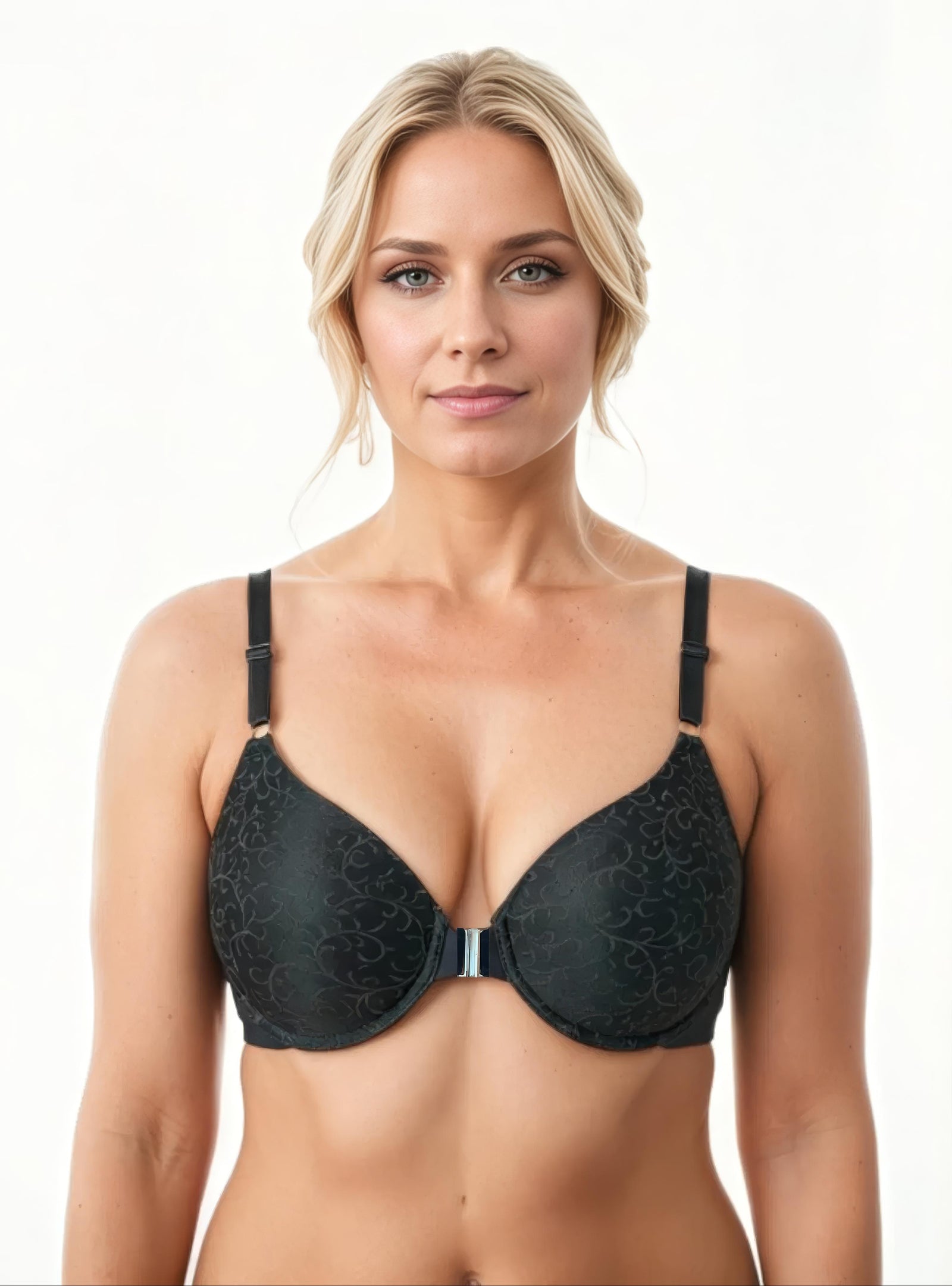
A front closure bra opens and closes in the center front, usually with hooks, clasps, or a zipper. You step into it or slip your arms through, then fasten it in front of your body. For many women, that alone is a major upgrade from reaching behind the back and wrestling with tiny hooks.
A pullover bra has no traditional closure at all. You pull it over your head or step into it, and the stretch of the fabric does the work. This style is often associated with wire-free comfort, light support, and a smoother, simpler feel against the body.
At first glance, the difference seems small. In practice, it changes the entire fit experience. A front closure bra tends to offer more structure and a more defined fit, while a pullover bra usually prioritizes flexibility and ease.
If ease of dressing matters to you, front closure bras often win immediately. Women with shoulder limitations, arthritis, reduced mobility, or simple frustration with back hooks usually appreciate being able to see exactly what they are fastening. There is less twisting, less strain, and less trial and error.
Front closure styles can also offer a more secure feeling for fuller busts. Because they are often designed with more intentional structure through the cups, band, and side panels, they can feel more anchored than a softer pullover design. That does not mean every front closure bra is high support, but it does mean this category is often a better place to start if support is a priority.
This style also tends to work well for women who want shaping and smoothing in one piece. A thoughtfully designed front closure bra can create a cleaner line under tops because there is no row of hooks across the back. That matters if you are dealing with back bulge, side spillover, or loose skin that standard bras tend to emphasize rather than smooth.
There are trade-offs, of course. If the front closure sits too high or too rigidly, it may show under lower necklines or feel more noticeable at the center chest. And because the closure is fixed in front, the fit has to be right from the start. You cannot always rely on the same kind of adjustment range you get from a traditional back band.
Pullover bras appeal to women who want softness first. If your priority is comfort for lounging, sleeping, working from home, light errands, or low-impact movement, a good pullover bra can feel wonderfully uncomplicated. There are no hooks, no clasps, and often no wires to interrupt the fit.
They also tend to disappear more easily under casual clothing. T-shirts, knit tops, and relaxed layers often pair well with pullover bras because the silhouette is simple and the fabric usually lies flat. For women who are sensitive to hardware or just tired of feeling every bra component throughout the day, that can be a real relief.
Pullover styles can also be a good fit if your size fluctuates. Stretch fabrics allow a little more give, which some women appreciate during hormonal changes, travel, or days when they simply want less restriction.
The limitation is support. Some pullover bras offer impressive hold, especially those with wide underbands, full coverage, and engineered compression, but many are still better suited to light or moderate support needs. If you have a fuller bust, a very soft pullover bra may feel comfortable for a few hours and then leave you wanting more lift, separation, or stability.
Comfort means different things to different women. For one woman, comfort is a bra she can fasten without twisting. For another, it is a bra with no hardware at all. That is why front closure vs pullover bras is such a personal comparison.
A front closure bra can be more comfortable because it is easier to put on and take off, especially if shoulder mobility is limited. It can also feel more comfortable under clothing if it smooths the back and sides instead of cutting across them.
A pullover bra can be more comfortable because it feels lighter, stretchier, and less structured. If you dislike clasps, wires, or any bra that feels overly engineered, a pullover style may be the one you reach for most often.
The key is to ask what kind of discomfort you are trying to eliminate. If your current issue is back hooks and visible bulges, front closure may solve more of the problem. If your issue is pressure and stiffness, pullover may feel better.
Support and smoothing are where the comparison gets more nuanced. A pullover bra may feel smooth because it has fewer components, but that does not automatically mean it creates the smoothest silhouette under clothing. If the fabric is too thin, too soft, or too lightly structured, it can allow movement and unevenness that show through fitted tops.
A front closure bra often has an advantage here, particularly when it is designed with full coverage, side control, and back-smoothing construction. The absence of back hooks can reduce visible lines, while a more supportive build can shape the bust and contain tissue at the sides. For women who want clothing to skim rather than cling, that combination matters.
This is one reason many women move toward bras that combine bra support with smoothing features. Shapeez built its reputation around that exact frustration: bras that support the front but ignore what is happening at the back and sides. When a bra addresses the whole silhouette, not just the cups, it tends to earn a permanent place in the drawer.
If you have a fuller bust, front closure bras often provide better support and more reliable shaping. Not always, but often. Look for full coverage, wider straps, substantial side panels, and a design that distributes support beyond the shoulder straps alone.
If you are smaller busted or mainly looking for gentle everyday comfort, a pullover bra may be enough. Many women love this style for weekends, travel, and casual wear because it feels less fussy.
If you are dealing with back bulge, side bulge, or post-weight-loss skin changes, front closure designs with smoothing construction usually outperform basic pullovers. A simple pullover can sometimes compress lightly, but it may not guide and smooth tissue in the same flattering way.
If mobility is your main concern, both styles can help, but in different ways. A front closure bra removes the challenge of fastening behind your back. A pullover bra removes fastening altogether. The better option depends on whether overhead dressing feels easier or harder than fastening at the chest.
Think about your real day, not your ideal one. If you need a bra that works under polished tops, supports you through long hours, and helps clothing fit better, front closure is often the stronger performer. If you need a bra for softer days, quick comfort, and minimal structure, pullover may be exactly right.
Also consider your neckline preferences. Some front closure styles have a more defined center front that can affect what you wear over them. Some pullover bras have a sportier shape that may peek out under wider necklines. Neither is wrong. It just depends on your wardrobe.
And remember that your bra drawer does not need one winner. Many women do best with both. A front closure bra can be the one you trust for support, smoothing, and everyday polish. A pullover bra can be the one you keep close for comfort-first moments.
The right bra should not ask you to tolerate pinching, digging, bulging, or constant adjusting just because that is what you are used to. If front closure vs pullover bras has taught many women anything, it is this: better design changes how you feel in your clothes, and that changes how you carry yourself all day.