Your Cart is Empty




If your bra leaves grooves in your shoulders, pinches at your sides, or feels like it is pressing into your ribcage by lunchtime, the problem is not your body. When women search for how to stop bra digging, they are usually dealing with a fit issue, a design issue, or both. The good news is that digging is fixable, and often faster than you think.
A bra should support you without punishing you for wearing it. It should help your clothes fit better, smooth where you want smoothing, and feel secure without creating pressure points. If yours is doing the opposite, it is time to look at what is really causing that discomfort.
Bra digging usually happens when too much pressure is concentrated in one small area. That can show up in the straps, the band, the underwire, or the side panels. Instead of support being distributed evenly, one part of the bra is doing too much work.
The most common culprit is size. A band that is too tight can dig around the ribcage and create that squeezed, irritated feeling under the bust or along the back. A band that is too loose causes a different problem - it shifts the weight of the breasts onto the straps, which then dig into the shoulders. Many women tighten straps trying to feel more lifted, but that usually makes the pressure worse.
Cup fit matters just as much. If cups are too small, breast tissue can push against the top, sides, or center of the bra, causing pinching and cutting in. If the cup shape is wrong for your body, even the right size on paper may still feel uncomfortable. That is why two bras in the same size can fit completely differently.
Then there is construction. Narrow straps, stiff elastic, harsh seams, and shallow side panels can all create digging even if the size is close. Some traditional bras are simply built in a way that concentrates pressure rather than smoothing and supporting it.
The first step is to stop blaming your body and start evaluating the bra. A better fit should feel supportive, secure, and much less noticeable throughout the day.
Start with the band. It should sit level all the way around your body and feel firm, not restrictive. If it rides up in the back, it is probably too loose. If it feels like it is biting into your skin or leaves deep marks that stay for hours, it may be too tight or made with materials that are too rigid.
Next, check the straps. Straps should stay in place without carrying the full weight of your bust. If they are leaving painful dents in your shoulders, your band may not be doing enough, your cups may be too small, or the straps themselves may be too thin for your support needs. Wider, more comfortable straps often make a noticeable difference, especially for fuller busts.
Cup fit is easier to judge in motion than in the fitting room mirror. Bend, reach, sit, and walk around. If you spill out at the sides, top, or center, the cup is likely too small or the shape is wrong. If there is gaping, the cup may be too large or too tall. The goal is containment without compression.
Sometimes the issue is not just fit. It is the bra style itself.
A lot of women wear bras that were never designed to smooth the back and sides or distribute support comfortably. Traditional hook-back bras can create bulges, shifting, and pressure points. Underwires may poke or press if the wire shape does not match your body. Side seams can dig in where soft tissue needs more coverage and gentler support.
This is where construction really matters. A bra with fuller coverage, smoothing sides, and support that wraps around the body often feels dramatically different from a standard bra. Instead of one tight band and two overworked straps, the support is spread more evenly. That means less pinching, less rubbing, and a cleaner silhouette under clothes.
For many women, especially those who are fuller busted, mature, or dealing with back bulge or loose skin after weight changes, this can be the turning point. The right design does not just reduce digging. It can make getting dressed feel easier and more flattering.
If your straps are digging, resist the urge to tighten them more. That usually creates a deeper groove without actually improving support. Start by loosening them slightly, then assess whether the band is secure enough to do its job. If not, the bra may be the wrong size or simply not supportive enough for your needs.
Digging under the bust often points to a band problem. It may be too tight, too stiff, or too narrow to sit comfortably against your ribcage. Longline or smoothing styles can help because they spread pressure over a larger area instead of concentrating it in one strip of elastic.
Side digging is common when cups are too small or the side panels are too short. Breast tissue gets pushed into an area that should be supported, not squeezed. More side coverage and smoother shaping usually help here.
Hooks, narrow bands, and rigid back panels can create pressure points and visible lines. If you notice pinching around the closure or bulging above and below the band, a bra with a more smoothing, full-back design may be a better match.
Comfort is not about giving up support. In fact, better support is often exactly what stops digging.
Look for a bra that distributes support across the body instead of focusing it in one small area. Wider straps, fuller side coverage, a smoothing back, and a supportive underband all help. If you like the feeling of security but hate the pressure of wires, wire-free styles with strong engineering can be a smart alternative.
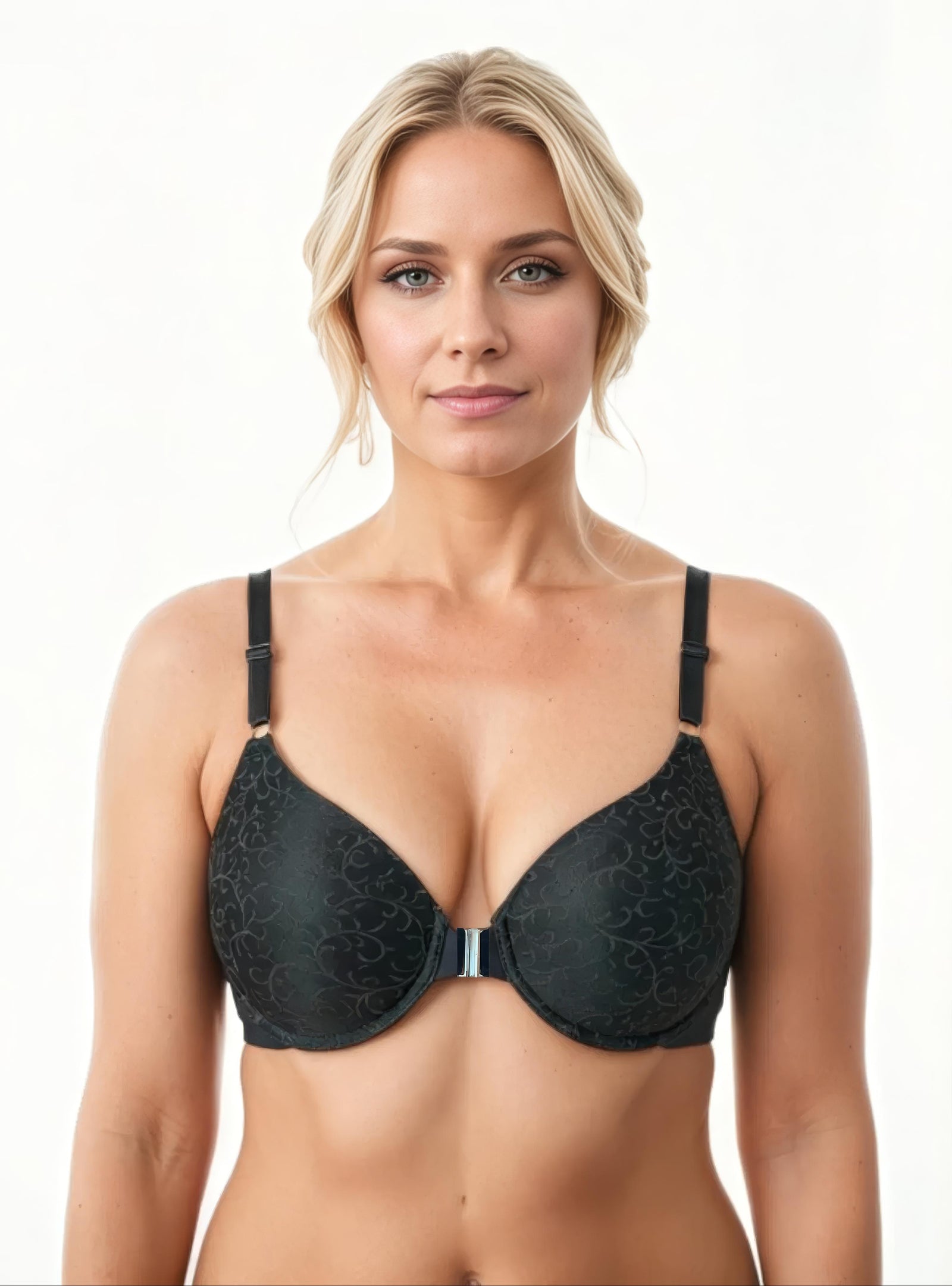
Front-closure bras can also be helpful for some women because they eliminate the bulky back hook area and often pair with more continuous back-smoothing construction. Tank-style bras and bra-and-shaping hybrids are worth considering too, especially if your goal is comfort, coverage, and a smoother line under clothing.
Fabric matters more than many women realize. Soft, flexible materials with some structure tend to feel better over long wear than stiff, scratchy fabrics that fight your shape. Breathability also helps, particularly if irritation gets worse in warm weather or during long days.
If a bra is digging, many women assume they should go up a size. Sometimes that helps. Sometimes it creates a new problem.
Going up in the band may relieve pressure if the current band is truly too tight, but if the band becomes too loose, your straps will start doing extra work and your shoulders may pay the price. Going up in the cup can help if tissue is being compressed or spilling over, but if the cup shape is still wrong, the bra may still dig at the sides or gap in the front.
This is why bra fit is not only about size labels. It is about size, shape, and construction working together. A better-designed bra in your correct size often feels more comfortable than simply sizing up in a bra that was never solving the real issue.
A common fear is that a softer bra will mean less lift, less shaping, or less confidence in clothes. But comfort and a flattering silhouette do not have to compete.
The best bras create smooth support. They hold you comfortably, reduce visible lines, and help tops and dresses skim better over the body. That is especially true when the design addresses the back and sides rather than focusing only on the front of the bra.
Shapeez built its reputation on exactly this kind of solution - bras designed for comfort, engineered to support, and made to smooth where traditional bras often dig, pinch, or leave visible lines. When support is built into the full design, not just the straps or underwire, the difference is easy to feel.
If you are constantly adjusting, tugging, or counting the minutes until you can take your bra off, that is useful information. Your bra is telling you it is not doing its job well enough.
Knowing how to stop bra digging starts with recognizing that daily discomfort is not something you have to accept. The right fit and the right construction can change how your bra feels, how your clothes look, and how confident you are in both. Start with comfort, look for real support, and choose a design that works with your body instead of pressing against it.