Your Cart is Empty





A bra can be the reason a favorite top lies smoothly, your posture feels supported, and you stop thinking about your chest by lunchtime. Or it can gap, dig, flatten, spill over, and leave you adjusting all day. This guide to bra cup shapes helps you identify what your bust needs from a cup - not what a hanger label says you should wear.
Cup shape is not about changing your body. It is about working with it. The right shape can create a rounded profile, offer dependable full coverage, minimize projection, or give you a little more openness at the neckline. The best choice depends on your breast shape, your preferred level of coverage, and the clothes you wear most often.
Two bras in the same band and cup size can fit completely differently. A cup may be technically large enough but still wrinkle at the top, cut into fuller tissue, or push breast tissue outward at the sides. That is usually a shape mismatch, not a body problem.
Cup shape affects where support sits, how your bust is distributed, and whether the bra stays comfortable through a full day. For women who want a smoother look under knits, button-downs, and fitted dresses, the cup also has to work with the bra's side and back construction. A beautifully shaped cup cannot fully solve the problem if the band rolls or the sides create visible lines.
Think of the cup as the front-facing part of your support system. It should hold your breast tissue without compressing it uncomfortably, leave no empty space, and sit close to the chest at the center when the bra includes an underwire.
Full-coverage cups rise higher on the bust and contain more breast tissue at the top and sides. They are often the most reliable option for fuller busts, softer tissue, or anyone tired of spilling out when they lean forward. This shape is also a strong everyday choice under workwear and T-shirts because it offers a secure, centered look.
Full coverage does not have to mean bulky. A well-designed cup can provide coverage while keeping the silhouette rounded and natural. If you notice that your current bras cut across the top of your breasts, a fuller cup may give you the comfort and confidence you have been missing.
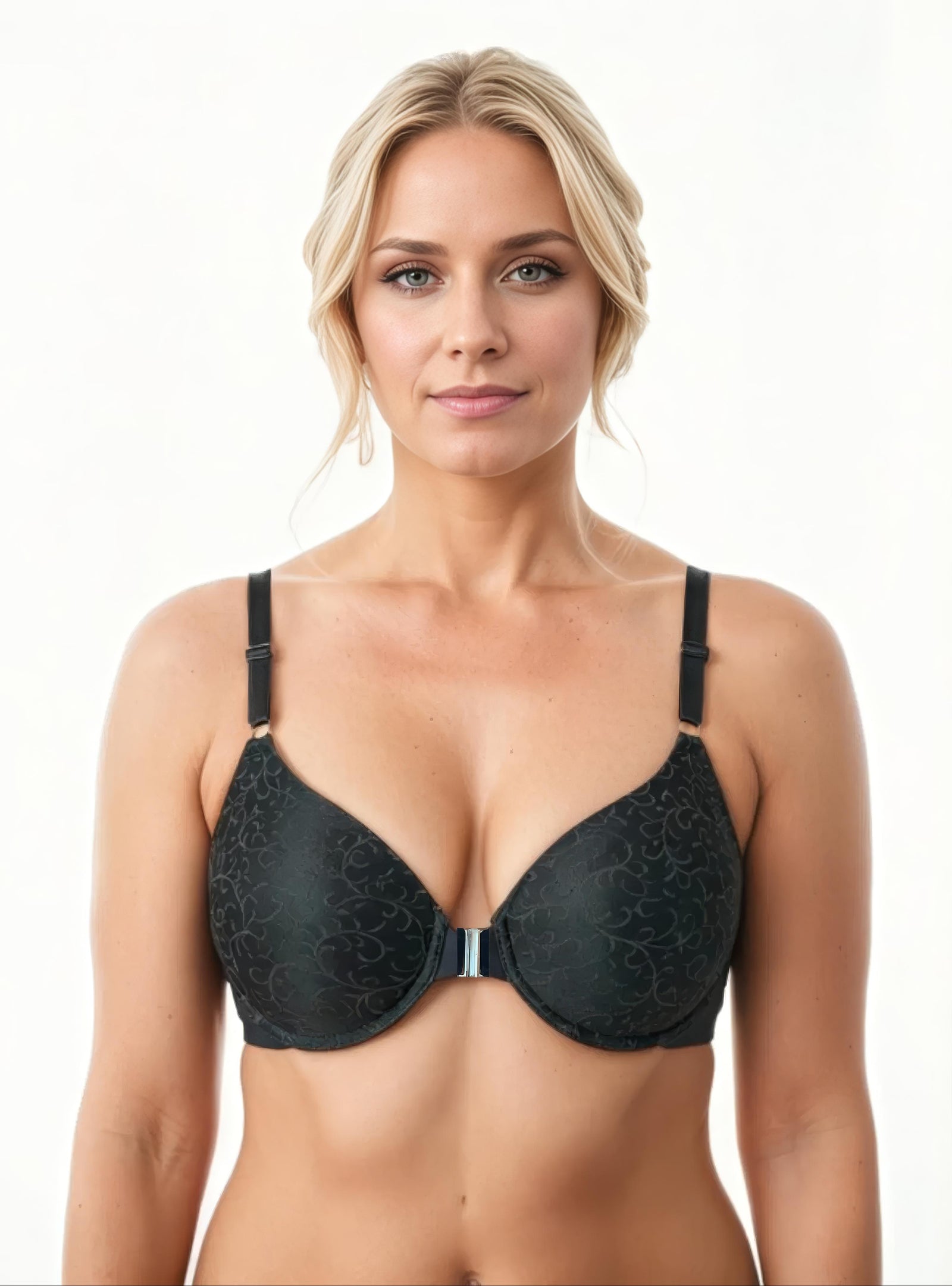
T-shirt bras typically use smooth, lightly padded or molded foam cups. Their main advantage is a clean, even appearance under thin or close-fitting clothing. They can help prevent nipple show-through and create a polished shape without adding dramatic volume.
Molded cups work especially well when your breasts fill the cup evenly. If one side is slightly smaller, you may see a little gaping at the top, which is very common. Look for flexible foam or stretch details rather than assuming you need a smaller cup. For daily smoothing, a molded cup paired with supportive side panels can be a practical wardrobe staple.
Demi and balconette cups have a lower, more horizontal neckline. They reveal more of the upper bust and are often designed to lift from underneath rather than cover from above. This can create a rounded, lifted profile under scoop-neck and square-neck tops.
The trade-off is coverage. If you have fuller-on-top breasts, soft tissue, or simply prefer to feel fully held in place, a demi cup may feel less secure for long days. It can be a lovely choice for a specific neckline, but it is not always the easiest all-purpose bra shape.
Plunge bras angle downward at the center, leaving room for lower-cut necklines. Their cups generally guide breast tissue inward, creating separation that works beneath V-necks and wrap dresses.
A plunge cup can be supportive, but its lower center means it may not be ideal if you need maximum containment or have a very full bust. If the inner edges of the cups cut in or you spill at the center, try a fuller-coverage shape instead. The goal is never to force your body into a neckline-specific bra at the expense of comfort.
Minimizer bras are designed to redistribute breast tissue across the chest rather than push it forward. They can reduce projection under button-front shirts and help clothing fall more smoothly, particularly for women with a fuller bust who feel that standard molded bras make them look more prominent.
A good minimizer should not feel like a squeeze. The difference is thoughtful distribution, not flattening. Look for a smooth cup with adequate depth and side support so the bust is guided comfortably forward and inward instead of pressed down or pushed toward the underarm.
Unlined cups use fabric instead of molded foam and often rely on seams, supportive mesh, or layered materials for shaping. They can feel lighter and more breathable, while providing impressive lift and definition. Because they are less rigid, they frequently adapt well to natural asymmetry and day-to-day changes in your body.
Seams may show under very thin tops, so this shape is not always the first pick for a sleek T-shirt. Still, for women who dislike the bulk of foam or want more natural shaping, an unlined cup can be an excellent fit solution.
Wire-free bras use fabric structure, wide bands, compression, or strategically placed panels to support without an underwire. They are a favorite for women who want flexibility, easier wear, and less pressure at the ribcage. They can also be especially helpful when traditional underwires feel restrictive or poke at the sides.
Support varies widely in wire-free styles. A soft bralette may be best for lounging, while a structured wire-free bra with full cups, a supportive underband, and wider straps can provide meaningful everyday support. For more coverage and smoothing, a tank-style bra can combine the feel of a comfortable layer with the function of a bra.
Start with the signs your current bra is giving you. Overflow at the top or sides usually calls for more cup volume, a taller cup, or fuller coverage. Empty space at the top may mean the cup is too large, but it can also mean the cup is too tall or too rigid for your breast shape. Wrinkling near the bottom often suggests the cup is too shallow.
Also pay attention to where your breast tissue is fullest. Fuller-on-bottom breasts often do well with balconette, demi, and certain molded styles that lift from below. Fuller-on-top breasts may prefer stretchier full-coverage cups that do not cut in. If your fullness sits more toward the sides, cups with side support can guide tissue forward for a more centered silhouette.
Your band matters here, too. The band provides much of the bra's support, while straps fine-tune the lift. If straps are doing all the work, the cups may pull downward, wrinkle, or shift as you move. A secure band with a supportive cup shape creates the kind of comfort that lasts past the first try-on.
The most useful bra wardrobe is built around real life. A smooth molded or full-coverage cup is often dependable under fitted tops. A minimizer can make button-down shirts feel easier to wear. A plunge or demi cup may earn its place for lower necklines, while a wire-free, full-coverage style can be the bra you reach for on travel days, busy errands, or quiet evenings at home.
If visible back lines and side bulge are part of your fit frustration, look beyond the cup alone. A bra with extended side coverage and a smoothing back can change how clothing fits from every angle. Shapeez built its patented back-smoothing bra approach around this reality: support at the bust feels even better when the band and back are designed to smooth, not pinch.
There is no single "best" cup shape, and your best choice may change by outfit, season, or stage of life. A bra that gives you confidence in a white T-shirt may not be the one you want under a V-neck dress. Keep the standard simple: your cup should feel secure, look smooth, and let you move without constant readjusting.
When a bra supports your shape instead of asking you to fight it, getting dressed becomes easier. That is a small daily comfort with a very real impact.