Your Cart is Empty




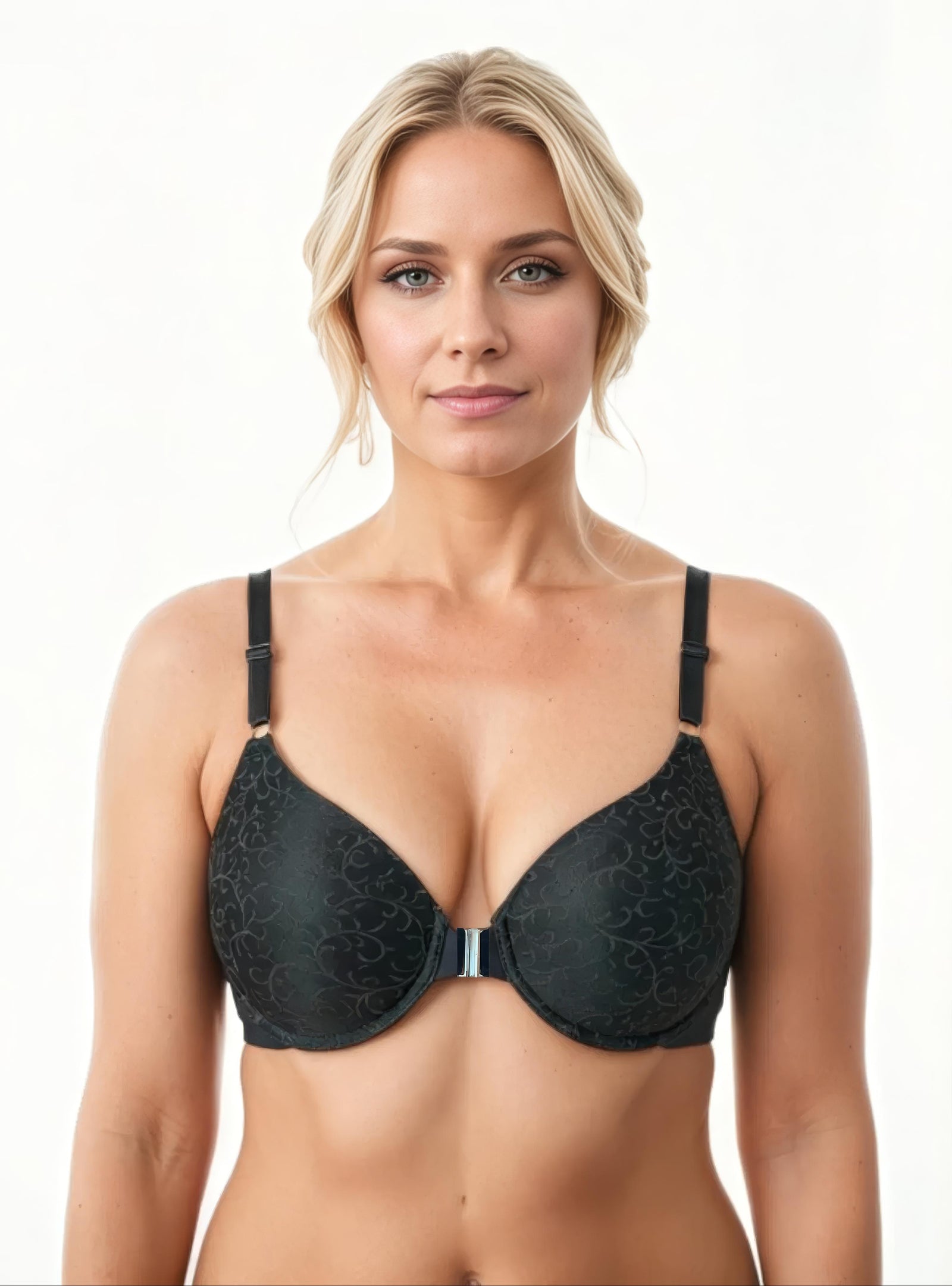
If you put on a minimizer bra and immediately feel flattened, pinched, or pushed into places you do not want to go, that is not the right fit. When women ask how should a minimizer bra fit, the answer is simple: it should make the bust look smoother and a little less projected without sacrificing support, comfort, or your natural shape.
A good minimizer bra is not supposed to feel restrictive. It is supposed to redistribute breast tissue more evenly across the chest, create a balanced silhouette under clothing, and help tops, button-downs, and dresses sit better. You should feel secure, not squeezed.
The best fit starts with the band. The band should sit level all the way around your body and stay in place when you move. If it rides up in the back, the bra is probably too loose. If it digs in so hard that it creates deep marks or makes breathing feel limited, it is too tight.
The cups should fully contain your breast tissue without cutting across the top or sides. A minimizer bra is designed to reduce forward projection, but it should not cause spillover, side bulge, or a compressed look that feels unnatural. Full coverage is often part of the design, so a higher cup or wider side panel can be a good sign if it creates a smoother line under clothes.
The center front, if the style has one, should lie as close to the body as the design allows. Straps should feel supportive but not do all the work. If your shoulders are carrying the weight, the fit is off. The bra should support from the band and cup construction first, with straps providing lift and stability.
A minimizer bra should make clothing fit better. That is the real test. If your favorite blouse stops pulling at the buttons, if knits skim more smoothly, and if your profile looks a bit more balanced, the bra is doing its job.
What it should not do is make your bust look squashed, low, or wider in an unflattering way. Some women try a minimizer and think, this makes me look broader. That can happen when the cup shape is wrong for your body, even if the size seems close. Minimizing is about redistribution, not compression for its own sake.
This is where personal preference matters. Some women want a subtle reduction for everyday wear. Others want stronger smoothing under tailored shirts. The right minimizer fit depends on both your breast shape and what you want your clothes to do over it.
You can usually tell within a few minutes whether the fit is working. A well-fitting minimizer bra should feel secure around the rib cage, smooth at the sides, and supportive through the cups. It should not shift every time you raise your arms or slide down as the day goes on.
You should also be able to look at yourself from the front and side and see a natural line. Your bust may appear slightly more contained, but not flattened into a shelf or spread too far outward. Under a fitted top, the silhouette should look neat and intentional.
Comfort is part of fit, not an extra bonus. If the fabric scratches, the straps dig, or the underband rolls, it does not matter how good it looks for five minutes. You need a minimizer bra that works through a full day of sitting, walking, reaching, and living.
One of the most common problems is choosing a cup that is too small because the goal is to look smaller. That usually backfires. A too-small cup creates overflow at the neckline and under the arms, making the bust look less smooth, not more.
Another issue is relying on a too-loose band. Women sometimes size up in the band to feel more comfortable, but that can reduce support and make the front of the bra work harder than it should. The result is shifting, strap strain, and a shape that does not stay consistent.
Cup shape can be just as important as size. If your breasts are fuller on top, fuller on bottom, close-set, or fuller at the sides, one minimizer style may work beautifully while another does not. This is why two bras in the same size can fit very differently.
Some minimizer bras also create visible lines under clothes if the cup edge is too firm or the side panels cut in. For many women, smoothing beyond the bust matters just as much as bust reduction. A bra that minimizes in front but leaves back or side bulges can still make clothing feel less flattering overall.
This is where the bra proves itself. Put it on under the kinds of tops that usually give you trouble. A button-down shirt, a knit tee, or a fitted dress will tell you more than a mirror in just a bra.
The fabric of your clothing should fall more smoothly over your chest. Buttons should lie flatter. The line from underarm to waist should look cleaner. If the bra creates new lumps at the cup edge, side seam, or back, it may technically fit in size but still fail in function.
For many women, a minimizer that also smooths the back and sides is the real game changer. That is especially true if you are trying to avoid visible bra lines, side spillover, or that uneven look under clingy fabrics. Shape matters all the way around, not just from the front.
A minimizer bra should feel firmer than a lounge bra, but firm does not mean punishing. You should notice support around the band and containment in the cups, yet still be able to breathe comfortably and move normally.
A good rule is this: snug feels stable, too tight feels distracting. If you spend the day tugging, adjusting, or counting the minutes until you can take it off, the fit is wrong. The best support should feel secure enough to forget about.
This matters even more for fuller-bust women, who are often told to accept discomfort as the price of support. That is outdated advice. A well-designed minimizer bra can offer shaping, smoothing, and support without constant digging or pressure.
Not every minimizer bra is built the same. Wider straps can help distribute weight more comfortably, especially in larger sizes. Fuller coverage cups can improve containment and reduce spillover. Side and back smoothing panels can make a major difference in how tops look and feel.
Front-closure styles can also work well for some women, particularly if they want easier wear and a cleaner back. Wire-free options may feel more comfortable for everyday use, but the support level depends on the internal structure and fabric strength. Underwire styles can offer excellent lift, though only if the wire actually follows your breast root and does not sit on tissue.
In other words, the right fit is not only about size. It is also about construction. A smart design can solve issues that sizing alone cannot.
Start by fastening the bra on the loosest setting if it is new. The band should feel secure there, giving you room to tighten it later as the bra stretches with wear. Scoop breast tissue fully into the cups from the sides and underneath, then adjust the straps.
Stand naturally and check the mirror from the front, side, and back. The band should be level. The cups should be smooth. The straps should stay put without digging. Then put a shirt on and see how the bra performs where it actually matters.
Raise your arms. Sit down. Reach forward. If the band shifts, the cups wrinkle, or tissue escapes at the sides, keep adjusting or try another size or style. A minimizer bra should work with your body in motion, not only while standing still.
The right minimizer bra does more than make the bust look a little smaller. It helps clothes skim instead of cling in the wrong places. It can reduce self-consciousness around gaping buttons, visible lines, or side bulge. It can also make getting dressed feel easier, which is no small thing.
Most women are not looking to erase their shape. They want support, smoothing, and a silhouette that feels balanced and flattering. That is exactly what a good minimizer fit should deliver.
If you have been settling for bras that dig, flatten, or leave you adjusting all day, do not assume that is just how minimizer bras work. The right one should feel like support with a purpose - comfortable, confidence-building, and ready to help your clothes fit the way you hoped they would.