Your Cart is Empty





You tug your bra band down in the morning, then again before lunch, then one more time when you catch it creeping up in the mirror. If you are wondering how to prevent bra band riding, the good news is that this is usually a fixable fit issue, not something you just have to live with.
A bra band that rides up is not only annoying. It can throw off support, make straps dig in, and create a shape under clothing that never feels quite right. For many women, especially those who want smoothing and all-day comfort, the band is the foundation of the bra. When that foundation shifts, everything else does too.
Most of the time, a riding band points to a band that is too loose. The band should sit level around your body, straight across the back, and stay in place as you move. If it climbs upward, it is often because it does not have enough firmness to anchor the bra.
But that is not the only reason. The wrong cup size can also affect band position. If cups are too small, the breasts can push the bra away from the body, which changes how the band sits. Straps that are too tight can pull the back upward as well. And sometimes the issue is less about size and more about design. A narrow band, slippery fabric, or a style with less coverage may not give enough stability for your shape.
Bodies also change. Weight fluctuations, hormonal changes, postural habits, and softer skin across the back and sides can all affect how a bra fits. That is why a bra that worked a year ago may suddenly start shifting now.
The first place to look is the band itself. A supportive bra band should feel snug, not restrictive. You should be able to slide a couple of fingers underneath it, but it should not feel easy to pull far away from your body. If the band spins, shifts, or rides up within a few minutes of wear, it is likely too loose.
A simple test is to check the band in the mirror from the side and back. If the front sits lower and the back angles upward, the fit is off. The band should form a straight line around your torso. That level fit is what helps distribute support evenly instead of forcing your shoulders to do the work.
Cup fit matters just as much. If your breasts spill over the top or sides, or if the center of the bra does not sit properly against your chest, the cups may be too small. A too-small cup often makes women size up in the band for relief, which creates the exact riding problem they are trying to avoid. In many cases, going down in the band and up in the cup creates a more secure, comfortable fit.
Straps should support the cups, but they should not carry the bra. If you tighten them to compensate for a loose band, the back will often lift. Loosen the straps slightly and check whether the band settles into a more level position.
Not every bra is built to stay put in the same way. If you have dealt with constant band movement, the answer may be choosing a different construction rather than endlessly adjusting your size.
Wider bands tend to be more stable than narrow ones because they spread pressure over a larger area and have more contact with the body. Full-coverage styles can also help because they create a more secure fit overall. For women who want extra smoothing through the back and sides, a bra with more substantial band coverage often feels better and looks better under clothing.
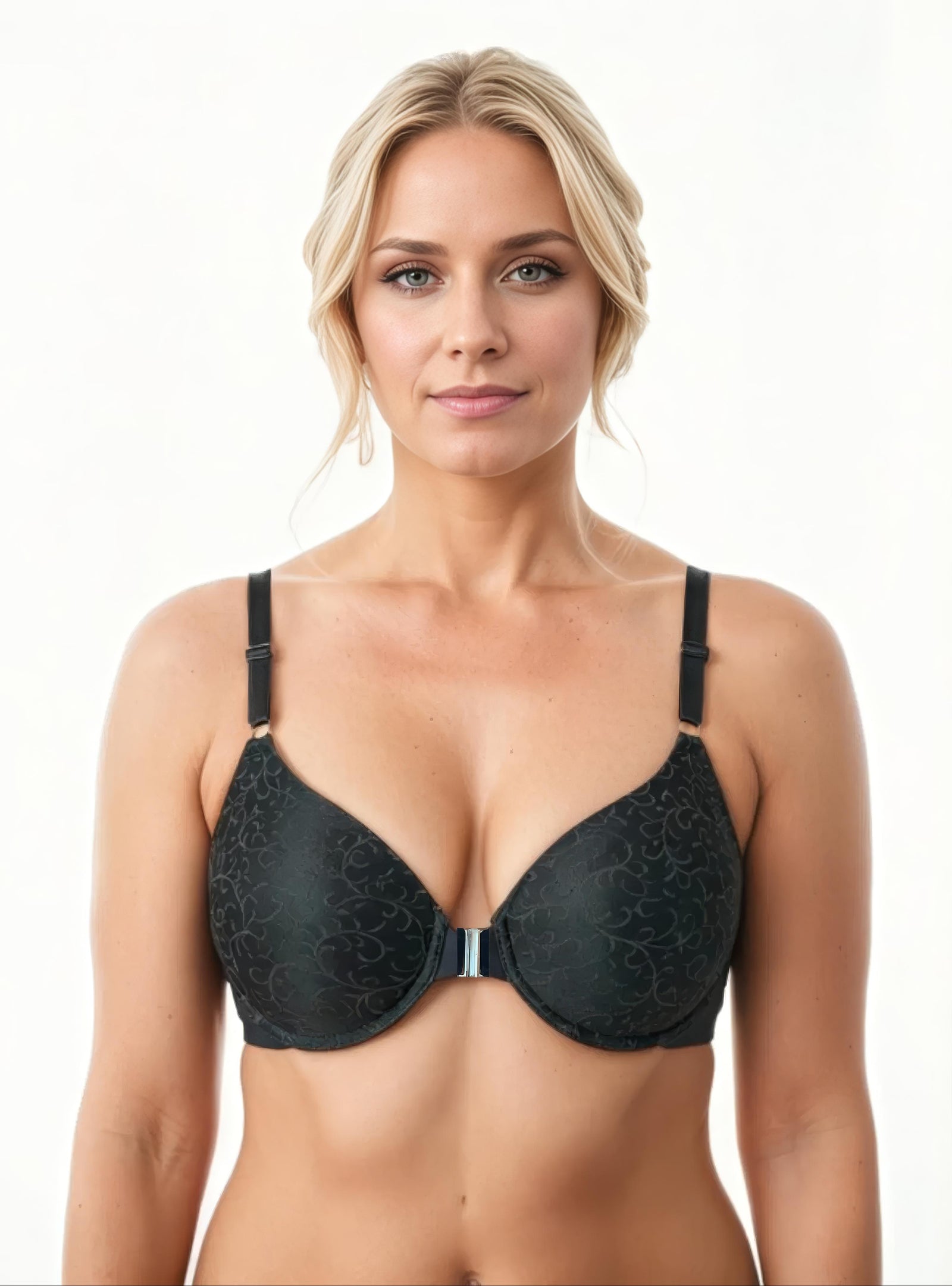
Fabric matters too. Stretch is important for comfort, but too much stretch in the band can lead to movement, especially over the course of a long day. A band with supportive recovery is more likely to hold its shape. Front-closure styles can work beautifully for some women, but they need strong overall construction to keep the back smooth and secure.
This is one reason many women move away from traditional, narrow-back bras when they are trying to solve fit frustrations. A design created for smoothing and support can offer more hold through the back, less shifting, and a more flattering line under tops and dresses.
Women with fuller busts often notice band riding sooner because the band is doing more work. Support should come primarily from the band, with the cups shaped to contain and lift comfortably. If the band is not firm enough, the extra weight in front can pull the bra out of balance.
In this case, size precision becomes even more important. A looser band may feel more comfortable at first, but it usually leads to more movement, more strap pressure, and less support by midday. A better-fitting band may feel more secure from the start and actually reduce discomfort over time.
A wider back design, fuller side coverage, and a silhouette that smooths rather than cuts in can all help. That is especially true if you are also dealing with back bulge, side spillage, or loose skin. The goal is not just to hold the bra down. It is to create a stable, comfortable fit all the way around the body.
One of the biggest mistakes is focusing only on the straps. If your band rides up, tightening the straps usually makes things worse. It may make the cups feel lifted for a moment, but it pulls the back upward and increases shoulder strain.
Another common issue is wearing an old bra past its supportive life. Bands stretch out over time, even in well-made bras. If you are hooking your bra on the tightest setting and it still rides up, the elastic may be worn out. At that point, replacing the bra is often the better solution.
Wearing the wrong style for your outfit or activity can also matter. A lightweight bra may not offer enough stability for long days, fuller busts, or clingy fabrics that reveal every line. Sometimes the right fix is choosing a bra with more structure, more smoothing, or a longer silhouette.
When the fit is right, you stop thinking about it so much. The band stays level. The straps do not dig. The cups sit smoothly. Your clothes skim more cleanly over your back and sides, and you are not reaching behind you all day to tug things back into place.
Comfort is part of the test, but so is appearance. A good bra should support your shape without creating new problems under clothing. That is why many women look for styles that combine bra support with smoothing benefits instead of treating those as two separate needs.
Shapeez built its reputation on that exact frustration. When a bra is engineered to smooth the back and sides while offering full-coverage support, it can solve more than one problem at once.
If you have been buying the same size for years, it may be time to reassess. Start with your current bra and evaluate what is actually happening. Is the band loose from the first wear, or only after months of use? Do the straps feel overly tight? Are the cups containing you comfortably, or are they being pushed out of position?
Try bras on the loosest hook first, since that gives you room to tighten the band as it naturally stretches with wear. Move around in it. Sit down, raise your arms, and twist at the waist. A bra that only fits when you stand perfectly still is not the right bra.
Pay attention to the back view as much as the front. Many women are taught to focus on cup shape and cleavage, but for everyday comfort and support, the back construction is just as important. If the bra smooths, stays level, and feels secure without digging, you are much closer to the fit you want.
There is also an it depends factor here. Some women prefer a firmer, more structured feel. Others want softer support with gentle shaping. Neither is wrong, but both still require a band that stays in place. The best bra for you is the one that balances support, smoothing, and comfort for your body and your wardrobe.
A riding bra band is not a minor annoyance you should keep adjusting around. It is a sign that something in the fit or design needs to work harder for you. Once you find a bra that stays level, supports comfortably, and smooths where you want it to, getting dressed feels easier and a lot more confident.