Your Cart is Empty




A bra can be the right size on paper and still feel wrong the second you put on a fitted top. That usually comes down to coverage. If you’ve been wondering how to measure bra coverage, the goal is simple: figure out whether the cups, sides, center, and neckline give you the amount of support and containment your body actually needs.
Coverage is not just about how much fabric a bra has. It is about where that fabric sits on your body, what it holds in, and how well it stays in place as you move through the day. A bra with too little coverage can lead to spilling, side bulge, and constant adjusting. A bra with too much can feel stiff, high, or bulky under clothes. The best coverage feels secure, smooth, and almost unremarkable because everything stays where it should.
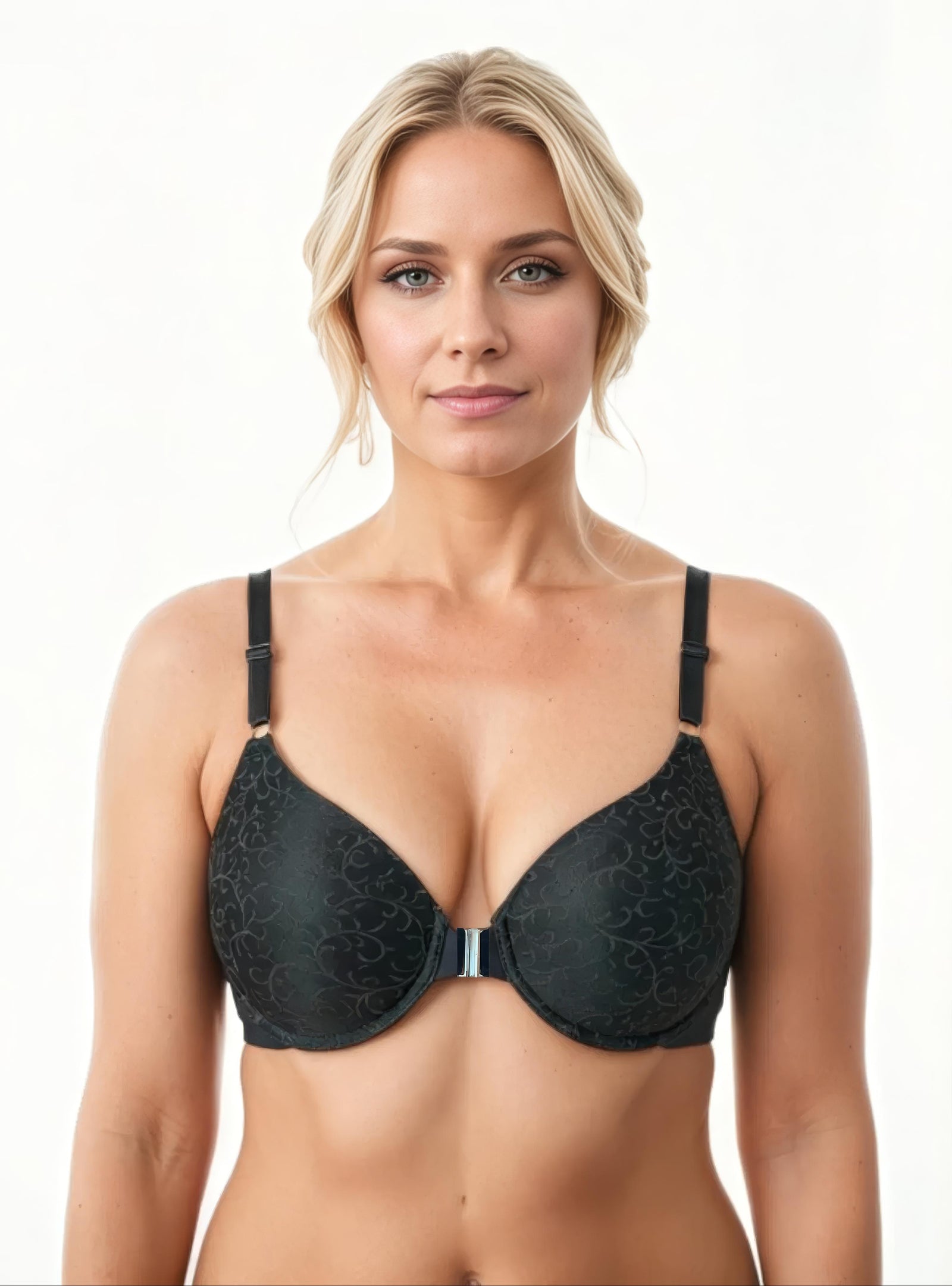
When most women hear full coverage, demi, or medium coverage, they think of cup height alone. That is only one part of the story. Coverage includes the top of the cup, the outer side of the cup near the underarm, the center front between the breasts, and even the back and side construction that affects how smooth your silhouette looks.
This is why two bras in the same size can fit very differently. One may cut across the top of the bust while another fully contains breast tissue. One may leave tissue escaping near the armhole while another creates a clean line under clothing. Coverage is about containment, support, and shaping working together.
You do not need special tools for this. A soft measuring tape helps, but a mirror and a well-fitting top are just as useful. Start by putting on your bra correctly. Lean forward, place your breast tissue fully into the cups, and gently sweep tissue from the sides into the cup area. Then stand up straight and check the fit.
Look at where the top edge of the cup sits on your breast. If it cuts into tissue, you do not have enough top coverage, even if the band and cup size seem technically close. If there is gaping or wrinkling at the top, the coverage may be too high for your shape or the cup may not be the right cut.
To measure this more clearly, use your tape to note the distance from your nipple to the top edge of the cup. Then compare that number from one bra to another. A larger distance usually means more vertical coverage, but the shape of the cup matters too. Stretch lace, molded foam, and seamed fabric all behave differently.
This is one of the most overlooked parts of bra fit. Side coverage helps control side spillage, reduce underarm bulge, and create a smoother line under sleeves and knits. Check where the outer edge of the cup and side panel sit in relation to your breast tissue.
Use your fingers to feel whether breast tissue extends beyond the side of the cup. If it does, you likely need more side coverage or a better side-support design. A bra that fits in the front but loses containment at the sides will not feel secure for long.
The center front, sometimes called the gore, plays a big role in coverage and support. If the center is too low for your shape, you may feel less contained. If it is too high, it may dig or show under certain necklines. You want a center that sits comfortably and helps keep the cups positioned correctly.
Measure from the bottom of the center front up to the highest point between the cups. This gives you a simple way to compare low, medium, and higher center coverage styles. For fuller busts, a little more center coverage often adds security. For close-set breasts, too much center height can be uncomfortable. This is where fit becomes personal.
Bra coverage is not only in the cups. The wings and back matter just as much, especially if your goal is a smooth look under clothing. A narrow back may leave digging lines or visible bulges, while a wider back and side design can create a more even silhouette.
Look in the mirror from the side and back. If the band is level but tissue is pushed up or over the edges, you may need more smoothing coverage through the wings or back. This is especially helpful for women who are frustrated by visible bra lines, side bulge, or loose skin after weight changes.
The body gives clear feedback when coverage is off. Too little coverage usually shows up as spilling at the neckline, side overflow, straps that work too hard, or a feeling that you need to tuck yourself back in throughout the day. You may also notice that tops pull strangely across the bust.
Too much coverage can feel just as frustrating. The cups may rise too high on the chest, the neckline may show under more of your wardrobe, or the bra may feel heavy and stiff. Some women also notice empty space in the upper cup when the style is simply too closed off for their shape.
Neither issue automatically means the bra is bad. It may just be the wrong coverage level for your proportions, breast shape, or the clothes you wear most often.
This is where bra shopping gets more realistic. Measuring tape numbers help, but breast shape changes how coverage fits. Full-on-top breasts often need more open upper cup edges or more flexible fabrics to avoid cutting in. Full-on-bottom shapes may do better with cups that do not rise too high. Wide-set breasts may need more outer coverage, while close-set breasts may prefer a lower or narrower center.
That is why learning how to measure bra coverage is not about chasing one perfect number. It is about understanding your own fit points so you can recognize what works faster.
Full coverage bras are often the best choice if you want maximum containment, less bounce, and a smoother look under clothing. They are especially helpful for fuller busts, mature shoppers, and anyone tired of adjusting their bra throughout the day. The trade-off is that some full coverage styles may show under lower necklines.
Medium coverage bras balance support and versatility. They work well for everyday wear if you want enough containment without feeling too covered up. For many women, this is the easiest category to live in.
Lower coverage or demi styles can work beautifully under open necklines, but they are not always the best answer if your main concern is smoothing, side support, or all-day security. A lower cup can fit well for one outfit and feel less practical for a full day of movement.
One of the best tests is not in front of the lingerie mirror. It is in front of your closet. Put on a T-shirt, a blouse, and one more fitted top you wear often. Then check the result.
Does the bra disappear under fabric, or do you see cutting, lines, or fullness in the wrong places? Does your bust look supported and centered, or compressed and flattened? Does the back look smooth, or do the edges create indentations? Coverage should support your shape and improve how clothing fits, not create new problems.
For many women, this is where smarter construction makes the difference. A bra with fuller back and side coverage can often do more for your silhouette than simply sizing up in the cups. Shapeez built its reputation on exactly that kind of problem-solving fit.
If you are trying to decide between styles, compare three things: top cup height, side coverage, and back width. Take quick measurements while each bra is lying flat, then confirm the fit on your body. Numbers alone will not tell the whole story, but they will help you spot patterns.
You may find that every bra you love has a similar side height. Or that every bra you stop wearing has a center that sits too high. Once you know those details, shopping becomes less trial and error and more about choosing designs that already match your needs.
Sometimes what looks like a coverage issue starts with size. If the band is too loose, the cups can shift and coverage will fail. If the cups are too small, you may think you need a different neckline when you actually need more cup volume. If the straps are overtightened to compensate, the whole bra can ride up and distort the fit.
So yes, measure your band and cup size. But then go one step further. Check whether the bra actually covers and smooths the areas that matter to you most.
The right coverage should make getting dressed easier. You should feel held in, smoothed out, and comfortable enough to forget about your bra for a while. That is usually the clearest sign you found the right one.