Your Cart is Empty




If you’ve ever caught your bra band creeping toward your shoulder blades by lunchtime and thought, why does my bra ride up, you’re not imagining it - and you’re not doing anything wrong. A bra that rides up is one of the clearest signs that something in the fit is off. The good news is that this problem is usually fixable, and once you know what to look for, it gets much easier to find a bra that stays put, supports properly, and feels better all day.
Most of the time, a bra rides up because the band is too loose. The band is the part of the bra that does most of the work. It should sit straight and level around your body, anchoring the bra in place. When it’s not snug enough, it can’t hold steady, so it slides upward in the back while the front drops or the straps start overcompensating.
That upward pull creates a chain reaction. The straps may start digging in, the cups may shift, and your clothes may not sit as smoothly as you want. Many women assume the straps are the problem because that’s where discomfort shows up first. In reality, the band is usually the starting point.
A properly fitted bra band should feel secure on the loosest hook when it’s new. That gives you room to tighten it over time as the fabric naturally stretches with wear. If your bra already feels loose on the loosest setting, it may never give you the support and stability you need.
A loose band is the top cause, but it’s not the only one. Bra fit is connected, and one mismatch can affect everything else.
This is the most common answer to why does my bra ride up. If the band is too large, it simply can’t anchor against your ribcage. Instead of staying horizontal, it shifts upward and makes the whole bra feel less supportive.
This is especially common if you’ve been wearing the same size for years, if your body has changed, or if you’ve been choosing bras based mainly on cup size while overlooking the band. Many women are surprised to learn they need a smaller band and a different cup letter to keep the same cup volume.
Tight straps can pull the back of the bra upward. This is easy to miss because tightening straps feels like a quick way to get more lift. But straps are there to help shape and stabilize, not to carry the full weight of the bust.
If you loosen the straps slightly and the band settles into a straighter line, that’s a clue the straps were doing too much. The bra should still feel supportive without the straps being overly snug.
If the cups are too small, breast tissue may push the bra away from the body, changing how the band sits. If the cups are too large, the bra may not hold the bust securely, which can also affect balance and position. Either way, the bra may shift more than it should.
Cup fit matters more than many people realize. A band that rides up can sometimes be a band problem, but sometimes it starts with cups that aren’t matching your shape or volume correctly.
Some bra constructions are more stable than others. A very narrow band, minimal side support, or a style with less coverage may not stay in place as well for every body. If you have a fuller bust, softer skin, or want more smoothing through the back and sides, design matters.
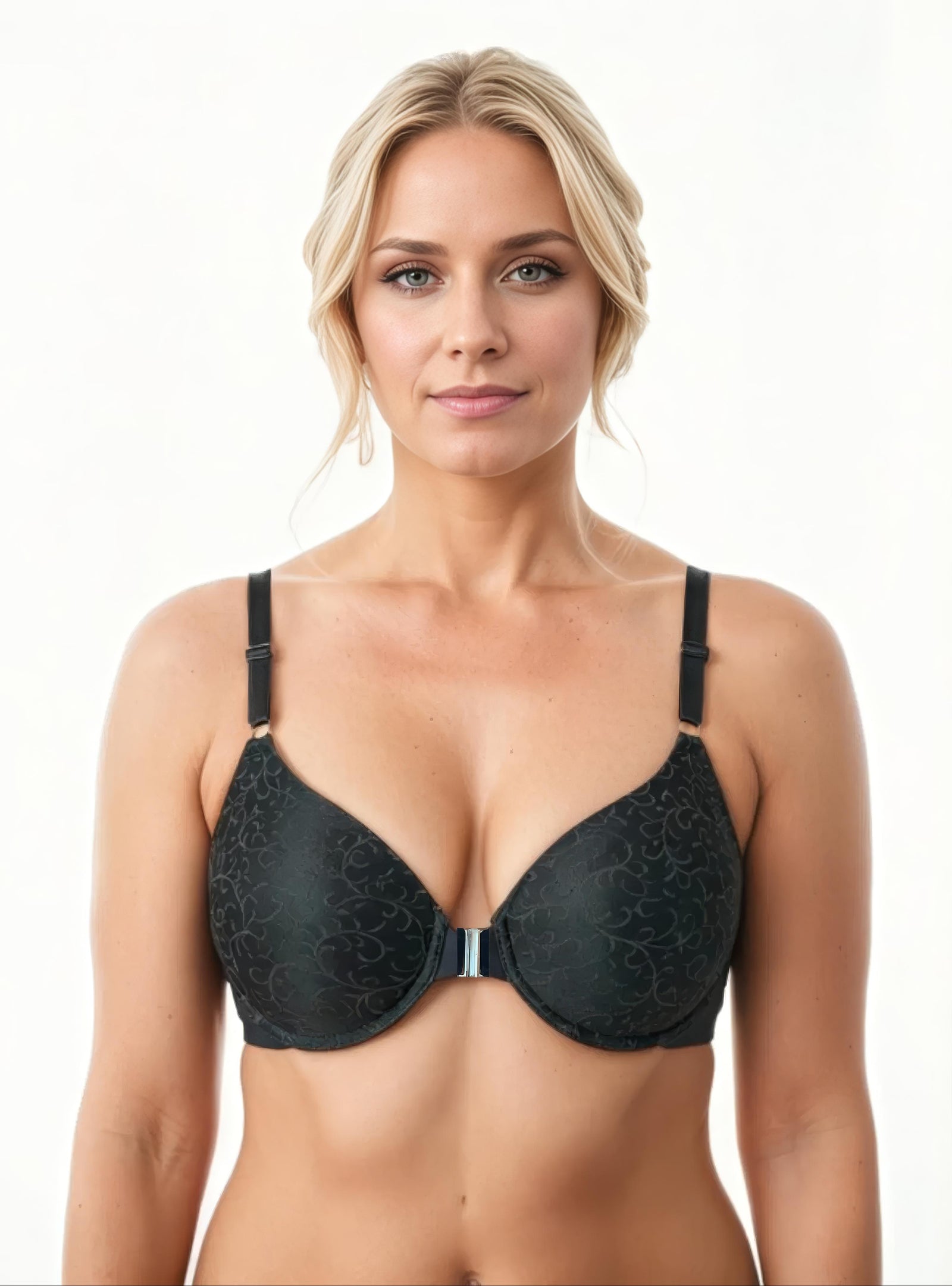
This is where a comfort-first, full-coverage bra can make a noticeable difference. A wider band and more smoothing structure can help distribute support better and reduce the shifting that often leads to ride-up.
Even a bra that once fit beautifully can start riding up when the elastic loses strength. If the band feels stretched, the fabric feels tired, or you’re using the tightest hook and still not getting support, the bra may simply be past its prime.
That doesn’t mean you did anything wrong. Bras are hardworking garments, and daily wear takes a toll. Rotation and proper care help, but eventually support materials break down.
A good bra band should sit level all the way around your torso. If you look in the mirror from the side, the front and back should be roughly in line. If the back is noticeably higher than the front, the bra is likely too loose or being pulled out of position.
You should be able to slide two fingers under the band comfortably, but not much more. It should feel snug, not restrictive. Secure is the goal. A band that feels firm at first often becomes your most comfortable bra because it’s doing its job instead of shifting and forcing the straps to dig in.
It also helps to move around. Raise your arms, sit down, bend slightly, and walk a bit. A well-fitted bra should stay close to the body through normal movement. If the band starts climbing quickly, that’s useful information.
Start with the simplest adjustment before assuming you need a whole new bra. Loosen your straps slightly and check the band position again. If the back drops into a straighter line, that may solve part of the issue.
If the band still rides up, try a smaller band size. In many cases, that one change makes the biggest difference. Keep in mind that changing the band usually means adjusting the cup size too. For example, if you go down in the band, you may need to go up in the cup letter to keep a similar cup volume.
Also pay attention to the shape of the bra, not just the size on the tag. Some women need more side coverage, more back smoothing, or a longer line under the bust to get the secure fit they’ve been missing. If a traditional bra has always shifted, pinched, or left visible lines under clothing, the issue may be the construction as much as the size.
When a bra rides up, it doesn’t just affect comfort. It can also change how your clothes look and feel. A shifting band can create uneven lines across the back, push tissue in the wrong places, and make tops or dresses sit less smoothly.
That’s why many women find better results with bras designed to do more than lift. A bra that offers back smoothing, side coverage, and a stable band can create a more flattering silhouette while also improving comfort. Support and smoothing are not separate benefits. In a well-designed bra, they work together.
For women with fuller busts, mature skin, or concerns about back bulge, this can be especially important. A narrow, flimsy band may technically close, but it may not deliver the comfort or confidence you’re looking for. A wider, thoughtfully engineered design often feels better because it distributes pressure more evenly and stays where it belongs.
Sometimes you can wear the technically correct size and still feel like something is off. That’s because bra fit is also about body shape, tissue distribution, posture, and personal comfort preferences. Two women can wear the same size and need completely different styles.
If you’ve lost weight, gained weight, experienced hormonal changes, or noticed looser skin through the back or sides, you may need a different kind of support than you did a few years ago. That’s normal. Fit needs change.
This is one reason many women move away from conventional bras with narrow bands and multiple back hooks and look for more smoothing, more coverage, and easier wear. Shapeez was built around that frustration - creating bras that support the bust while smoothing the back and sides, so the bra works with your body instead of fighting it.
Look for a band that feels firm on the loosest setting, straps that don’t need to be over-tightened, and cups that fully contain your breast tissue without gaping or spilling. Pay attention to the back of the bra, not just the front view in the dressing room mirror.
It also helps to think beyond size alone. Consider whether you want fuller coverage, wire-free comfort, front closure convenience, wider sides, or a longline shape for added smoothing. Those details can make the difference between a bra that gets tolerated and one that gets reached for every morning.
If your current bra rides up, slips around, or leaves you adjusting all day, don’t assume that’s just how bras are. A better fit can feel more comfortable, look smoother under clothes, and give you the kind of support that lets you forget about your bra for a while - which is exactly how a good one should feel.