Your Cart is Empty




You tighten your bra straps in the morning, get dressed, and within an hour one has slid down your shoulder again. If you’ve been wondering why do bra straps slip, the answer usually has less to do with your shoulders and more to do with overall bra fit. Slipping straps are often a clue that something in the band, cup, strap placement, or bra design is working against your shape instead of supporting it.
That’s actually good news. A slipping strap is frustrating, but it’s also fixable. Once you know what’s causing it, you can stop tugging at your bra all day and start wearing styles that feel secure, smooth, and supportive.
This is one of the most common fit complaints because tightening the straps seems like the obvious solution. But if the bra itself isn’t fitting correctly, tighter straps can make the problem worse. You may end up with straps that still slide while also digging into your shoulders.
In a well-fitting bra, the band does most of the support work. The straps help stabilize the cups and refine the fit, but they are not supposed to carry the full weight of the bust. When straps keep slipping, it often means the bra is shifting on your body or the straps are set too wide for your frame.
That’s why the real fix usually starts somewhere other than the adjusters.
A loose band is one of the biggest reasons straps won’t stay put. When the band rides up in the back, the whole bra loses its anchor. That movement changes the angle of the straps and makes them more likely to slide off your shoulders.
Many women respond by shortening the straps, but that only pulls the cups upward without solving the lack of support around the ribcage. If your band is doing its job, it should sit level around your body and feel snug without feeling restrictive.
Cup fit affects strap behavior more than most people realize. If the cups are too small, breast tissue can push the bra forward and outward, changing where the straps sit. If the cups are too large, the bra may not hold the bust securely enough to stay in place.
Either way, the bra can shift as you move. That shifting shows up at the shoulders first.
Some bras are designed with wide-set straps, and that can be a problem for women with narrower or more sloped shoulders. Even if the band and cups fit fairly well, strap placement can still make a bra feel unstable.
This is where design matters. A bra that looks fine on the hanger may not match your frame once it’s on. If you constantly have trouble with slipping straps across multiple sizes, the issue may be the style rather than your body.
Over time, elastic loses recovery. If you’ve had the bra for a while, the straps may no longer hold tension the way they once did. You can tighten them, but they may relax again quickly or feel uneven from side to side.
This is especially common in bras that get heavy wear or are washed in ways that break down elastic faster.
Bodies vary, and bra design doesn’t always account for that as well as it should. Women with petite frames, narrow shoulders, or more rounded shoulders often deal with strap slippage even when their size is close.
That does not mean you are hard to fit. It means you may need bras with a different strap shape, closer-set straps, fuller coverage, or a construction that creates more stability across the upper body.
A bra rarely fails in just one place. If your straps keep slipping, it’s worth checking the rest of the fit instead of focusing only on the shoulder area.
Look at the back of the bra in a mirror. If the band is climbing upward, that’s a sign it’s too loose. Notice the cups as well. Are they gaping, wrinkling, or cutting in? Do you feel like you are constantly readjusting throughout the day? Those are all signs the bra may not be balanced correctly.
Another clue is shoulder discomfort. Straps that slip and dig can happen at the same time when the bra is asking the straps to do more than they should. Support should come from the full design, not from two overworked strips of elastic.
The fix depends on the cause, but a few changes make a real difference.
Start with the band. If it rides up, try a firmer band size and reassess the cups at the same time. Bra sizing is a system, so changing one part often affects another. A more secure band can stabilize the entire bra and keep the straps from drifting outward.
Next, adjust the straps so they sit comfortably against the body without digging. A good rule is that you should be able to slide a finger underneath. Too loose and they fall. Too tight and they pull the bra out of balance.
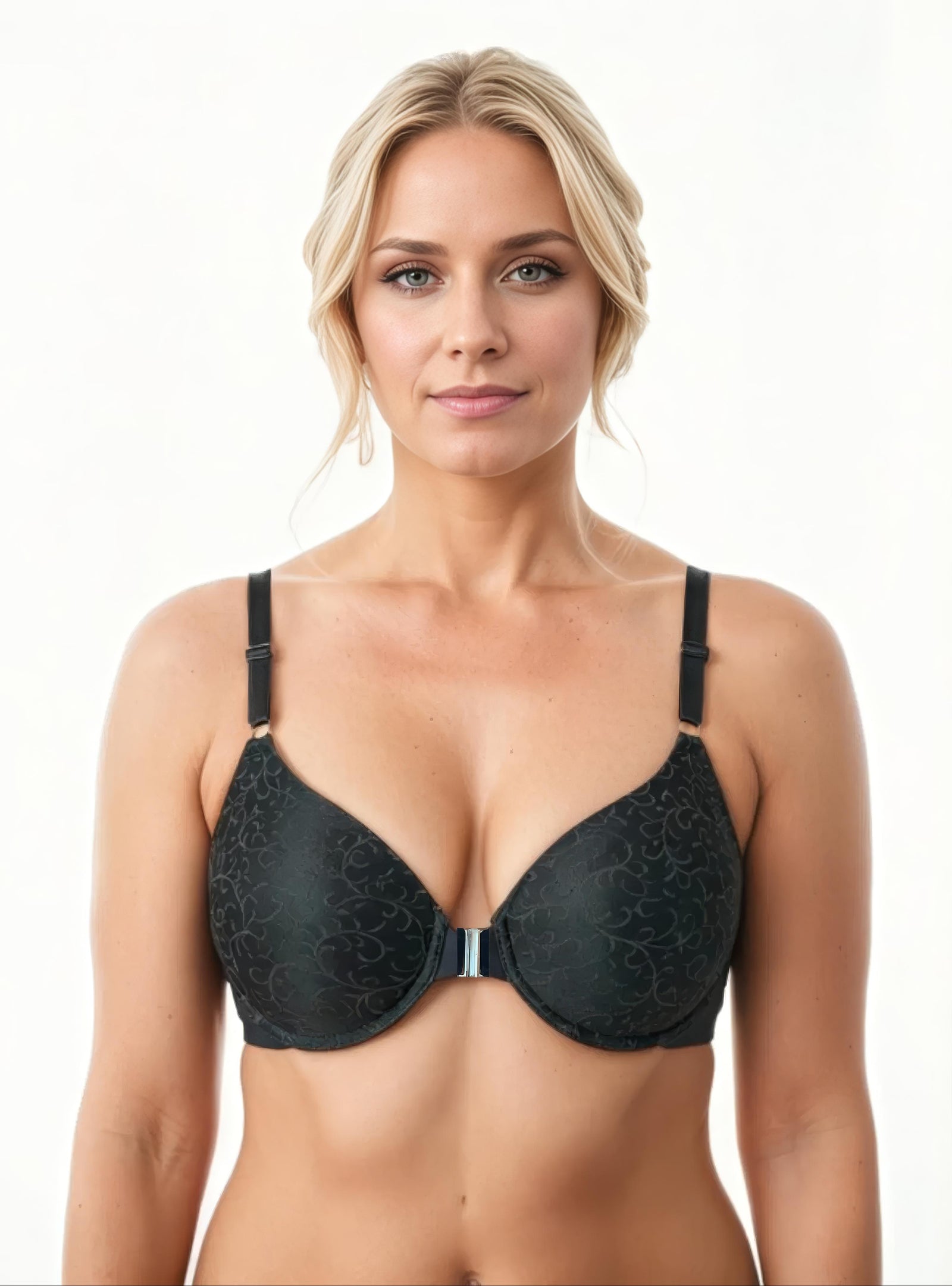
Then consider the shape of the bra itself. Full-coverage styles, tank-style bras, and designs with more built-in smoothing often create a more secure fit because they distribute support across a larger area. For many women, especially those frustrated by traditional hook-back bras, a more engineered design solves the problem better than constant adjustment ever will.
A lot of fit advice stops at size, but design is just as important. Two bras in the same size can fit completely differently depending on strap placement, side coverage, back construction, closure type, and how the support is built into the garment.
That’s especially true if you want comfort and smoothing, not just lift. A bra with a narrow back and widely placed straps may technically be your size and still fail you by lunchtime. A bra with more coverage and a supportive, smoothing foundation may stay put because it works with your body instead of balancing everything on your shoulders.
This is one reason many women move away from conventional bra designs after years of tugging, pinching, and slipping. They are not looking for more adjustment. They are looking for a better solution.
If you notice more slipping with certain tops, that doesn’t always mean the bra fits well the rest of the time. Fabric can change how a bra sits on the body. Slippery blouses, wider necklines, and tops that expose the shoulder line can make strap movement more noticeable.
Posture matters too. If you spend hours at a desk or tend to roll your shoulders forward, straps may drift more during the day. That doesn’t mean posture is the whole problem, but it can make an already imperfect fit more obvious.
The key is to choose bras that remain stable through normal movement. You should be able to walk, sit, bend, and go about your day without constantly reaching up to fix a strap.
Sometimes the answer is simple. If the bra used to fit and now the straps won’t stay up, the elastic may be worn out. The band may have relaxed, the straps may have stretched, or the fabric may no longer offer the same level of support.
Weight changes, hormonal shifts, and age can change bra fit too. A bra that worked a few years ago may not be the right style now, even if you are buying the same size. That’s not a setback. It’s just a reminder that support needs can evolve.
For women who want smoothing, secure coverage, and less daily frustration, it can be worth choosing bras designed to solve multiple fit problems at once. Shapeez built its reputation around that kind of comfort-first engineering, and that matters when you’re tired of bras that look acceptable but don’t actually stay in place.
Bra straps slipping is often brushed off as normal, but it usually means your bra is asking too much from too little support. The right fit feels steadier than that. It stays in place, smooths where you want smoothing, and supports without digging, shifting, or distracting you all day.
If your straps keep sliding, don’t blame your shoulders. Take it as a sign to expect more from your bra. A well-designed one should help you feel held, comfortable, and confident from the first wear to the last thing on your calendar.