Your Cart is Empty



If you’ve ever taken off your bra at the end of the day and felt instant relief, you already know why wire free bras matter. The real question is whether they can give you the comfort you want without giving up the support, shaping, and smooth look you still need under clothes. The answer is yes - but only when the design is doing more of the work than a wire ever could.
For many women, the move away from underwire starts with frustration. Wires poke. Bands roll. Straps dig. Back hooks create lumps under knit tops, and side spillage can make even a well-cut outfit feel less flattering. A wire-free bra should solve those problems, not just remove one uncomfortable piece and leave everything else the same.
Women are asking more from their bras than they used to. Comfort is part of it, but so is appearance. A bra has to support the bust, smooth the back and sides, and disappear under clothing. That is especially true if you wear fitted tops, lightweight fabrics, or dresses that show every seam and bulge.
Wire free bras have improved because construction has improved. Better fabrics, wider underbands, fuller side panels, molded or structured cups, and smoothing silhouettes now do much of what underwires used to handle alone. That means more women can wear wire-free styles for everyday life, not just lounging.
This matters even more for women who are tired of being told that support and comfort are a trade-off. In reality, it depends on the bra. A flimsy bralette is not the same thing as a thoughtfully engineered wire-free bra. One is mostly soft. The other is built to lift, contain, and smooth.
Support does not come from a single feature. It comes from the way several elements work together. When women say a wire-free bra has no support, they are often describing a style that lacked structure in the cup, stability in the band, or enough coverage at the sides and back.
A supportive wire-free bra usually starts with the band. If the band is too narrow or too stretchy, the bra has very little foundation. A wider band helps anchor the garment and reduces that shifting, creeping feeling that makes some bras uncomfortable by noon.
Cup design matters just as much. Fuller coverage cups can help distribute breast tissue more evenly and reduce spillover at the neckline and underarm. Seaming, molded shaping, or inner support panels can create lift without relying on metal. For fuller busts, this is often the difference between a bra that feels secure and one that feels like a compromise.
Straps also play a role, but they should not do all the work. If your shoulders are carrying the entire load, the fit is off. Good wire-free support should feel balanced, with the band and body of the bra doing the heavy lifting.
Removing the wire is only the beginning. The best styles address the fit frustrations that made you unhappy in the first place.
If back bulge is a concern, look beyond the front of the bra. Many bras appear fine from straight on but create lines and compression marks across the back. That usually happens when the back is too narrow, too tight, or broken up by closures and seams that press into the skin. A smoother, more continuous back design can make a real difference in how tops and dresses skim over your body.
The same goes for side coverage. Side spillage is not just a sizing issue. Sometimes the bra simply does not have enough side support to guide tissue forward. Wire-free bras with wider side panels and a more embracing shape tend to create a cleaner silhouette under clothing.
This is where innovation matters. Shapeez built its reputation on solving one of the most overlooked bra problems - visible back and side bulge - with patented smoothing construction designed to support and flatter at the same time. That kind of design thinking is what separates an average comfort bra from one that truly changes how your clothes fit.
For many women, wire-free bras are not just “right for casual days.” They become the everyday favorite. Still, the best choice depends on your priorities.
If you want a bra for long workdays, travel, errands, or time at home, wire-free styles are often ideal because they move with you and feel less restrictive. If your skin is sensitive, if wires tend to poke or twist, or if you are dealing with post-weight-loss skin changes, a smoother wire-free design can feel much kinder against the body.
If you have a fuller bust, the answer is not automatically no. It simply means you should be more selective. A supportive wire-free bra for a larger cup size needs serious construction - not a thin triangle shape pretending to be practical. Look for full coverage, secure underband support, wider straps, and side containment.
There are also moments when an underwire might still make sense, depending on the outfit and your shape. Some women prefer underwire for very specific necklines or for a more lifted look under structured clothing. That does not mean wire-free bras fall short. It just means the right bra is often about the right job.
A good fit starts with honesty about what bothers you most in your current bras. If the issue is digging, focus on the band, strap width, and fabric recovery. If the issue is bulge, pay attention to side and back construction. If the issue is lack of shape, study the cup design more closely.
Fabric can change everything. Soft does not have to mean weak. The best fabrics feel comfortable against the skin while still offering enough hold to support and smooth. Stretch should recover well, not relax after a few hours. If a bra feels great when you first put it on but loses shape by lunchtime, the fabric is not doing enough.
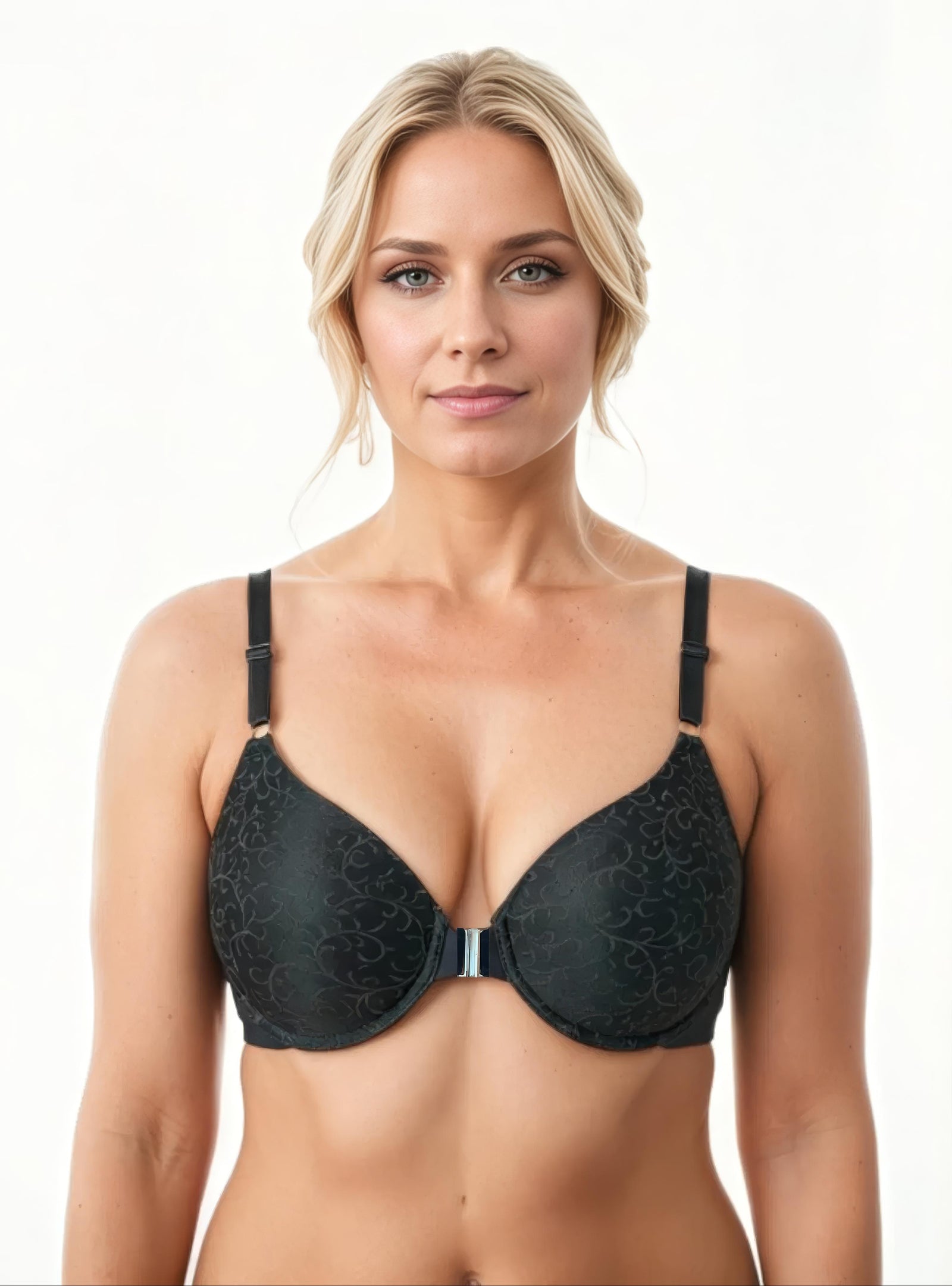
Front closure can also be a smart option, especially for women who dislike back hooks or want a sleeker back profile. Longline or tank-style silhouettes may offer extra smoothing through the upper torso, which can be especially helpful under clingy tops.
And do not underestimate coverage. Many women spend years in bras that technically fit but do not contain or support them properly. A little more coverage can mean less adjusting, less spillover, and much more confidence.
One common mistake is expecting every wire-free style to perform the same way. A soft bralette for weekends is not built like a supportive everyday bra. If you buy based only on the promise of comfort, you may end up disappointed by the support.
Another mistake is sizing up to avoid tightness. That can backfire quickly. A too-loose band often rides up, shifts around, and forces the straps to overcompensate. The result is less support and more discomfort, not more ease.
Some women also hold onto the idea that if a bra is smoothing, it must feel restrictive. That is not necessarily true. The right smoothing bra should feel secure and gently shaping, not stiff or suffocating. There is a difference between support and compression.
A better bra can make your wardrobe feel more wearable without changing your body at all. When the bust is supported and the back is smoother, fabric hangs differently. Knit tops cling less awkwardly. Button-down shirts gap less. Dresses skim instead of catching on seams and bulges.
That is why wire free bras are not only about comfort. They are also about confidence. When you are not tugging at your shirt, adjusting your straps, or worrying about what shows through the back of your top, you can focus on your day instead.
The best part is that comfort no longer has to mean settling. You can ask for softness, support, smoothing, and a flattering shape in the same bra. You should.
If you’ve been disappointed by wire-free styles before, it may not be because wire free bras are wrong for you. It may be because the bra was not designed to solve the problems you actually have. Start with those problems, choose construction over hype, and you’ll get closer to a bra that feels as good at 6 p.m. as it did at 8 a.m.