Your Cart is Empty





A bra can look beautiful on the hanger and still leave you counting the minutes until you can take it off. That is usually not because you need to tolerate more discomfort. It is because the bra support levels in your drawer may not match your body, your outfit, or the way you move through the day.
The right amount of support should feel steady, not restrictive. It should help your bust feel comfortably held, keep straps from doing all the work, and create the smooth, confident look you want under clothing. Whether you prefer a barely-there bralette, need fuller coverage for a busy day, or want extra hold for movement, understanding support makes shopping far less frustrating.
Support is not simply about underwires. A supportive bra distributes the weight of the bust across the band, cups, straps, and fabric construction so no single area has to work too hard. The band does most of the holding. Straps help lift and stabilize, but they should not dig into your shoulders to compensate for a loose band or cups that are too small.
Support also means different things for different bodies. A smaller-bust woman may find light support perfect for daily wear, while someone with a fuller bust may need more structured cups and a wider underband to feel equally comfortable. Neither preference is better. The goal is a bra that feels like it is working with your body, not asking your body to adapt to it.
The level you need can change, too. You may want a relaxed option for a quiet morning at home, firmer support beneath a fitted dress, and a high-support style for a long day on your feet. One bra is rarely the answer to every occasion.
Light-support bras are made for comfort, flexibility, and a natural shape. They often use soft stretch fabric, wire-free construction, less rigid cup structure, and a gentler underband. Think of the bras you reach for while working from home, running errands, traveling, or relaxing.
Light support can be especially welcome when your skin feels sensitive or you are tired of wires, hooks, and tight elastic. It does not mean no support. A well-designed wire-free bralette or tank-style bra can still provide coverage, smoothing, and a secure feel, particularly when the fabric has enough recovery to stay in place.
The trade-off is that light support may not give every woman the lift, separation, or bounce control she wants under tailored clothing or during active movement. If you find yourself constantly pulling a light bra back into place, moving up a support level can make a noticeable difference.
Medium support is where many women find their most dependable everyday bra. It balances hold with flexibility and may include molded or lined cups, a wider band, adjustable straps, more coverage, or light shaping panels. It is supportive enough for work, errands, lunch out, and most daily activities without feeling like performance gear.
For fuller busts, medium support often provides the confidence to move through the day without thinking about your bra. For women who experience side fullness, back bulge, or loose skin after weight changes, the right medium-support style can offer a smoother foundation under tops and dresses without adding a separate shapewear layer.
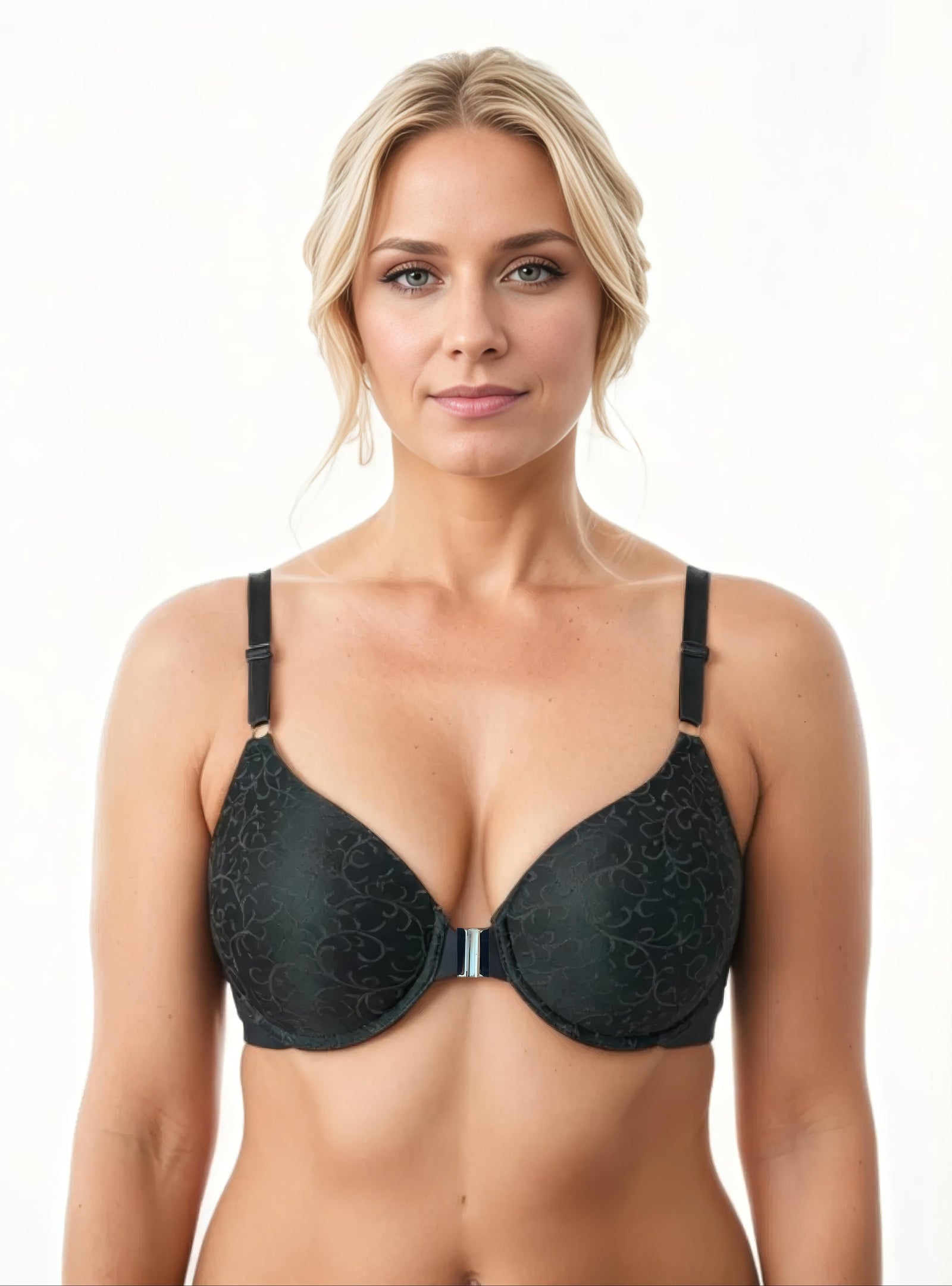
Construction matters here. A wide, stay-put band can help prevent rolling and riding up. Full-coverage cups can reduce spillover at the neckline and sides. Smooth, flexible fabric around the back can make a bigger visual difference than tighter elastic that creates lines. Shapeez built its patented back-smoothing bra category around this very real need: support should not come at the cost of feeling squeezed or seeing bra lines through your clothes.
Firm support is designed for days when you want the most stability. These bras generally have more structured cups, stronger fabric, wider bands, reinforced side panels, and straps designed to stay comfortable under greater demand. Some are underwire styles, while others create firm support with wire-free engineering and targeted compression.
Choose firm support when you have a fuller bust, prefer a lifted and contained shape, wear fitted or button-front clothing, or simply feel better with more secure coverage. It can also be helpful for long travel days, events where you will be standing for hours, and activities that involve a lot of walking or movement.
Firm does not have to mean stiff. The best styles feel secure from the first wear, with no sharp wire pressure, pinching at the underarm, or band that leaves you desperate to change clothes. If a firm-support bra feels painful, the issue may be fit rather than support level. A band that is too small or cups that do not fully contain the breast can make even a beautifully designed bra feel unforgiving.
This distinction matters, especially when you want a smoother silhouette. Compression presses the bust closer to the chest. Support lifts, shapes, and stabilizes it. Some bras offer both, but they are not interchangeable.
A compression-heavy bra may feel secure during movement, yet flatten your shape more than you prefer for everyday wear. A supportive full-coverage bra, on the other hand, can create a polished look by distributing breast tissue into the cups and smoothing the back and sides without making you feel compressed from every angle.
If your main concern is visible back lines or side bulge, avoid assuming that tighter is automatically better. Look for broader, smoothing fabric that lies flat against the body. The goal is a more even transition under clothing, not an overly tight band that creates new lines above and below it.
Your body gives you useful feedback. In a supportive bra, your band should sit level around your torso and remain comfortably snug. The center of the bra should sit close to the chest when the style is designed to do so, and the cups should hold breast tissue without gaping, cutting in, or allowing side spill.
Your straps should stay in place with only light adjustment. Deep shoulder grooves, sliding straps, or a band that climbs up your back are signs that the bra is not distributing support properly. You should also be able to breathe, sit, bend, and reach without feeling like the bra shifts dramatically or rolls at the hem.
Look at how your clothing falls over it. A supportive bra should help a T-shirt skim instead of cling awkwardly at the bust, back, and sides. It will not erase the natural shape of your body, nor should it. It should simply give you a smoother, more comfortable starting point.
Cup size is one part of the equation, but your lifestyle is equally important. A woman with the same cup size may choose light support for a soft weekend outfit and firm support for a presentation or a day of travel. Your breast shape, shoulder sensitivity, preferred neckline, and the fabrics you wear also influence what feels best.
Consider keeping a small rotation instead of asking one bra to do every job. A comfortable light-support option, a smoothing medium-support bra, and a firmer style for high-demand days can cover most needs. This approach also gives your bras time to recover between wears, helping elastic maintain its supportive stretch longer.
When you try on a new bra, test it in motion. Raise your arms, twist at the waist, sit down, and take a full breath. Notice whether you feel held without feeling restricted. The right level of support often becomes clear when you stop adjusting your bra and start forgetting about it.
Your best bra is not the one with the most structure. It is the one that lets you move through your day feeling smooth, supported, and entirely at ease in your own shape.