Your Cart is Empty



That familiar end-of-day urge to unhook your bra is not proof that you need less support. More often, it is proof that your bra is asking underwire, narrow straps, and a too-tight band to do all the work. So, can wireless bras lift well? Absolutely - when they are engineered to support from the band, cups, and overall construction rather than relying on a wire alone.
For women who want a smoother back, comfortable full coverage, and a shape that looks polished under everyday clothes, a well-designed wire-free bra can be a genuine wardrobe solution. The key is knowing what separates true support from a soft bralette that simply feels nice for a few hours.
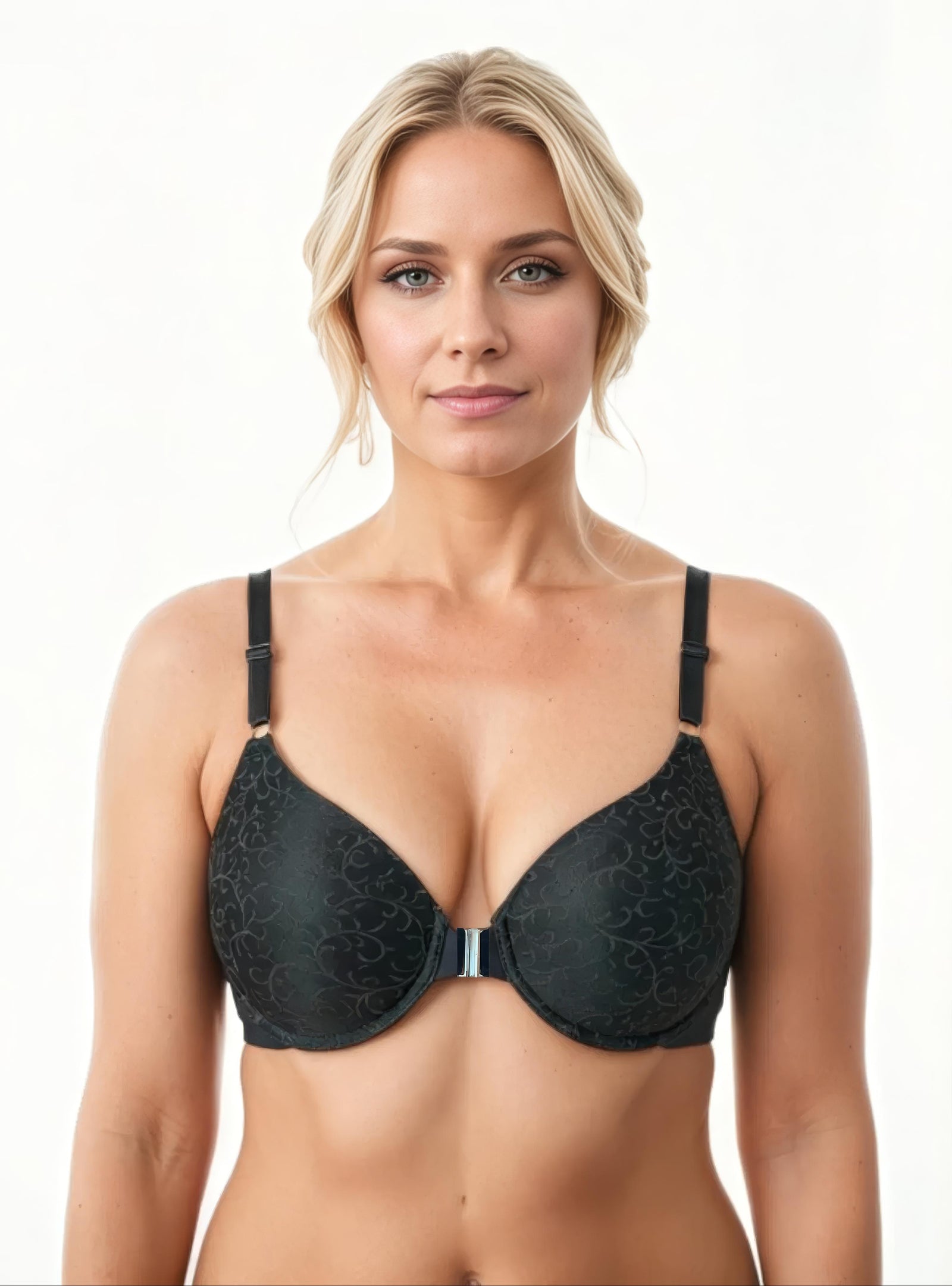
Yes, but lift may feel and look a little different than it does in a traditional underwire bra. An underwire creates a defined curve by encircling and lifting breast tissue from beneath. A wire-free bra creates lift through thoughtful structure: a secure underband, shaped cups, supportive fabric, strategic seaming, and a silhouette that holds the bust close to the body.
That distinction matters. A supportive wireless bra should not flatten you, leave you feeling loose, or make you constantly adjust. It should gently elevate, center, and contain the bust while distributing pressure more comfortably across the garment.
The best wire-free styles often create a naturally rounded, relaxed profile rather than the sharply separated look some underwire bras produce. For many women, especially those who have grown tired of poking wires or bands that roll and pinch, that softer-looking lift is exactly the point. It can feel more like your body, just supported.
A wire may be the most visible support feature in a conventional bra, but it is never the only one. In a quality wireless design, several details work together to provide lift.
The band is the foundation of any supportive bra. If it rides up your back, slides during the day, or feels too loose on the firmest setting, the bra cannot offer its best lift - wired or wire-free.
A wide, stable underband anchors the bra against the torso so the cups can support from below. This is particularly helpful for fuller busts, where a thin elastic band may feel like it is doing too much with too little surface area. A broader base can spread pressure more evenly, helping you feel held without feeling squeezed.
For the smoothest result under clothing, look for a back design that stays flat and does not cut into skin. Shapeez built its reputation around patented 360-degree smoothing construction because support should not come at the expense of the way your back and sides feel - or the way your favorite top falls.
Wire-free cups need purpose. Lightly molded cups, supportive foam, double-layer fabric, and well-placed seams can all help maintain shape and prevent the downward drift that makes some soft bras feel less supportive.
Full-coverage cups are often an especially smart choice if you experience spillover at the neckline or sides. They surround more of the breast tissue, helping create a secure, centered fit. A higher side panel can also help guide tissue forward rather than allowing it to spread toward the underarm.
Not every woman wants foam, and she should not have to choose between comfort and shape. Non-foam cups can still provide beautiful lift when the fabric is supportive and the cut is well designed. Foam tends to offer a smoother, more rounded finish under thin knits and T-shirts, while non-foam styles can feel lighter and more breathable.
Straps should assist with lift, not carry the entire load. If your shoulders are sore or your straps leave deep marks, the band may be too loose or the cups may not be providing enough containment.
Adjustable, wider straps can make a major difference in comfort, especially for women with fuller busts. They help fine-tune your fit and reduce pressure at the shoulders. Still, tightening straps until they dig is not a long-term fix. A supportive bra starts at the band and cups.
Lift is not only about where the bust sits. It is also about how supported you feel from the front, sides, and back. A bra that contains side tissue and stays in place can make clothing look cleaner while helping you move through your day with less tugging and shifting.
This is where a wire-free bra with a longline or tank-style silhouette can shine. More fabric through the torso can provide additional stability and smoothing, particularly if you are bothered by back bulge, side spillage, or loose skin after weight changes. The right design creates support as one continuous system instead of concentrating it in a narrow band.
Women with fuller busts often have good reason to be skeptical. Many wireless bras are really lounge bras in disguise: comfortable, yes, but not made to provide the lift, coverage, and everyday security needed for work, errands, travel, or special occasions.
A truly supportive wireless bra for a larger bust should feel secure at the base, keep breast tissue comfortably contained, and maintain its shape after several hours of wear. You should be able to bend, reach, sit, and walk without needing to pull the cups back into place.
The trade-off is that maximum wire-free comfort may not always deliver the exact same highly lifted, sculpted profile as a firm underwire bra. If you love a very projected, separated silhouette or need intense support for high-impact exercise, an underwire or dedicated sports bra may still be your best choice. But for everyday life, many women find that a well-constructed wire-free bra offers the balance they have been looking for: meaningful lift without the constant reminder that they are wearing a bra.
A good fit is easy to recognize once you know what to notice. The band should sit level around your body, not creep upward in back. The cups should fully hold your breast tissue without gaping, cutting in, or creating overflow at the top and sides.
Your bust should sit in a comfortable, supported position rather than resting heavily on your upper abdomen. The center front should lie as flat as the style is designed to allow, though wire-free bras do not always tack against the chest the way underwire bras do. Most importantly, you should not feel the need to adjust every time you move.
Try your bra under the kinds of clothing you actually wear. A style can look lovely on its own and still show lines under a fitted shirt or feel bulky beneath a blouse. Check the back and sides in a mirror, raise your arms, and sit down. The right bra should stay comfortable and keep its smoothing power from morning through evening.
When a wireless bra fails to lift, the issue is often fit rather than the absence of wire. A band that is too large cannot anchor the bra. Cups that are too small can push tissue out rather than holding it up. Cups that are too large may wrinkle or leave space that prevents the fabric from supporting the breast.
Style matters, too. A lightly stretchy bralette may be perfect for sleeping, recovery days, or quiet weekends, but it may not have the structure needed beneath a work dress. A wireless bra with fuller cups, a stronger base, supportive lining, and smoothing side and back panels is better equipped for all-day wear.
Give a new bra a little time, but do not talk yourself into discomfort. A supportive fit should feel secure, not restrictive. If the band rolls, the straps dig, the cups shift, or you find yourself counting the minutes until you can take it off, that style is not serving you.
The best bra does more than lift your bust. It helps you stand taller, move freely, and wear your clothes without worrying about visible lines or the constant tug of an uncomfortable band. Wire-free support is not a compromise when the bra is designed with real structure and real bodies in mind.
Choose the level of lift that makes you feel like yourself: comfortable, smooth, supported, and ready for whatever is on your calendar. Bye Bye Bulge. Hello Beautiful.