Your Cart is Empty




A bra can look beautiful on the hanger and still become the first thing you want to take off at the end of the day. When considering front closure vs back closure, the right choice is less about a universal winner and more about where you need comfort, support, smoothing, and ease in your daily routine.
For women who are tired of twisting, tugging, dealing with straps that slip, or seeing a row of hooks create lines beneath a favorite top, the closure placement can make a meaningful difference. The best bra is the one that supports your shape without asking you to tolerate pinching, rolling, or visible bulges to get it.
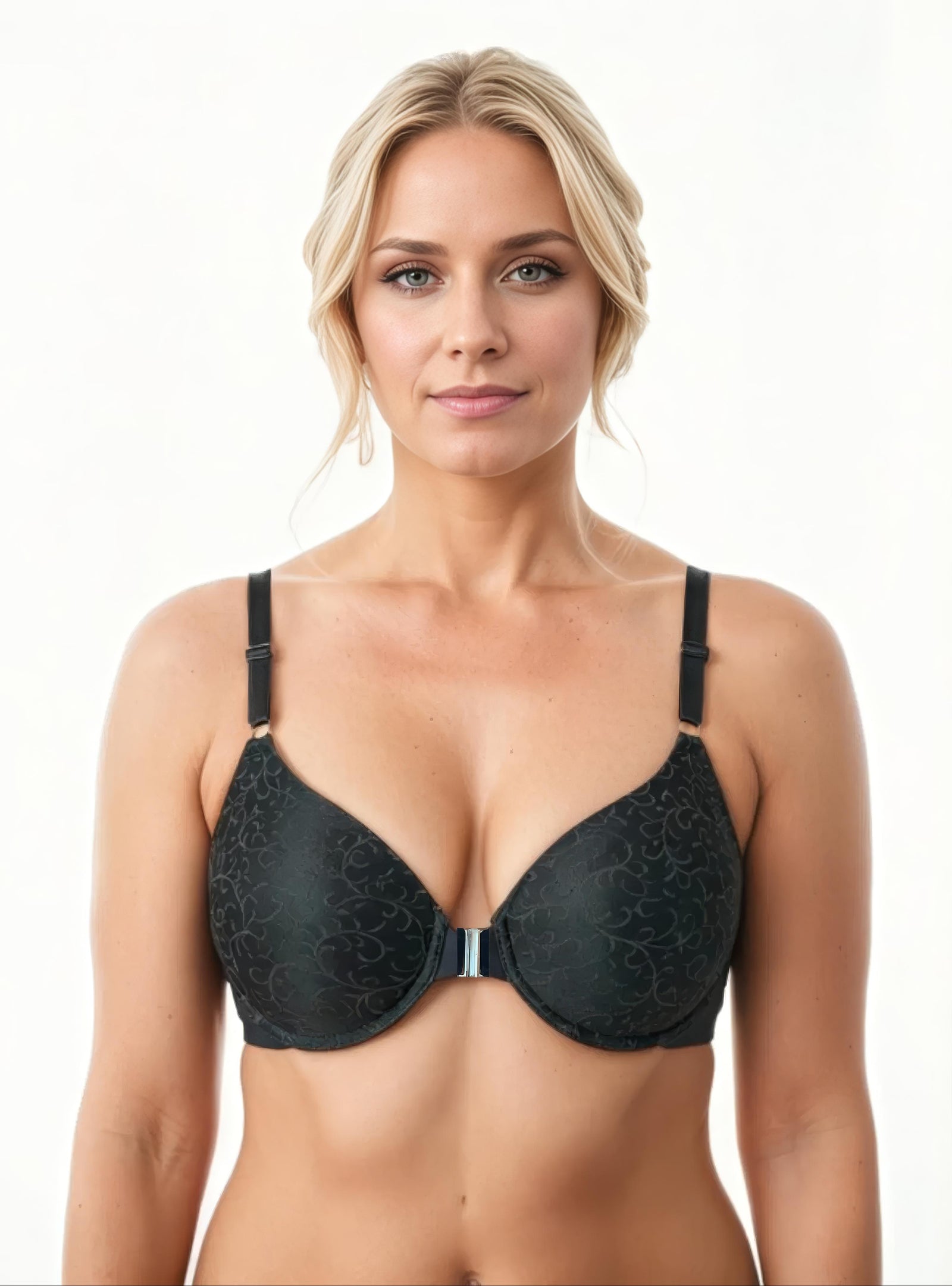
A front-closure bra fastens at the center of the chest, usually with a clasp, hook, or zipper-style closure. A back-closure bra fastens with traditional hooks and eyes across the back band. Both can provide excellent support, but they distribute convenience and adjustability differently.
Front closures are often chosen for easy dressing. You can see the closure, reach it without strain, and secure your bra without the familiar twist-and-hook routine. Back closures offer more band adjustability because many styles include multiple rows of hooks. That adjustability can be especially useful when you are fine-tuning a new bra's fit over time.
The decision gets more personal when you consider your body, mobility, bust size, wardrobe, and the areas you want your bra to smooth.
The most obvious advantage is accessibility. A front closure can be a welcome solution for women with shoulder discomfort, arthritis, limited range of motion, or simply a deep dislike of reaching behind their backs before work. It is also helpful for anyone recovering from a procedure, provided their medical team has approved bra wear and the specific closure style.
Front-closure designs can create a clean, uninterrupted back. Without a traditional hook-and-eye panel sitting across the shoulder blades, the back of the bra may lie flatter under fitted knits, lightweight tees, and dresses. This is particularly valuable when the garment also uses a wide, smoothing back band rather than narrow elastic that can press into the skin.
Many women also appreciate the way a front closure centers the bust. Depending on the cup construction, it can bring breast tissue forward for a more contained, lifted profile beneath clothing. If you have felt that traditional bras leave you spilling at the sides or looking wider through the chest, a thoughtfully designed front-closure style may offer a more polished silhouette.
There are trade-offs. Front closures commonly have fewer adjustment points at the band, so getting the size right from the start matters. If the band stretches over time, you may not have extra hook settings to tighten it. The center closure can also show beneath very thin or very low-cut tops, depending on its shape and placement.
Back-closure bras have lasted for a reason: they are familiar, widely available, and often highly adjustable. Multiple rows of hooks let you begin with a firm fit on the loosest setting, then move inward as the band naturally relaxes with wear. That can help extend the useful life of the bra.
For fuller busts, a traditional back closure can provide a very secure anchor when it is paired with a supportive band, well-designed cups, and comfortable straps. The closure itself is not what creates support, but a properly fitted back band does much of the work. In fact, when straps are doing all the lifting, they tend to dig into shoulders and leave you constantly pulling them back into place.
A back-closure style can also be easier to find in highly specific cup-and-band combinations. If you know your preferred size and like the control of multiple hook positions, this style may feel dependable and familiar.
The downside is the back closure panel itself. On a conventional bra with a narrow band, the hooks and elastic can create a visible ridge or encourage skin to press around the edges. That is not a body problem. It is a construction problem. A wider back and side panel designed to distribute pressure more evenly can make a dramatic difference in how a bra feels and how clothing falls over it.
It is easy to assume that a front closure automatically means a smoother back. Sometimes that is true, but closure placement alone does not guarantee a smooth result. The real difference comes from the bra's overall engineering.
Look at the width of the back band, the side coverage, the stretch and recovery of the fabric, and whether the edges are designed to lie flat without rolling. A narrow band may feel secure at first but can create a pronounced line by the end of a long day. A wider, supportive construction helps gently smooth the back and sides while keeping the band in place.
This is where a bra can do more than hold the bust. It can replace the feeling of needing an extra shaping layer under every top. Shapeez was built around this idea, with patented back-smoothing designs that combine bra support with 360-degree smoothing for a more comfortable, confident finish.
If back bulge, side fullness, or loose skin after weight changes has made you avoid fitted clothing, do not assume you need to size up until everything feels loose. You may need better coverage and a more supportive band instead. A bra should hug the body securely without cutting in, rolling up, or making you feel restricted.
A front closure can be beautifully supportive, especially when it includes full-coverage cups, a wide underband, supportive side panels, and straps that stay comfortably in place. Wire-free front-closure bras can be an excellent choice for everyday comfort when the fabric and construction provide enough structure to lift and contain.
A back closure can offer stronger fit flexibility, particularly for women whose band measurement fluctuates due to weight changes, hormonal shifts, or bloating. The ability to move to a tighter or looser hook setting can make the bra feel more adaptable from month to month.
Neither style should rely on painful underwire, overly tight straps, or compression that leaves deep marks to feel supportive. Underwire can be useful for lift and shape, but it should sit around breast tissue rather than on it. Wire-free styles should still have enough intentional structure to prevent the flattened, uncontained feeling some women associate with soft bras.
For both styles, the band should sit level around the torso. If it rides up in the back, the band is likely too loose or the straps are over-tightened. If the cups wrinkle, gape, or spill, the cup size or shape may not be right. A few minutes spent assessing fit can save you from hours of adjusting your bra throughout the day.
Your wardrobe can point you toward the better closure style. Front closures work especially well when you want a smooth-looking back under close-fitting tops, when dressing ease is a priority, or when you prefer a bra that feels more like a supportive camisole or bralette. A front-closure bra-and-slip hybrid can also simplify getting dressed for dresses that need both support and a smooth foundation.
Back closures may be the practical choice if you prefer a traditional bra profile, need frequent band adjustments, or wear styles where a center-front clasp could show. They can also be a good option for women who have a favorite cup style and do not mind fastening behind the back.
Think about when you wear the bra, too. Your workday bra may need smoothing and all-day comfort. Your lounge bra may prioritize soft stretch and wire-free ease. A special-occasion bra may need a lower neckline or more shaping. One closure style does not need to solve every job in your drawer.
If you are deciding between a front closure and a back closure, start with the frustration you most want to solve. Choose front closure when reaching behind your back is difficult, a clean back profile matters, or you want a quicker, easier on-and-off experience. Choose back closure when you value multiple fit settings and have found that traditional band adjustability helps you get a secure fit.
Then look beyond the clasp. Prioritize full coverage where you want it, wide smoothing panels if back and side lines bother you, straps that stay put, and fabrics that feel good against your skin for a full day. Your bra should support your clothing, but more importantly, it should support the way you want to move through your day: comfortable, smooth, and completely at home in your body.