Your Cart is Empty





If you have ever twisted a bra around your body, fought with tiny hooks, or ended the day with straps digging into your shoulders, a front-close style can feel like a real upgrade. But a front closure bra fit guide matters because the clasp location changes how the bra should sit, support, and smooth. A good fit is not just about fastening it closed - it is about how the band anchors, how the cups contain, and how the back lies under clothes.
Front closure bras solve a very specific set of frustrations. They can be easier to put on, especially if shoulder mobility is limited or back hooks feel like a chore. They also tend to create a cleaner look in back because there is no row of bulky fasteners. That said, they fit a little differently than traditional bras, and that difference is where many women get stuck.
The biggest difference is adjustability. Many front closure bras do not have multiple rows of hooks in back, so the band fit needs to be right from the start. If the band is too loose, the bra cannot do its job. If it is too tight, the front clasp can feel strained and the back may ride up or dig in.
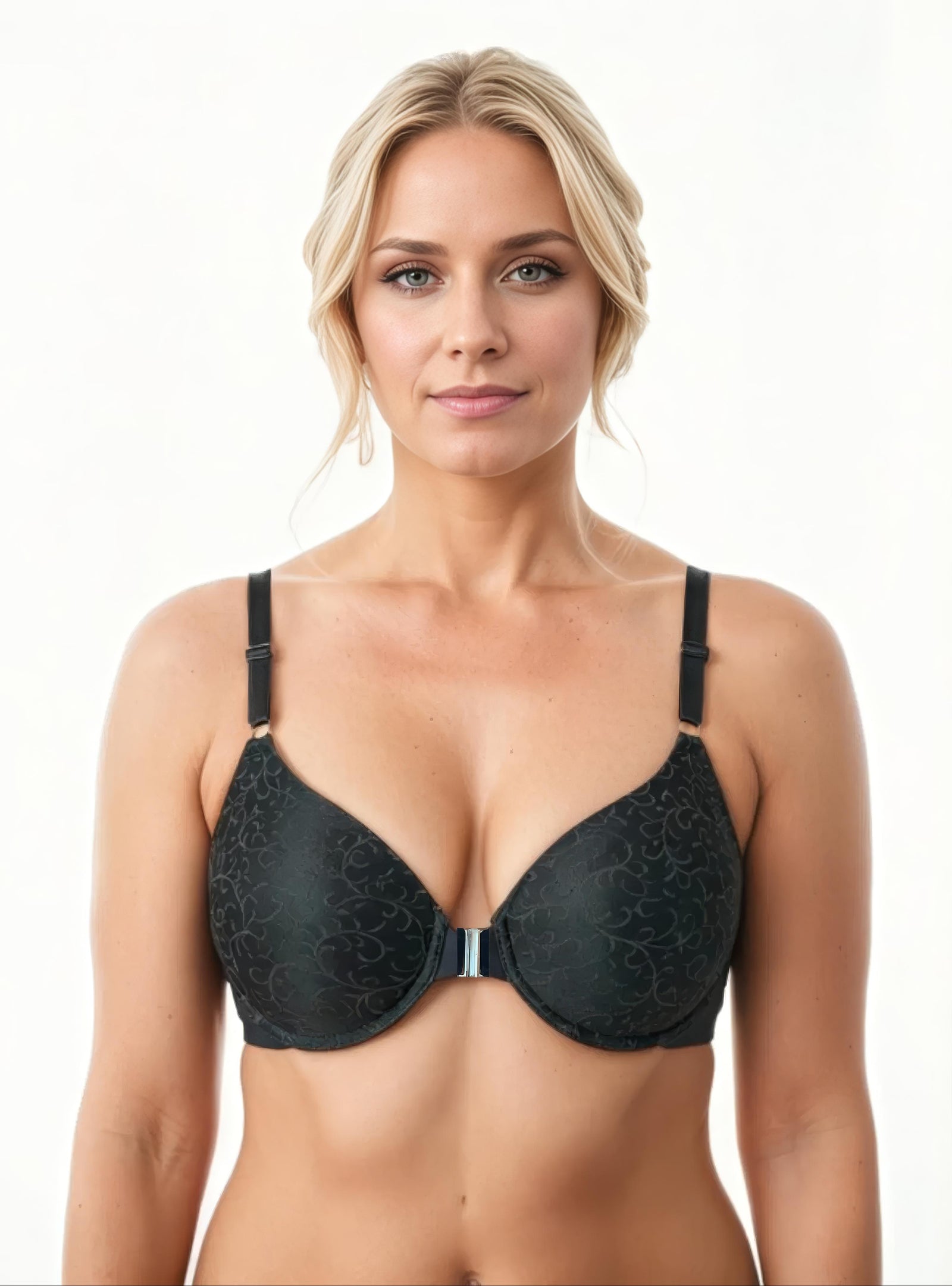
The front closure also changes tension across the bra. Instead of fastening in back and letting the front lie flat, the clasp becomes a central anchor point. That means the cups need to sit flush against the body and the band needs to hold evenly all the way around. You should not feel pulling at the center closure or see the front popping away from the chest.
This is also why a smoothing design matters so much. A front-close bra can make dressing easier, but if the back and sides are not thoughtfully constructed, you may still see lines, bulges, or shifting under clothing. Support and smoothing need to work together.
If there is one place to focus first, it is the band. The band provides most of the support, not the straps. In a front closure bra, the band should feel snug and secure on the loosest usable setting the design offers, or simply snug if there is only one closure position. It should sit level from front to back and stay in place when you raise your arms.
If the back rides up, the band is likely too loose. That often leads to a chain reaction: straps get tightened to compensate, shoulders take on too much weight, and the front closure may start to pull. On the other hand, if the band feels restrictive enough to pinch or roll, the size or silhouette may be wrong for your shape.
A smoothing bra can feel more substantial than a barely-there bra, and that is not the same thing as too tight. A supportive band should feel firm, not punishing. You want hold without that end-of-day relief feeling when you finally take it off.
Once the band is right, look at the cups. A well-fitting front closure bra should fully contain breast tissue without cutting in at the top, sides, or center. You should not see spillage, and you should not have empty space or wrinkling either.
If the cups gap, the issue is not always that the cup is too big. Sometimes the style shape is not right for your fullness. Women with softer tissue, asymmetry, or fuller bottoms often see gaping in bras that are too tall or too open at the neckline. In that case, a different cup construction may fit better than simply sizing down.
If tissue spills over the top or under the arms, the cup may be too small, or the side coverage may be too low for what you need. Full coverage is often the better choice if your goal is a smooth silhouette under knits, tees, or fitted tops.
This is where front-close bras tell on themselves. The clasp in front should feel secure and lie flat against the body. It should not twist, poke, or pull outward. If it looks strained, the band may be too tight, the cups may be too small, or both.
You also should not feel like the closure is carrying all the tension. In a properly fitted bra, support is distributed through the band, cups, and straps. The front clasp is the fastening point, not the only thing holding everything together.
A little firmness at the closure is normal, especially in a supportive style. But discomfort, bulging around the clasp, or a front that shifts during the day usually means the fit needs adjusting.
Straps should stabilize the fit, not rescue it. In a front closure bra, over-tightened straps are a common mistake because women often try to create more lift when the band is actually too loose or the cups are off.
The right strap adjustment keeps the cups in place without digging into your shoulders. You should be able to slide a finger under the strap comfortably. If the straps leave deep marks, slip off constantly, or feel like they are doing all the lifting, something else in the fit is off.
This matters even more for fuller busts. When support comes from the right places, the bra feels better and looks better. Your posture improves, your clothes skim more smoothly, and you spend less time fidgeting.
Many women think of smoothing as a style feature, but it is really part of whether a bra works. A front-close bra may fit in the technical sense and still fall short if it creates lines, compresses in the wrong places, or allows side spillover.
That is why construction matters. Wider backs, fuller side panels, and 360-degree smoothing designs can make a major difference in how the bra looks under clothing. This is especially true if you have back bulge, side fullness, or loose skin from weight changes. A bra should support your body as it is, not ask your body to match a narrow fit ideal.
At Shapeez, that problem-solving approach is the whole point: support in front, smoothing all around, and comfort you can actually live in.
A good front-close fit is easy to recognize once you know what to look for. The band stays level. The closure lies flat. The cups hold you without cutting in or gaping. The straps stay put without leaving painful grooves. And your clothes look smoother without the bra feeling like armor.
You should also notice what is not happening. No shifting when you move. No constant tugging at the band. No side spillover by midday. No relief countdown until you can take it off at night.
That does not mean every supportive bra will feel invisible. Some smoothing styles have more structure by design. But the overall feeling should be secure, flattering, and comfortable enough for real life.
Sometimes the problem is not your size. It is the bra shape, fabric, or support level. A front closure bra in a minimal, stretchy silhouette may feel comfortable at first but lack the structure needed for fuller busts. A rigid full-coverage bra may offer better support but feel too tall if you have shorter roots or less upper fullness.
It depends on what you need most. If your top priority is easy dressing, front closure is a strong option. If your top priority is smoothing under fitted clothing, look for wider back coverage and side support. If you want both, you may need a design that combines bra support with shaping features instead of treating them as separate needs.
This is where many women find relief in bras that are engineered, not just styled. Features like full coverage, broader back panels, and wire-free support are not marketing extras when they solve the exact issues that make most bras frustrating.
The best front closure bra fit guide is not about chasing a perfect number on a tag. It is about how the bra performs on your body, in your clothes, through your day. If it supports without pinching, smooths without flattening, and stays in place without constant adjustment, you are in the right neighborhood.
And if a bra closes easily in front but leaves you tugging, spilling, or hiding lines under every top, it is not doing enough. You deserve a bra that works with your shape, not against it. The right one should feel like one less thing to think about when you get dressed.