Your Cart is Empty



A front fastening bra review should answer more than one question: Is the clasp easier to use? It should also tell you whether the bra stays supportive, smooth under clothes, and comfortable through a full day. For women who are tired of reaching behind their backs, fighting small hooks, or settling for a bra that creates lines and bulges, the right front closure can be a practical reset.
Front-fastening bras are not all built alike. Some are designed mainly for convenience, while others pair an easy closure with full coverage, shaping fabric, and the kind of all-around support that helps clothes lie better. The difference comes down to construction, fit, and what you need from your everyday bra.
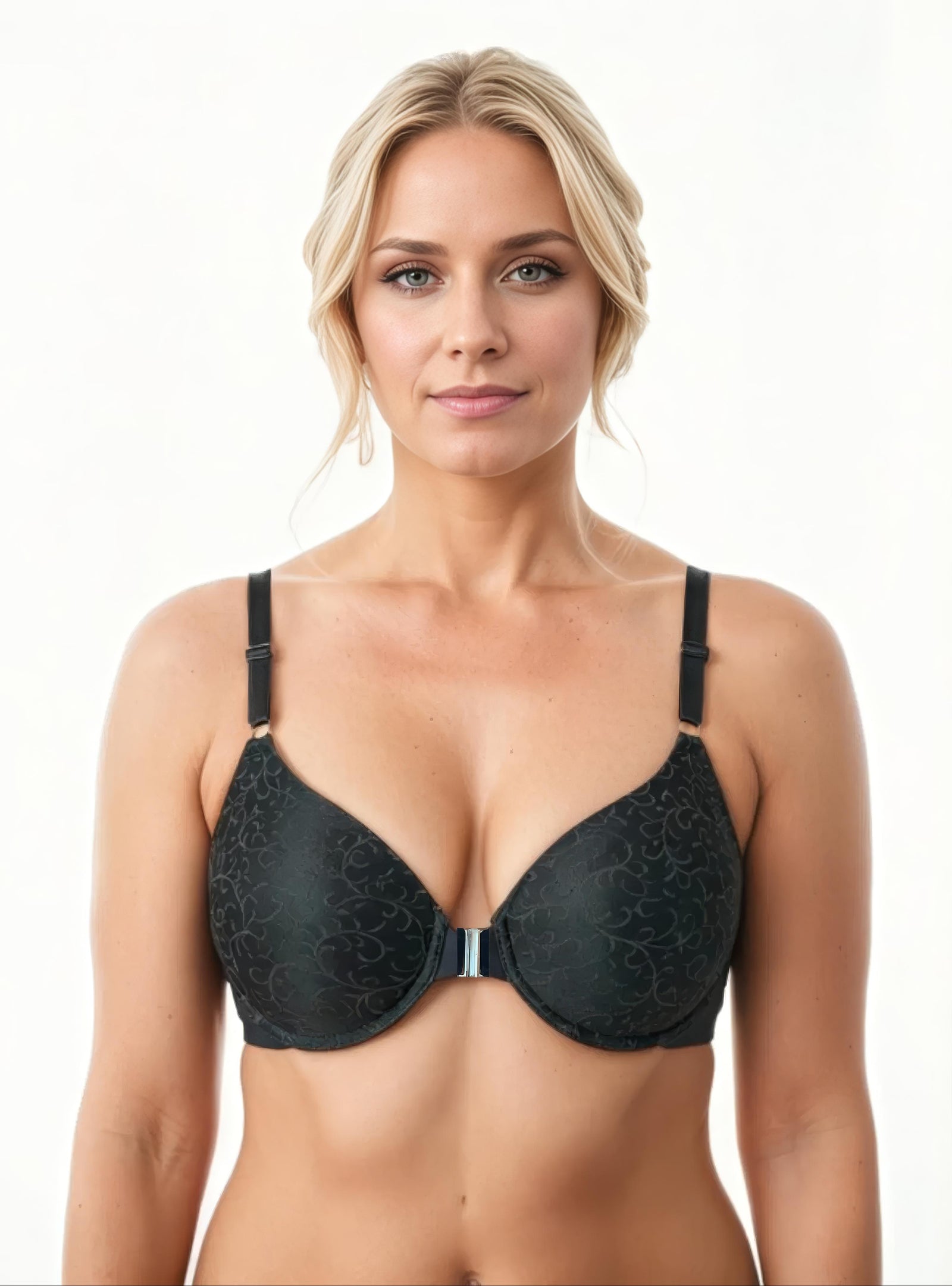
Traditional bras fasten in the back, which means twisting your shoulders or reaching behind you to secure a row of hooks. A front fastening bra places the closure between the cups, where you can see and reach it easily. Depending on the style, that closure may be a hook-and-eye clasp, a slide-and-lock design, or a zip front.
That placement can make getting dressed feel much simpler, especially if shoulder mobility, arthritis, recovery, or hand strength makes back hooks frustrating. It can also make a bra easier to put on without asking for help. Convenience matters, but it is not the only benefit.
A well-designed front closure can help the center of the bra sit flat against the chest, creating a secure, anchored feel. When paired with wide bands and supportive cups, it can offer the held-in comfort many women want without the struggle of a back closure.
The best reason to choose a front fastening bra is that it solves a real daily annoyance without asking you to give up support. You can fasten it while looking in the mirror, adjust the cups as you settle in, and avoid the shoulder strain that comes with reaching backward.
Front closures are especially appealing for women who want a more independent dressing routine. They are also helpful when a traditional bra has become difficult after surgery or an injury, although your care team should always guide you toward any recovery-specific garment requirements.
There is a style benefit, too. Many front-closure bras are made with a smooth, uninterrupted back rather than a narrow band broken up by hooks. That can reduce visible bra lines under fitted tops. When the back panel is wide enough and made with supportive stretch, it can help smooth the back and sides instead of cutting into them.
For fuller busts, the convenience is only worthwhile if the bra still distributes weight well. Look for full-coverage cups, wider straps, a supportive underband, and fabric that holds its shape. A front clasp by itself does not create lift or smoothing. The surrounding structure does that work.
An honest review has to include the trade-offs. The most common one is adjustability. Many back-hook bras have several rows of eyes, letting you tighten the band over time as it naturally stretches. A front closure often has one fastening position, so getting the band size right from the start matters even more.
Some front-clasp styles also have a lower center opening. That may not suit women who prefer maximum coverage at the neckline or who find that a plunging shape allows too much movement. If you want a secure, everyday fit, look closely at the cup height and center-front coverage rather than assuming every front closure will feel the same.
The clasp itself is another deciding factor. A closure should lie flat, feel secure, and be manageable with your hands. If it feels stiff when you try it on, it may not become easier after a long day. On the other hand, a clasp that pops open too easily is not delivering the confidence you need.
Finally, not every front-fastening bra is a smoothing bra. A thin, narrow-back style may be easy to put on but still create indentation across the back and underarms. If smoother lines are part of your goal, prioritize a wide back, side coverage, and a no-roll finish.
Start with the band. It should sit level around your body and feel comfortably firm, not painfully tight. If it rides up in the back, the band is likely too loose. If it digs deeply or makes breathing uncomfortable, it may be too tight or the style may not have enough stretch and width for your body.
Your breasts should be fully contained inside the cups, with no spilling at the top, sides, or center. Gaping usually means the cup is too large, the shape is wrong for you, or the straps are doing too much work. Spillage usually points to a cup that is too small or too shallow.
Straps should rest comfortably on your shoulders, not leave deep marks or carry all the weight of the bust. The band and cup structure should provide most of the support. This is particularly important in wire-free bras, where thoughtful engineering has to replace the lift usually created by an underwire.
After fastening the bra, move through a normal range of motion. Reach for a shelf, sit down, take a short walk, and bend forward. A bra can look good in a fitting room and still reveal shifting cups, rolling edges, or an irritating clasp once you start living in it.
For many women, the goal is not to look smaller. It is to feel comfortable and see a cleaner line under a T-shirt, blouse, knit dress, or special-occasion outfit. That requires support around the entire bra, not just in front.
Look for a design that reaches high enough at the underarm to contain side tissue without rubbing. A wider back panel helps spread tension across a larger area, so the band is less likely to create a sharp line. Smooth, flexible fabric can offer gentle shaping while allowing you to breathe and move naturally.
This is where a bra-and-shapewear approach can make a meaningful difference. Shapeez, known for its patented back-smoothing bra construction, focuses on turning the bra band into a more supportive smoothing panel rather than treating it as a thin strap around the body. For someone frustrated by back bulge, loose skin after weight loss, or visible band lines, that added coverage can change how a favorite top feels and fits.
A front fastening bra can be underwire, wire-free, or built with flexible alternatives such as molded cups and reinforced panels. There is no universal winner. It depends on your bust shape, support preferences, and how long you plan to wear the bra.
Underwire can create defined lift and separation, which some women prefer beneath tailored clothing. The wire must sit directly under the breast tissue and never press into it. If it pokes, shifts, or lands on breast tissue, the size or shape is wrong.
Wire-free styles often feel more forgiving for lounging, travel, work-from-home days, and anyone who dislikes the pressure of a wire. A quality wire-free bra should not mean unsupported. Look for structured cups, wide elastic, supportive side panels, and straps that stay in place. For a fuller bust, a longline silhouette or higher back can provide extra stability.
Rather than judging a front fastening bra only by how easy it is to clasp, consider how it will perform in your actual wardrobe and routine. Ask whether it provides enough coverage for your preferred tops, whether the band smooths or merely squeezes, and whether the closure feels secure enough for all-day movement.
Also consider the days you need it most. If you want a bra for dressing independently, ease of fastening may be the priority. If your main concern is back smoothing under close-fitting clothing, coverage and fabric construction deserve more weight. If you need both, do not compromise on either one.
Care matters as well. Close the front clasp before washing so it does not catch on delicate fabric. Hand washing is gentlest, but if the care label permits machine washing, use a lingerie bag and skip high heat. Heat can wear down elastic and shorten the life of the band that provides your support.
A front fastening bra is worth keeping when you stop thinking about it halfway through the day. It should close without a struggle, stay put without digging, and help you feel comfortable in the clothes you already love. That is not a small upgrade - it is the kind of everyday ease that lets you focus on everything else.