Your Cart is Empty




The moment you find a smoothing tank or bodysuit that makes a dress fall beautifully, it is tempting to skip the bra altogether. But can shapewear replace a bra every day? For some women and some outfits, absolutely. For others, shapewear is most comfortable and flattering when it works alongside a supportive bra rather than trying to do both jobs alone.
The difference comes down to the support you need, the shape you prefer, and how long you plan to wear the garment. A piece that feels wonderful for dinner may not offer enough lift or stability for a full workday. The best choice is the one that lets you move, breathe, and forget about adjusting your clothes.
Shapewear is designed primarily to smooth, shape, and create a more streamlined foundation under clothing. A bra is designed to support breast tissue, distribute weight, and create the level of lift and separation you prefer. Those functions can overlap, especially in thoughtfully constructed shaping camis, bodysuits, and bra-and-slip styles, but they are not automatically the same.
A light-control shaping tank with a shelf bra may be enough if you have a smaller bust, want gentle support, or are wearing it for a short period. It can also be a smart choice under relaxed clothing, sleepwear, or a casual top where you do not need a highly defined shape. Many women appreciate the simplicity of one layer instead of a bra plus a separate smoothing garment.
The equation changes with fuller busts, breast heaviness, or a preference for more lift. If you usually rely on a full-coverage bra to feel secure, a shelf bra or thin elastic band may not give you the same result. It may flatten rather than lift, shift as you move, or put pressure on your shoulders and neck because the garment is trying to carry more weight than it was designed to handle.
That does not mean you must choose between smoothing and support. It means the garment needs to be engineered for both.
A supportive shapewear bra combines the benefits women often want from two layers: dependable breast support and a smoother look through the back and sides. The key is construction, not simply adding cups to a tank.
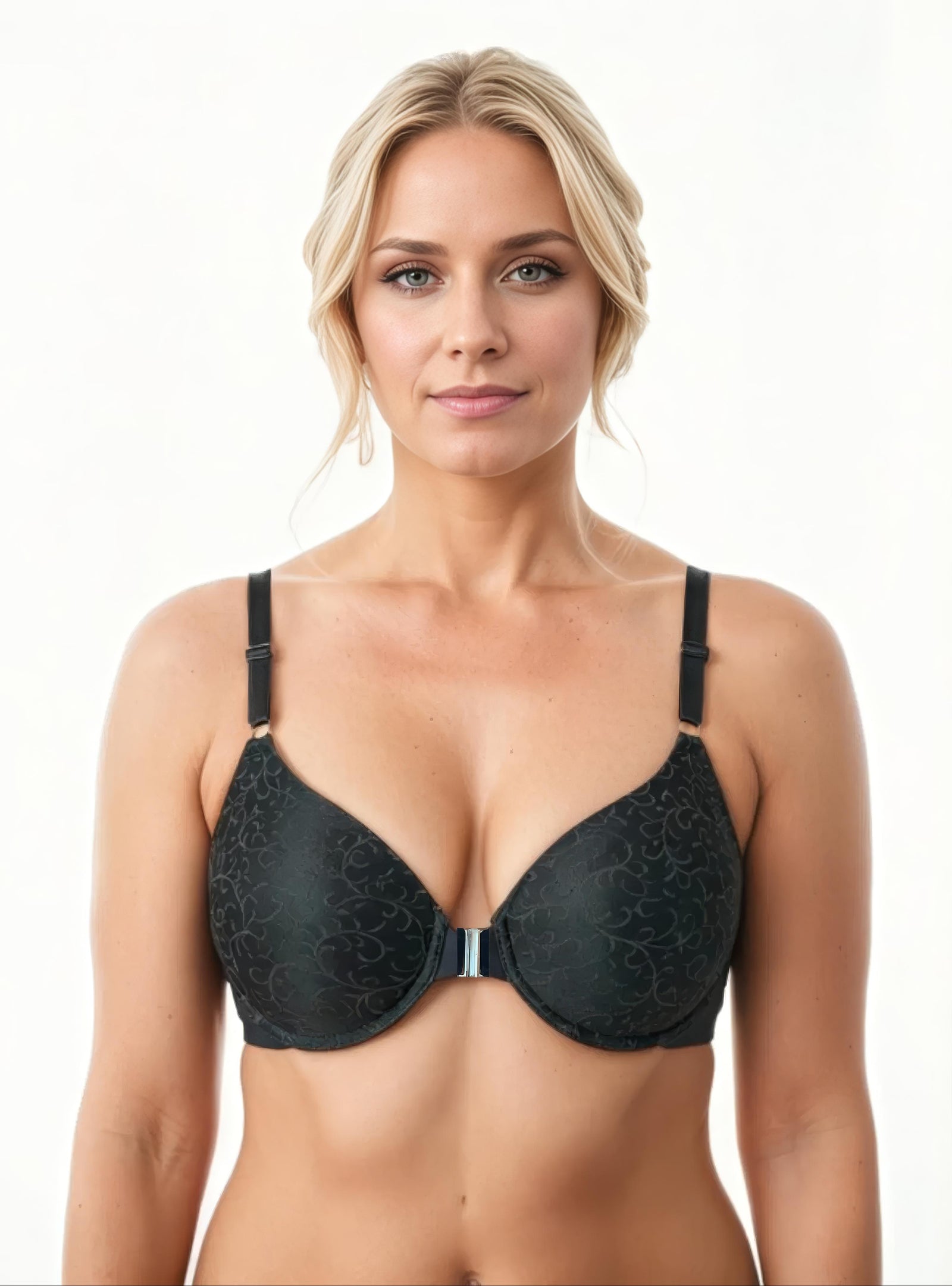
Look for full-coverage cups that contain rather than compress, supportive bands that stay in place, and straps that do not dig. A wider back panel can smooth the area where traditional bra bands often create visible lines, while a longer silhouette may help create a more even transition from bust to torso. Front closures can also make dressing easier for women who struggle with twisting, reaching behind their back, or managing multiple hooks.
Shapeez built its patented back-smoothing bra category around this real-life frustration: a bra can fit well in front yet still leave the back and sides feeling pinched or visibly segmented under clothing. A bra-style smoothing garment addresses that issue at the source, helping your top or dress lie more smoothly without asking you to squeeze into restrictive shapewear.
Comfort matters just as much as appearance. If a garment rolls at the hem, rides up, squeezes the ribcage, or forces you to tug at it all day, it is not functioning as a replacement bra - even if it looks smooth for the first five minutes. Good support should feel secure, not like a constant negotiation with your wardrobe.
There are plenty of situations where a bra-free shapewear style is a practical, comfortable choice. Gentle built-in support can work beautifully when you are at home, traveling, layering under sweaters, or wearing looser silhouettes. It may also be ideal after a long day in a conventional bra, when you still want coverage and a polished feel without underwire or firm compression.
A wire-free bralette or tank-style bra can be especially useful if your priority is light lift with a soft, natural shape. These styles often offer more coverage and stability than a basic shelf bra, without the pressure points some women associate with traditional underwires.
Your breast shape matters here, too. Women with a shallower or smaller bust may find that a supportive cami gives them everything they need. Women with fuller, pendulous, or more projected breasts may prefer cups with greater structure, even when the garment is wire-free. Neither choice is more correct. The goal is to match the garment to your body, not force your body to match the garment.
If you are dressing for a long day, a high-impact activity, or an outfit that calls for a more lifted and defined silhouette, dedicated bra support is usually the better choice. The same applies if you experience shoulder discomfort, breast tenderness, under-bust irritation, or frequent shifting in light-support garments.
Sports are a separate category. Everyday shapewear is not a substitute for a sports bra because it is not designed to control movement during exercise. Even a snug shaping tank can allow enough bounce to cause discomfort. Choose a true sports bra when walking briskly, exercising, playing tennis, or doing any activity where your breasts need motion control.
You may also want a more structured bra under fitted button-down shirts, tailored jackets, and dresses with a defined waist. Shapewear may smooth the torso, but the right bra creates the foundation that helps clothing sit where it should. When support is balanced, you are less likely to pull at your neckline or adjust your straps throughout the day.
Start by asking what you want the garment to solve. If your main concern is a smoother back under knit tops, look for a bra with broad smoothing panels and full coverage. If you want to replace two layers under a dress, a bra-and-slip hybrid or supportive shaping tank may be the most efficient option. If ease is your priority, consider wire-free cups, wide straps, and a front closure.
Then consider compression honestly. More compression does not always mean more support. Extremely firm shapewear can flatten the bust or make breathing uncomfortable, while light compression with well-designed cups and a secure under-bust band can give a more flattering result. You should be able to inhale fully, sit comfortably, and raise your arms without the garment shifting.
Sizing is where many bra-replacement experiments go wrong. Do not automatically buy down in size because you want smoothing. A garment that is too small may roll, dig, or push breast tissue upward and outward. Use your current bust and under-bust measurements, follow the brand's size guidance, and pay attention to cup fit. Spillage at the top or sides, gaping cups, sliding straps, and a band that climbs up the back are all signs that the fit needs adjusting.
You do not have to declare shapewear or bras the winner. Your wardrobe can include a light-support smoothing piece for easy days, a wire-free bra for comfort, a supportive back-smoothing bra for polished outfits, and a sports bra for movement. Different days place different demands on your body.
The most flattering undergarment is not the one that changes you the most. It is the one that supports you well enough to let you focus on the meeting, the celebration, the flight, or the people in front of you. When your bra and shapewear work with your body instead of against it, getting dressed becomes one less thing to think about.