Your Cart is Empty




A bra can look perfectly fine at 8 a.m. and feel completely different by lunchtime. When warmth, movement, or a busy day leaves you feeling damp beneath the bust or along your back, the issue is not just comfort. Moisture held against the skin can lead to chafing, rubbing, odors, and a bra that feels heavier as the day goes on. This guide to moisture wicking bras will help you understand what makes a difference, what fit still matters, and how to choose support that helps you feel dry, smooth, and confident.
Moisture-wicking fabric is designed to move perspiration away from your skin and spread it across the surface of the material, where it can evaporate more easily. It does not stop you from sweating, and it cannot make a bra feel dry in every high-heat or high-intensity situation. What it can do is reduce that sticky, trapped feeling that makes an ordinary bra uncomfortable.
This distinction matters. A fabric may feel soft and breathable, yet still absorb moisture and stay wet for hours. A true moisture-wicking bra uses fibers and construction that encourage moisture to move outward rather than remain concentrated against your body. The result is often a cooler, lighter feel through everyday errands, travel, workdays, walks, and low-to-medium-impact exercise.
For women who deal with perspiration beneath the bust, a smooth wicking layer can also help minimize friction. That is especially welcome when skin is sensitive, the weather is humid, or a bra's underband tends to shift during the day.
The best fabric in the world cannot compensate for a bra that is too tight, too loose, or wrong for your shape. In fact, poor fit can make moisture discomfort worse. A band that digs in may create heat and friction. Cups that are too small can cause breast tissue to spill over, leaving skin-on-skin contact that holds warmth. A loose band can ride up, shift, and rub.
Start with the band. It should sit level around your torso and feel secure without restricting your breathing. You should be able to move, sit, and reach without immediately wanting to pull it away from your body. The underbust area needs enough contact for support, but not so much compression that it feels sealed off.
Next, check the cups. Full coverage is often useful when comfort and moisture management are priorities because it helps keep breast tissue supported and contained. That said, more coverage is not automatically better. The right cup is one that lies smoothly against the breast without gaping, cutting in, or forcing you to readjust throughout the day.
Straps deserve attention, too. They should help stabilize the cup, not carry all the weight of your bust. If straps leave deep marks while the band rides up your back, the band may be too loose or worn out. A well-fitted bra distributes support more evenly, which can make hot days feel far more manageable.
Moisture-wicking bras are often made with performance blends that include nylon, polyester, spandex, or similar synthetic fibers. These fibers can move moisture efficiently, dry relatively quickly, and provide the stretch needed for a supportive fit. A small amount of spandex helps a bra recover its shape after wear, which matters if you rely on it for everyday support.
Natural fibers have a place, but they come with trade-offs. Cotton can feel wonderfully soft and familiar, especially for lounging or sleeping. However, it tends to hold onto moisture longer than many performance fabrics. If you perspire heavily, cotton may feel damp rather than dry. Merino wool can manage moisture and temperature well, but it may be less common in structured, full-coverage bras and can require more particular care.
Fabric labels tell only part of the story. Construction matters just as much. Look for a bra with a smooth inner surface, a comfortable underband, and areas where airflow is needed most. Mesh panels can be helpful, but only if they do not scratch or compromise coverage. Flat or carefully placed seams can reduce irritation, particularly beneath the bust and along the sides.
Many women assume they have to choose between a sporty moisture-wicking bra and the smooth silhouette they want under clothing. You should not have to add layers or accept visible lines just to stay more comfortable.
A thoughtfully designed smoothing bra can offer moisture management alongside full coverage and dependable support. Wide, supportive back panels may help distribute pressure more comfortably than narrow bands that cut in. Longer silhouettes can provide a more secure feel and create a smoother transition beneath tops, provided the hem stays in place and does not roll.
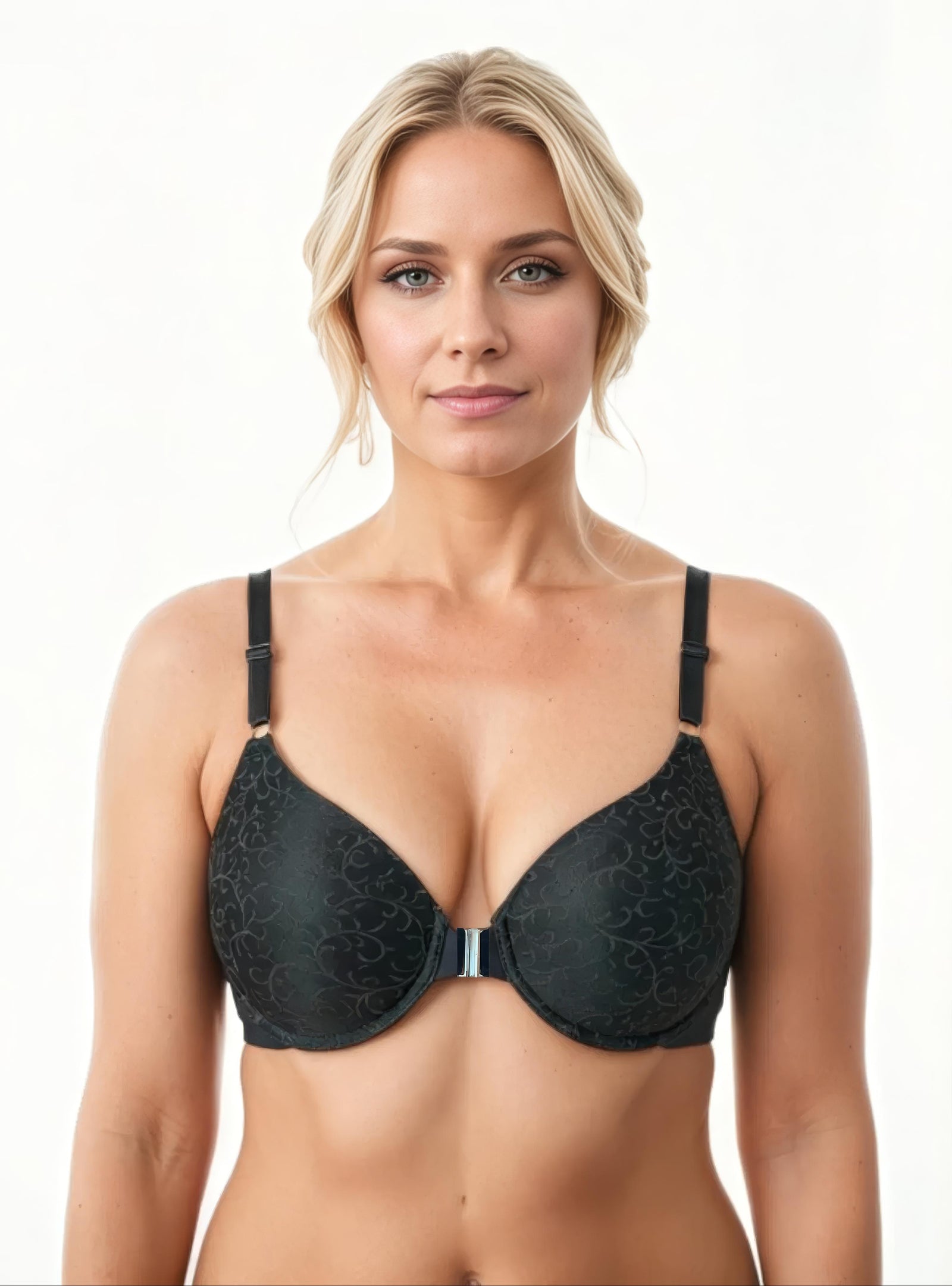
This is where your daily wardrobe matters. If you wear lightweight knits, fitted tees, or dresses, you may prefer a bra with a smooth outer finish and a back design that reduces lines and bulges. If you need easy dressing because of shoulder mobility or hand discomfort, a front closure can be a practical feature. Shapeez built its patented back-smoothing bra approach around the idea that support should improve how you feel and how your clothing fits, not create another source of frustration.
The right option depends on your needs. A wire-free style may be ideal for long workdays, travel, or recovery periods when pressure points are the last thing you want. An underwire design may offer more lift and shaping for some fuller-bust wearers. Neither choice is universally better. Comfort comes from the combination of your body, your activity level, and a fit that stays put.
You do not need to be heading to a workout class to benefit from wicking fabric. These bras can be especially helpful during warm commutes, outdoor events, travel days, menopause-related hot flashes, and busy schedules that leave little time to change outfits.
They are also useful for women whose bras tend to trap heat under the bust or across the back. Larger breasts, close-set breasts, and a fuller torso can create areas where moisture lingers. That is a normal body reality, not a personal failing. Choosing fabrics and silhouettes that reduce friction is a simple form of everyday care.
For high-impact workouts, a moisture-wicking sports bra with activity-appropriate support is still the better choice. Everyday smoothing bras can handle daily movement, but they are not all designed for running, jumping, or intense training. Match the bra to the moment so you get the support and breathability you need.
Performance fabric needs gentle care. Fabric softener can leave a coating on fibers that interferes with their ability to move moisture, so it is best skipped. Wash bras in cool water on a delicate cycle or by hand, ideally fastened and placed in a lingerie bag to protect closures and fabric.
Avoid high heat whenever possible. Heat can weaken elastic, affect stretch recovery, and shorten the life of the band that provides much of your support. Air-drying takes a little longer, but it helps preserve the fit and performance you paid for.
It also helps to rotate your bras rather than wearing the same one day after day. Giving elastic time to rest supports better recovery, while washing after sweaty wear prevents oils and residue from building up. If a bra begins to feel loose, ride up, or lose its ability to stay comfortably in place, it may be time to reassess the fit or replace it.
If you regularly feel damp long after you have cooled down, notice rubbing under the bust, or find yourself adjusting straps and band all day, your bra may be working against you. Other clues include fabric that stays wet after light activity, an underband that rolls, cups that shift, and visible lines that make you avoid certain tops.
A better bra will not change your body, and it should not ask you to hide it. It should give you reliable support, help manage everyday moisture, and let you move through your day without constantly thinking about what is happening underneath your clothes. When comfort is designed into the fit from the start, feeling polished can be as straightforward as getting dressed.