Your Cart is Empty




A longline bra for smoothing silhouette is not about changing your body. It is about ending the familiar fit frustrations that can make getting dressed feel harder than it should: bands that pinch, side bulge under a fitted top, straps that slip, and bra lines that show through the back of your favorite dress. The right design supports your bust while creating a more even look through the back, sides, and torso - without asking you to pile on uncomfortable layers.
For many women, especially those who want fuller coverage or have grown tired of traditional hook-and-eye bras, a longline style offers a practical middle ground between a bra and shapewear. It can help your clothes lie more smoothly, while still feeling like something you can wear from morning errands to dinner plans.
A longline bra has a band that extends farther down the torso than a conventional bra. That added length gives the garment more surface area to distribute support and smoothing, rather than concentrating all the pressure in one narrow band across the back.
The difference can be especially noticeable under thin knits, fitted T-shirts, dresses, and tops that reveal every line beneath them. A standard bra may create a visible indentation where the band ends. A well-designed longline bra uses a broader, more flexible foundation so the transition from bra to body looks softer under clothing.
Longline does not automatically mean restrictive. The best styles are designed to move with you, using stretch fabrics, thoughtfully placed panels, and hems that stay in place instead of rolling upward. When the bra fits correctly, you should feel held, not squeezed. You should also be able to sit, bend, and reach without constantly adjusting the bottom edge.
Support is only one part of how a bra affects your outfit. The back and sides matter, too. Narrow bands, tight elastic, and multiple closure points can create lines that show through clothing, even when the cups technically fit.
A smoothing bra addresses that issue with wider coverage across the back and side wings. Instead of pressing into a small area, the fabric helps create a more continuous, comfortable fit. For women with soft tissue at the back or under the arms, or loose skin after weight changes, that extra coverage can make a meaningful difference in how a top feels and falls.
Shapeez built its reputation around this very need, with patented back-smoothing construction that combines bra support and shapewear-inspired coverage in one piece. The goal is straightforward: Bye Bye Bulge. Hello Beautiful. Not through extreme compression, but through a better-engineered foundation.
A smoother result depends on the garment, the fabric, and your body. No bra should promise to erase natural curves or texture. What it can do is reduce harsh lines and give you a more polished base for the clothes you already love.
The right style starts with your daily priorities. If you need reliable lift for a fuller bust, look for full-coverage cups and a supportive underband. If wires have become a source of discomfort, a wire-free longline bra with structured cups or supportive inner panels may give you the gentle hold you want without the poking and digging.
Your band provides much of the bra's support, so it needs to sit secure and level across your back. A band that rides up is usually too loose. One that digs sharply, rolls, or leaves deep marks may be too tight, too narrow, or simply not the right construction for your body.
With a longline style, pay attention to the lower edge as well as the main band. It should rest smoothly against your torso. A no-roll hem or a longer, flexible body can be helpful if you have experienced bras that curl up during the day.
Smoothing the back is far more comfortable when the cups also fit. If the top or sides of your bust spill over the cup, you may need a larger cup size, a fuller-coverage shape, or a style with a more accommodating neckline. If there is gaping or wrinkling, the cup may be too large or the shape may not match your breast tissue.
A well-fitting cup contains and supports without flattening you unnecessarily. Minimizer styles can be useful when you want a less projected look under button-front shirts or tailored clothing, but they are not the only answer. Some women prefer a rounded, lifted shape; others want a more natural profile. Both are valid fit goals.
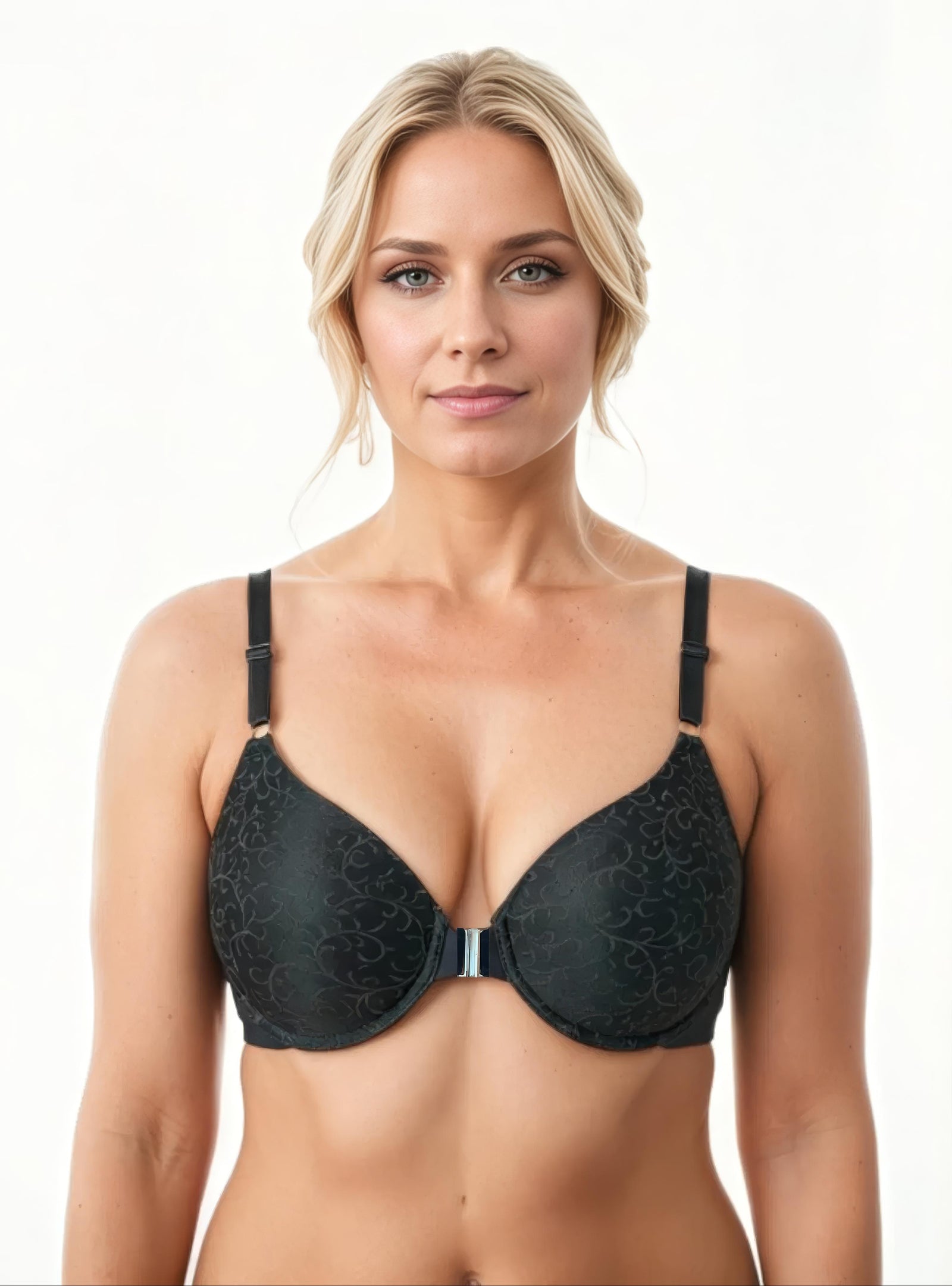
Front-closure longline bras can be a welcome solution if reaching behind your back is difficult or traditional hooks feel fussy. They can also create a cleaner back profile because there is no rear closure adding bulk beneath a close-fitting top.
That said, the closure is only one part of the fit. A front-closing bra should still feel secure across the band and stay comfortably in place all day. If you prefer the adjustability of a back closure, a style with a wide smoothing back may be the better choice.
Fabric changes the experience as much as silhouette. For everyday wear, breathable, moisture-wicking materials can help you stay more comfortable through warm weather, busy schedules, and long travel days. Soft stretch fabric is often ideal beneath casual clothing, while firmer smoothing panels may offer more control under occasion dresses or tailored looks.
More compression is not always better. High-control shapewear can feel great for a few hours at an event, but an everyday longline bra should allow normal movement and comfortable breathing. If you find yourself counting the minutes until you can take it off, that is useful feedback. Try a less restrictive style, a different size, or a design with more flexible support.
A longline bra can be particularly helpful under garments that tend to cling at the back or sides. Think smooth jersey tops, fine-gauge sweaters, sheath dresses, fitted blouses, and lightweight fabrics. The broader base helps prevent the abrupt band line that can distract from an otherwise polished outfit.
It can also simplify your wardrobe. Instead of wearing a conventional bra plus a separate smoothing camisole or shapewear layer, one supportive longline piece may give you the coverage you need. That means fewer straps, fewer waistbands, and less heat trapped under your clothes.
There are times when a shorter bra may still be your best option. A low-back dress, a cropped top, or a very specific neckline may call for a different silhouette. The value of a longline bra is not that it replaces every bra in your drawer. It is that it becomes the dependable choice when comfort, coverage, and a smoother foundation are all on your list.
When trying on a new bra, put it through a real-life test before removing the tags. Raise your arms, twist at the waist, sit down, and take a few deep breaths. The cups should remain in place, the straps should not do all the lifting, and the longline section should stay smooth rather than folding over.
Wear the top or dress you bought it for, if possible. A bra can look fine on its own but behave differently beneath a thin fabric. Check the back and side view in natural light. Focus less on achieving an airbrushed look and more on whether you feel comfortable, supported, and free to move without worrying about visible lines.
Care matters, too. Hand washing or using a lingerie bag on a gentle cycle can help preserve stretch and support. Skip high heat when drying, since it can wear down elastic fibers over time. A well-cared-for smoothing bra will hold its shape longer and continue to do its job under your favorite clothes.
The best longline bra is the one that lets you stop thinking about your bra. When your back feels smooth, your bust feels supported, and your clothes sit the way you hoped they would, you have more room to focus on the day ahead - and feel beautiful in it.