Your Cart is Empty




You put on a bra that feels fine for the first few minutes, then the band starts curling, folding, or riding into an uncomfortable little ridge by midday. If you’ve been wondering why do bra bands roll, the answer usually comes down to a mix of fit, construction, and how the bra works with your shape - not anything wrong with your body.
A rolling bra band is frustrating because it affects more than comfort. It can create visible lines under clothing, change how supported you feel, and make a bra that looked promising in the drawer feel like the wrong choice by lunchtime. The good news is that band rolling is often fixable once you know what to look for.
Most bra bands roll because the band is being asked to do something its design cannot fully support. Sometimes the bra is too small in the band, sometimes it is too short in the body, and sometimes the fabric simply does not have enough structure to stay flat. In many cases, it is a combination of those factors.
The band is the foundation of bra support. If that foundation is too tight, too narrow, too flimsy, or cut in a way that fights your natural shape, it may buckle instead of staying smooth. This is especially common in bras with thin elastic bands, lightweight materials, or silhouettes that end at a spot where the body naturally creases when you sit or bend.
Rolling can also happen even when a bra technically fits. Bodies are not flat forms. The rib cage can taper, the torso can be short, the skin can be softer after weight changes, and some women simply need more coverage and smoothing than a traditional bra band provides. That is not a fit failure on your part. It means the bra design may not match your real-life needs.
A too-tight band is one of the biggest causes. When the elastic is stretched beyond what feels supportive, it starts to compress and curl. Instead of lying flat across your back and underbust, it digs in and folds on itself.
This can be confusing because many women are told that a snug band is always better. Snug matters, but there is a line between supportive and strained. If the band leaves deep marks, feels hard to fasten, or rolls more as the day goes on, it may be too tight for that style.
A narrow band has less surface area to distribute pressure. That means it can dig in faster and is more likely to fold, especially on fuller figures or softer tissue. Thin elastic bands may look minimal, but they often do less smoothing and more squeezing.
Wider bands, longline designs, and bras with back-smoothing construction usually perform better here because they spread support across a larger area. That can help the fabric stay flat instead of turning into a compressed strip.
This one surprises people. If the cups are too small, breast tissue pushes the bra away from the body and forces extra tension into the band. The band then works harder than it should, and that stress can make it roll.
If you notice spilling at the top, side overflow, or underwire sitting on tissue instead of around it, the band issue may actually start in the cups.
Some bras hit right at a point where your body bends or creases. When that happens, the bottom edge can flip upward. This is especially common with shorter bras on women who carry fullness through the upper waist or who want more smoothing through the back and sides.
A longer silhouette can make a big difference. More length often means more stability, less bunching, and a smoother line under clothing.
Soft stretch fabric can feel nice at first, but if it does not have enough recovery or support, it may not hold its shape throughout the day. Once heat, movement, and body pressure come into play, that softness can become rolling.
Good support does not have to feel stiff. But it does need enough engineering to resist folding. This is where construction matters as much as size.
Not every bra is made for every body. If your rib cage flares, your torso is shorter, your back has softer tissue, or you have experienced weight loss, traditional hook-back bras with narrow bands may be more likely to shift and roll.
That does not mean bras are off limits. It means a different solution may serve you better - one with fuller coverage, smoothing panels, or a design that behaves more like supportive apparel than a basic band-and-cup bra.
A simple clue is when the rolling starts. If it happens the moment you put the bra on, sizing is often the first thing to check. If it starts later, after sitting, moving, or wearing it under clothes for a few hours, the issue may be more about structure and design.
Look at the whole bra, not just the band. Are the cups containing everything comfortably? Do the straps feel balanced rather than doing all the lifting? Does the back sit level? Is the band smooth when standing but folding when you sit? Each of those signs points to a slightly different cause.
It also helps to notice whether the bra rolls in the same place every time. If the bottom edge flips directly under the bust, the band may be too tight or too soft. If the back curls, a narrow band or poor smoothing construction may be the issue. If the front rolls on a longline style, the length or torso shape match may be off.
The first fix is often trying a different size combination, not just a bigger band. Sometimes going up in the cup and adjusting the band accordingly creates a better balance and reduces stress on the band. A proper fit should feel secure without creating a tight, folded edge.
The second fix is choosing more supportive construction. Wider back coverage, better fabric recovery, and designs created to smooth the back and sides can dramatically reduce rolling. This is one reason many women move away from conventional narrow-band bras when comfort and silhouette matter equally.
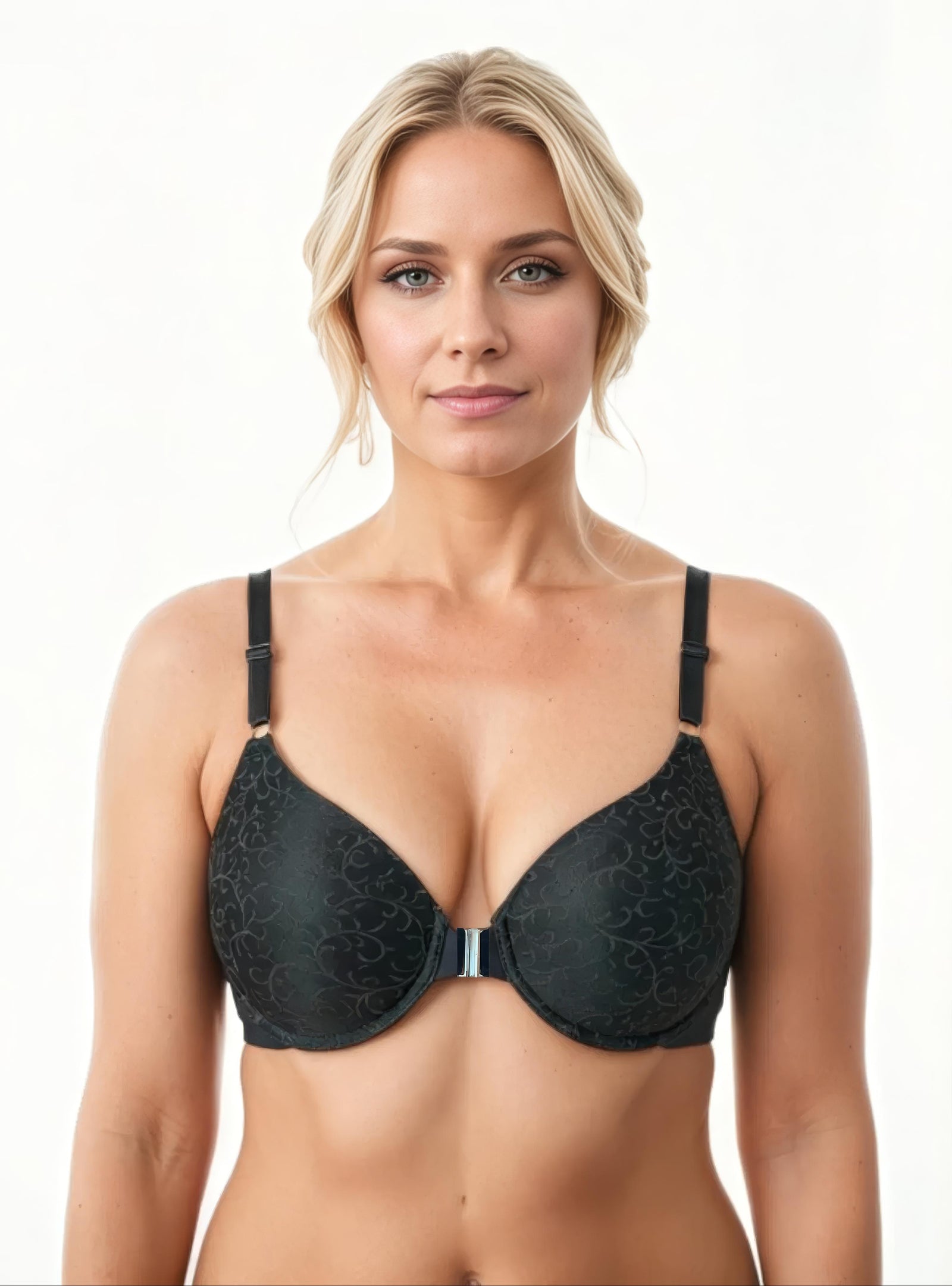
A front-closure design can also help in some cases, especially if the back is built to smooth rather than relying on a small hook-and-elastic section. For women who are tired of back bulge, rolling edges, and visible bra lines, a bra with 360-degree smoothing often feels like a completely different experience because the support is distributed more evenly.
Length matters too. If your bras tend to curl at the lower edge, a longer bra or bra-and-camisole style may stay put better than a short traditional band. More coverage can mean fewer pressure points and less temptation for the fabric to fold.
Because support needs are personal. A woman with a fuller bust may put more demand on the band than someone with a lighter bust. A mature woman with softer skin may want a smoother, gentler finish than a standard elastic band can deliver. Someone with a shorter torso may find that certain longline styles work beautifully, while others hit the wrong spot.
This is where body-positive fit advice matters. The goal is not to force your body into a bra that behaves poorly. The goal is to find a bra designed with enough coverage, support, and stability to work with your shape.
That is why solution-focused bras exist in the first place. Shapeez built its reputation around the idea that women should not have to choose between support and a smooth back. When a bra is engineered to eliminate visible lines, reduce back and side bulge, and stay comfortable through daily wear, rolling becomes far less likely.
If you are constantly tugging the band down, loosening straps to compensate, or changing positions to get comfortable, the bra is asking too much from you. A good bra should support you quietly. It should not need monitoring all day.
Pay attention to patterns. If multiple bras with the same narrow-band style roll on you, that style may simply not be your best option. If wider bands, fuller backs, or smoothing silhouettes feel better, trust that. Comfort is not settling. It is smart fit.
The best bra band is the one you barely think about because it stays smooth, supports well, and lets you move through your day feeling secure in your clothes and confident in your shape.