Your Cart is Empty




A bra can feel almost right until you catch the space at the top or sides of the cup in the mirror. If you are wondering how to stop bra cup gaping, the answer is rarely to simply tighten the straps. Gaping is a fit signal. It can point to the band, cup shape, cup size, breast position, or even the way you move through your day.
The good news: a cup that sits flat and smooth is possible without settling for digging wires, a too-tight band, or a bra that creates lines under your clothes. Start by identifying where the gap happens and what the rest of the bra is doing.
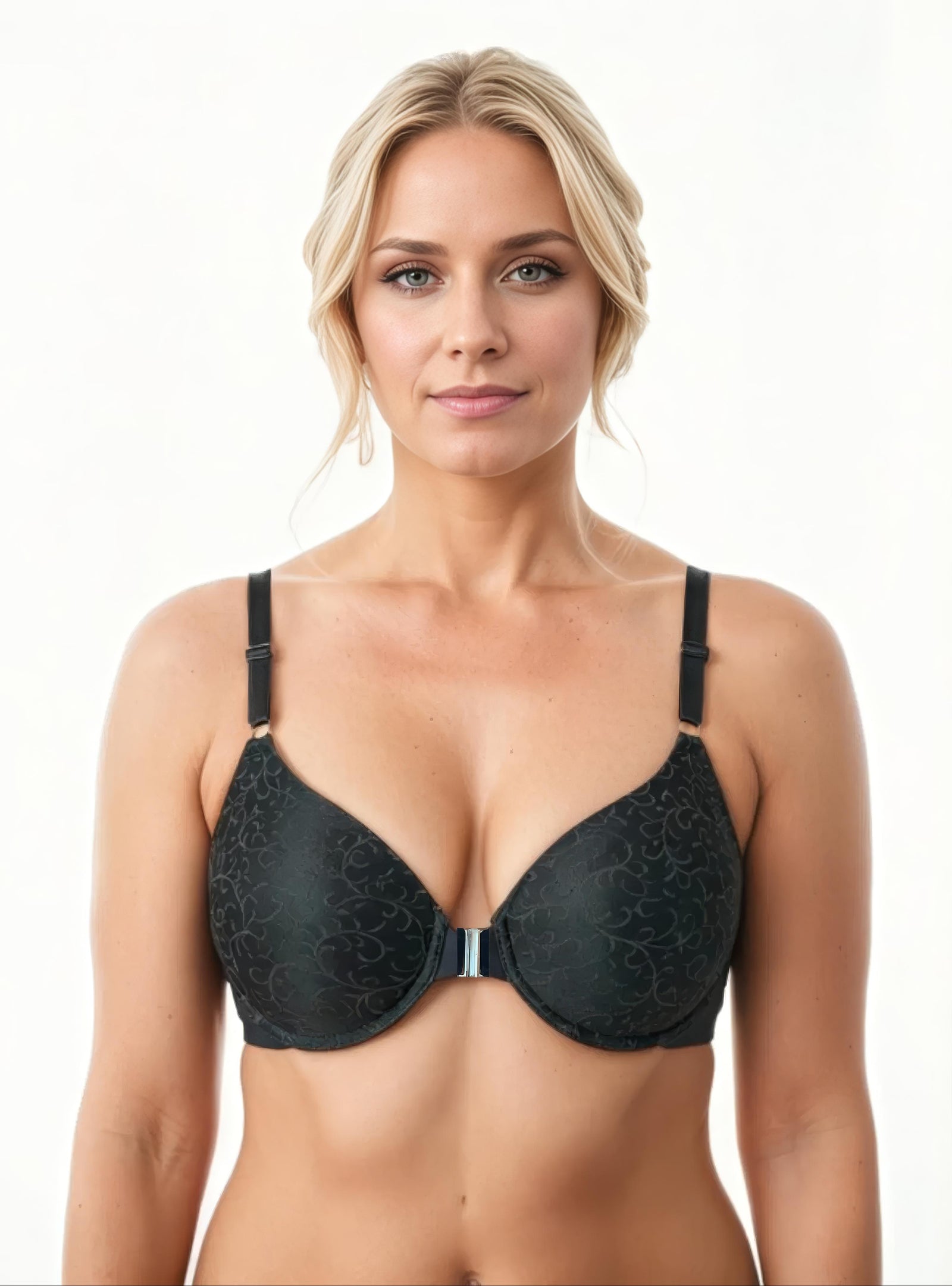
Bra cup gaping happens when the cup does not rest against your breast tissue. You may see a wrinkle or open space along the top edge, at the inner edge near the center, or at the sides. It is especially noticeable under a fitted T-shirt, blouse, or knit dress.
A gap does not always mean the cup is simply too large. That is one possibility, but bras are three-dimensional garments. A cup can have the right volume and still gape because it is too tall, too wide, too shallow, or too round for your natural shape. The most useful fix depends on the full fit picture.
Before judging the fit, put the bra on using the loosest hook setting if it has a back closure. Lean forward slightly and use your hand to guide breast tissue fully into each cup, including tissue from the sides. This is sometimes called scoop and swoop. Then stand up straight and assess the fit again. A bra can look like it gaps simply because the breast tissue has not been fully settled into the cup.
The band does most of the supporting work. When it is too loose, it rides up your back and allows the cups to sit too far forward. That can create space at the top of the cups, even if the cup volume is not actually too big.
Look at the band in a side mirror. It should sit level around your torso, not climb between your shoulder blades. You should be able to fit about two fingers beneath it comfortably, but it should feel secure. If you can pull it far away from your body or it shifts easily during the day, try a smaller band size.
When you go down a band size, go up one cup letter to keep roughly the same cup volume. For example, if a 38D band feels loose, a 36DD may offer a more stable fit. This is called sister sizing, and it can be helpful, but it is not a rule to follow blindly. Brands, materials, and bra styles all fit differently.
A supportive, smoothing foundation can make a meaningful difference here. A wider, thoughtfully constructed band distributes pressure more comfortably than a narrow band that does all its work in one small area. It can also help your clothing lie more smoothly across the back and sides.
If your band stays level but the cups still gap, look at the cup itself. Molded foam cups are a common culprit. They hold a preset shape, which can be beautiful under thin fabrics, but they cannot always adapt to the natural differences between one breast and the other or to breasts that are softer, fuller at the bottom, or less full at the top.
If the top of a molded cup stands away from your chest, a softer unlined cup, a stretch cup, or a bra with less rigid foam may follow your shape more naturally. A full-coverage bra can also be a better match when you need the cup edge to stay secure through bending, reaching, and sitting.
Pay attention to the location of the gap:
An underwire should frame your breast tissue, not rest on it. The wire needs to sit in the crease directly beneath the breast, with the outer end behind all breast tissue at the side. The center of an underwire bra should usually rest close to the chest between the breasts.
If the wire slides down during the day, the bra may be too loose in the band, too shallow in the cup, or both. When the wire sits too low, the breast cannot settle fully into the cup. That often creates a top gap even though the cup is not truly oversized.
If underwires tend to poke, press, or feel like a compromise you no longer want to make, wire-free support is worth considering. The right wire-free bra still needs structure, coverage, and a secure base. Comfort should not mean giving up on a smooth, supported shape.
Straps matter, but they are a finishing adjustment, not the foundation of fit. Start with straps that are snug enough to stay in place without digging into your shoulders. If you can lift the strap more than about an inch from your shoulder, it may be too loose.
Overtightening straps may temporarily pull a gaping cup closer to your body, but it can also lift the band in back, distort the cup, and leave shoulder marks. If you have to keep tightening your straps to feel supported, revisit the band and cup fit instead.
It is also normal for breast shape to change slightly with your posture. A cup may sit perfectly while you stand tall but show a small bit of space when you slump, raise your arms, or bend forward. The goal is a bra that stays comfortable and looks smooth during ordinary movement, not a rigid fit that never changes at all.
The same size can fit differently in two bras because shape matters as much as measurement. Breasts with more fullness at the bottom often do well in cups that are less tall and more flexible across the top. Breasts that are fuller on top may prefer a more open neckline. If one breast is smaller than the other, fit the larger breast first. A slight adjustment on the smaller side is usually more comfortable than wearing a cup that cuts into the fuller side.
Hormonal shifts, weight changes, breastfeeding history, and natural changes in skin and breast tissue can all affect how a bra fits. If bras that once worked now gape, your size may have changed, but your shape preferences may have changed too. That is not a failure of your body. It is useful information for choosing your next bra.
For a smoother look under clothing, consider more than the cup. Side coverage, a stable underband, wider wings, and a no-roll hem can help create the secure feel many traditional bras miss. Shapeez built its patented back-smoothing bra approach around this practical idea: support feels better when it is distributed across the garment rather than concentrated in straps, hooks, and narrow bands.
Wear the bra around your home for a few minutes before deciding. Sit down, reach for something overhead, bend to pick up a bag, and put on the type of top you wear most often. Check whether the cup edge stays close to the body without cutting in and whether the band remains level.
A well-fitting bra should not require constant readjustment. You should not be pulling the cups up, tucking tissue back in, or accepting a visible gap because you assume that is just how bras feel. The right fit supports your shape while leaving room to breathe, move, and feel like yourself.
A small cup gap is not a reason to criticize your body or force a bra to work harder than it should. Give yourself permission to choose the construction that feels secure, smooth, and comfortable from your first cup of coffee to the moment you change into pajamas.