Your Cart is Empty




A hot flash rarely arrives at a convenient time. You may fall asleep feeling perfectly comfortable, then wake up overheated, damp, and ready to throw every blanket off the bed. When nights are already interrupted, sleepwear should not add tight waistbands, clingy fabric, digging straps, or another layer of frustration.
The best sleepwear for hot flashes is designed to help your body release heat while keeping you comfortably covered. It should feel soft against sensitive skin, move with you when you change positions, and dry quickly if night sweats happen. The goal is not to trap you in a heavy layer. It is to give you a cooler, more comfortable way to rest.
Start with fabric. Breathable, moisture-managing materials can make a noticeable difference between waking up sweaty and waking up ready to return to sleep. Lightweight cotton is a familiar favorite because it feels soft, airy, and easy to care for. Cotton can absorb moisture, though, which means it may stay damp after heavier sweating.
For women who regularly wake up with night sweats, moisture-wicking performance fabrics are often a better match. These materials move moisture away from the skin so it can evaporate more quickly. Tencel and modal are also popular choices for their smooth feel, breathability, and ability to resist that sticky, overheated sensation.
Fabric is only half the decision. The cut matters just as much. A loose nightgown, relaxed pajama set, or lightweight tank-and-short pairing gives air room to circulate. A garment that twists, bunches, rides up, or pulls across the bust and back can turn a warm night into a long one.
The label does not need to be complicated. Look for sleepwear described as breathable, moisture-wicking, lightweight, or temperature regulating. Smooth fabric is especially helpful if your skin feels extra sensitive during a hot flash, since rough seams and stiff trim can suddenly feel impossible to ignore.
A blend can be a smart choice, too. Natural fibers may provide softness and airflow, while a small amount of stretch helps pajamas keep their shape without squeezing. What works best depends on how much you sweat and how warm your bedroom feels. If you tend to have light flashes, airy cotton may be all you need. For frequent drenching night sweats, a performance fabric may be worth prioritizing.
Hot-flash sleepwear should skim the body, not grip it. That does not mean you have to wear an oversized T-shirt that gets tangled around your legs. It means choosing a comfortable silhouette with enough ease through the bust, waist, hips, and arms.
Pay attention to the details that are easy to overlook in a fitting room or product photo. Wide, soft straps are less likely to dig into shoulders. A flexible waistband should stay in place without leaving a deep mark by morning. Flat seams reduce rubbing, while tag-free construction removes one more source of irritation. If you wear a sleep bra, look for gentle support without rigid wires, tight elastic, or compression that feels restrictive once you lie down.
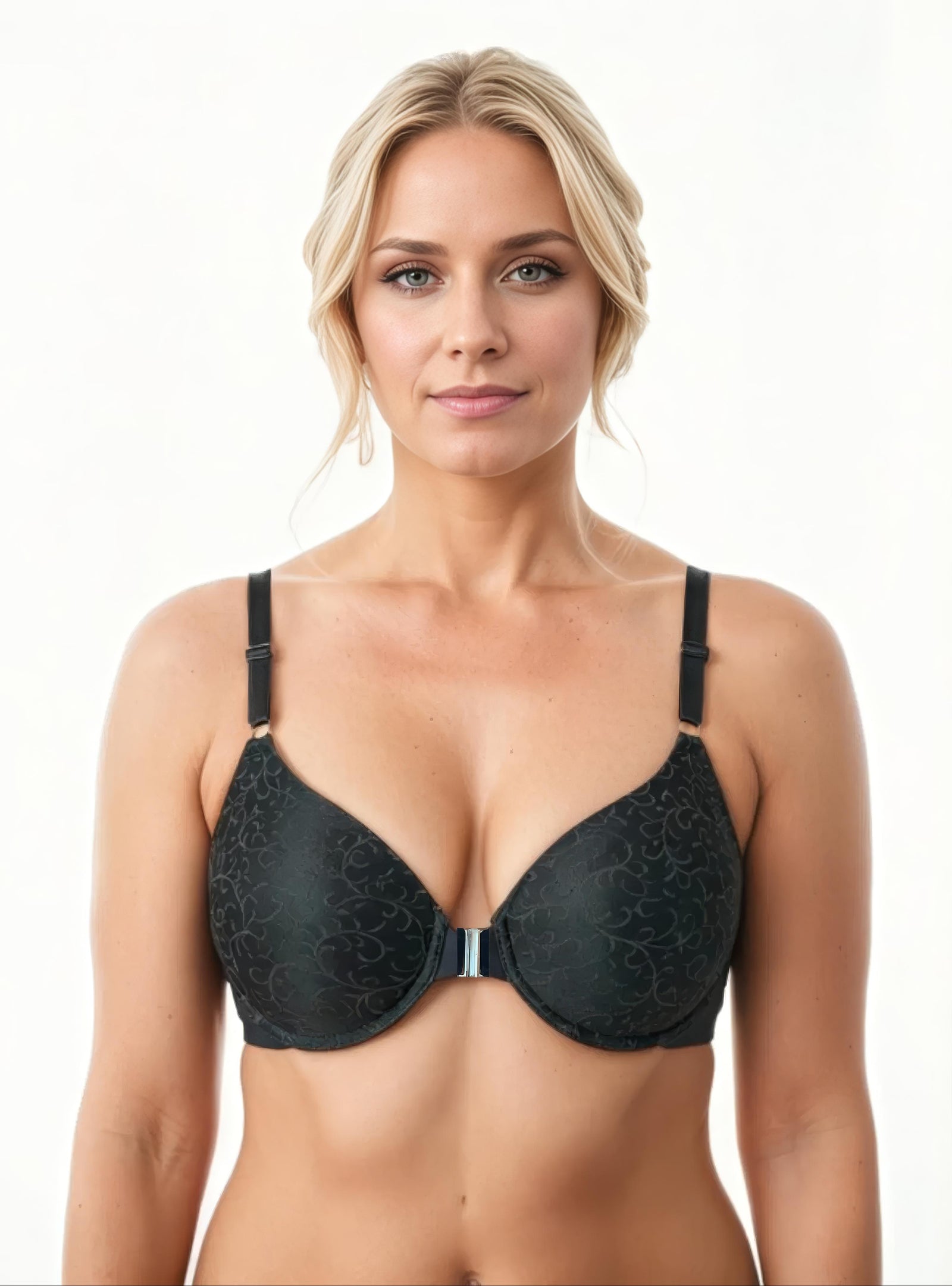
Many women also find that a front closure is more comfortable and convenient than pulling a fitted sleep top over their head, especially if they are warm, tired, or dealing with shoulder discomfort. The right closure should lie flat and feel unnoticeable against the skin.
There is no single best silhouette for every woman. Your preferred coverage, support needs, and bedroom temperature all play a role. Still, a few styles consistently make practical sense for hot flashes.
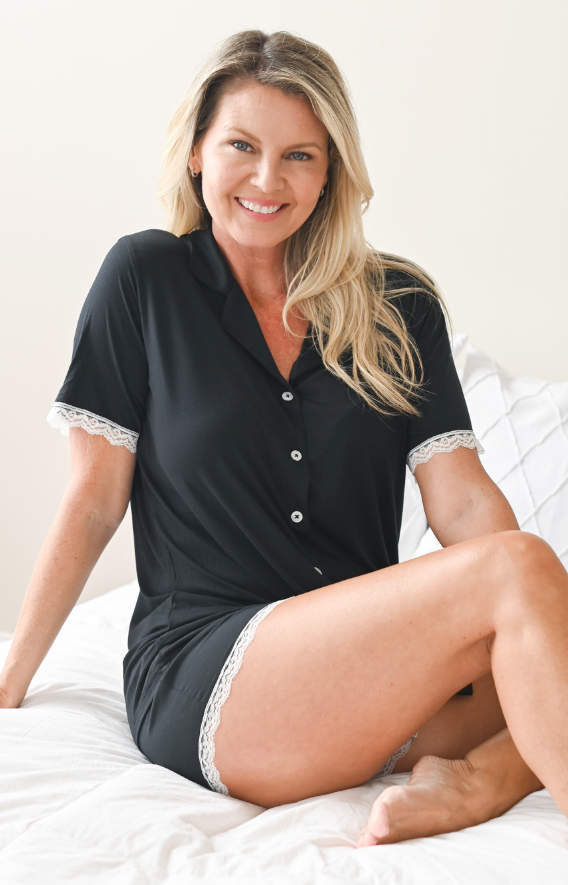
A relaxed short pajama set is a dependable option for women who want coverage without too much fabric. Choose a top that does not cling under the bust and shorts with a soft, non-binding waistband. This style is easy to layer with a light robe for the moments when a hot flash passes and you suddenly feel chilled.
A sleeveless sleep dress or nightgown can be even cooler because there is less fabric around the waist and legs. Look for one that falls away from the body rather than hugging the midsection. If you prefer a little shaping or support through the bust, a built-in shelf bra may work, but make sure the elastic is gentle enough for overnight wear.
For women who do not like their thighs touching while they sleep, lightweight capri or full-length pajama pants can still work well. The key is a breathable fabric and a relaxed leg. Avoid heavy flannel, thick fleece, or overly brushed materials when hot flashes are active, even if those fabrics feel cozy at bedtime.
A supportive sleep tank or bra-and-slip hybrid can be particularly useful if you want to feel held without wearing a traditional bra to bed. Shapeez designs comfort-focused pieces with smoothing, coverage, and support in mind, which can be welcome when you want a more secure feel without extra layers or uncomfortable hardware.
Sometimes the smallest construction choices determine whether sleepwear becomes a favorite or stays at the bottom of the drawer. Prioritize pieces that are easy to get on and off. When you wake overheated at 2 a.m., you should not have to struggle with tight sleeves, tangled straps, or a waistband that rolls every time you move.
Consider color, too. Darker shades can feel more reassuring if you experience noticeable night sweats, while lighter colors may feel cooler and are easier to spot-clean. Neither is universally better. Choose the option that lets you relax instead of worrying about your pajamas.
It also helps to keep a second set nearby. Changing into dry sleepwear after a sweaty wake-up can be more comfortable than trying to fall back asleep in damp fabric. This is not about building an enormous pajama wardrobe. Two or three reliable, washable sets can make your nighttime routine feel far more manageable.
The sleepwear that looks polished may not always be the sleepwear that feels best at midnight. Satin-like synthetics can look beautiful, but some trap heat or feel clammy after sweating. Heavy lace, thick decorative trim, stiff elastic, and scratchy labels can also become irritating quickly.
Be cautious with snug shapewear, high-compression garments, and restrictive sleep bras. Support is valuable, especially for a fuller bust, but overnight comfort requires a lighter touch. If you wake with red marks, deep indentations, numbness, or a strong urge to take the garment off immediately, the fit is not serving you.
Layering can be useful, but it should be intentional. A light sleep tank with an open robe gives you options as your temperature changes. Several fitted layers, on the other hand, can hold heat close to the body and make changing clothes harder when you are already uncomfortable.
Even the right pajamas cannot do all the work if your bedding holds heat. Lightweight sheets, a breathable blanket, and a bedroom temperature that feels slightly cool before bed can support a more comfortable night. Keep water within reach, and consider a spare pillowcase or sleep top nearby if sweating wakes you up.
If hot flashes are new, severe, or affecting your daily life as well as your sleep, speak with your health care provider. Menopause is a common reason for hot flashes, but your provider can help you understand your personal symptoms and discuss options that fit your health history.
The best choice is the one you forget you are wearing. When your sleepwear stays soft, dry, supported, and out of your way, you have one less reason to be awake when rest matters most.