Your Cart is Empty





A bra can look perfectly fine in the mirror at 8 a.m. and feel completely different by lunchtime. Straps start to press, the band shifts, cup edges show through a favorite top, or an underwire becomes the only thing you can think about. That is why an honest underwire wireless comparison should go beyond the usual question of whether a wire is more supportive. The best choice is the one that supports your shape, smooths where you want smoothing, and still lets you move through a full day comfortably.
The wire itself is only one part of a bra's support system. Underwire bras use a curved piece beneath each cup to help lift, separate, and define the bust. Wire-free bras rely on thoughtful construction instead: supportive fabric, well-shaped cups, a secure band, wider straps, and often a longer silhouette that distributes support across more of the torso.
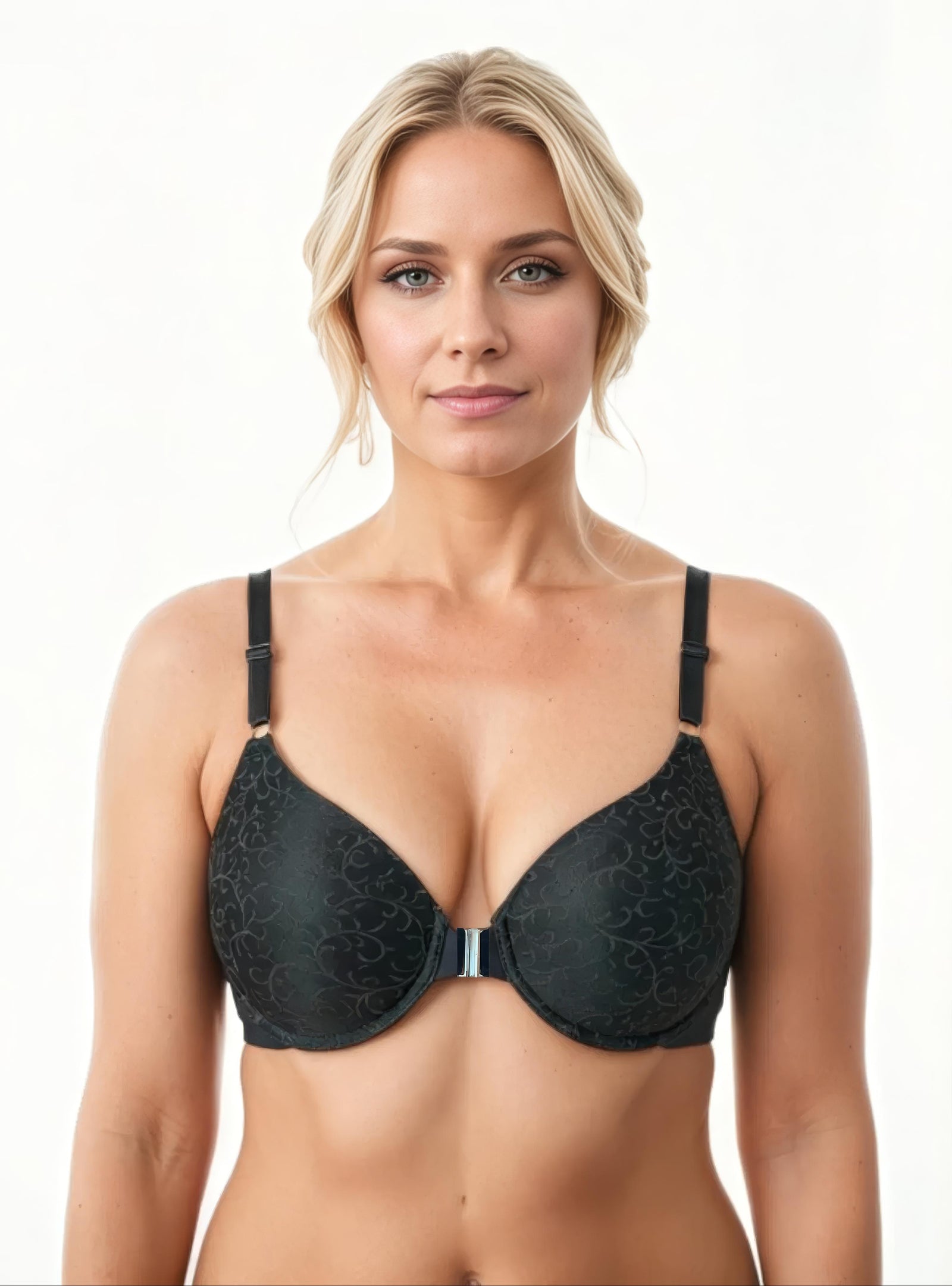
For some women, an underwire creates the most familiar lifted shape, especially under tailored clothing or when a clearly separated bust is the look they prefer. A properly fitted underwire should rest around breast tissue, not press into it. If it pokes, rides up, or leaves painful marks, the issue may be the size, cup shape, or overall bra design rather than underwire as a category.
Wire-free bras are often chosen for their flexibility and ease. Without a rigid wire, they can feel less restrictive when sitting, reaching, traveling, or relaxing at home. But wire-free does not have to mean unsupported. A full-coverage wire-free bra with engineered structure can provide meaningful lift and hold, particularly when the band stays anchored and the cups fully contain the bust.
The practical difference is where you feel the support. Underwire concentrates structure at the base of each breast. Wire-free designs can spread that work across the band, sides, back, and shoulders. For women tired of a bra that does one job in front while creating lines and bulges behind, that difference matters.
An underwire may suit you when you want a more defined, rounded profile or enjoy the separation it gives beneath structured dresses, button-downs, and blazers. Some fuller-bust women also find that underwire delivers the level of upward support they want for long workdays or special occasions.
It can also be a useful choice if your breast shape tends to sit lower on the chest and you prefer a pronounced lifted look. The wire gives a cup a firm foundation, which can make lightweight fabrics and molded cups look especially polished under clothing.
Still, comfort is nonnegotiable. The underwire should encircle the breast rather than rest on it, the center front should lie comfortably against the body when the style is designed to do so, and the band should feel secure without being painful. A wire that digs at the sides may signal that the cup is too small, the band is too tight, or the cup shape is not compatible with your body.
Underwire is not automatically the "dressier" or more supportive option for every body. An underwire bra with narrow bands, thin side wings, and little back coverage can still create visible lines under a smooth knit top. Structure in the cup cannot compensate for a back that rolls, rides up, or cuts in.
Wire-free bras are a strong everyday option for women who prioritize comfort but still want a held-in, full-coverage fit. They are especially appealing if you are sensitive to pressure under the bust, spend long hours seated, experience changes in breast size, or simply do not want to feel a rigid component against your ribcage.
The key is to look past the word “bralette.” Some wire-free styles are designed primarily for light support, while others use molded or foam cups, reinforced underbands, wide straps, side shaping, and smoothing panels to create a more supportive result. The level of support depends on the construction, not the absence of wire alone.
A tank-style or longline wire-free bra can be particularly helpful if back bulge, side spill, or loose skin makes traditional bras frustrating. More fabric across the back and sides can create a smoother base under clothing while reducing the feeling of a narrow band pressing into one spot. When the hem is designed not to roll, the garment can stay comfortably in place instead of becoming another layer to adjust all day.
Women with fuller busts should not feel limited to underwire. A wire-free bra with substantial support features can be a practical choice for daily wear, errands, working from home, travel, and casual outfits. The right style will not flatten you unnecessarily or ask your shoulders to carry all the weight.
Whether you choose wire-free or underwire, the band should do most of the support work. Straps help fine-tune the fit, but overly tightened straps often mean the band is too loose or the design is not giving enough support through the torso.
For a smoother fit, look for full back coverage, supportive side panels, and a silhouette that stays flat beneath clothing. Shapeez built its patented back-smoothing bra category around this idea: support should not stop at the cups. A bra that addresses the back and sides can help clothes skim your body more smoothly, with less visible bra line and less need for extra shaping layers.
If a bra leaves deep marks or creates a pronounced line across your back, it is easy to assume you need to size up. Sometimes that is true. Other times, the problem is a design that is too narrow or does not provide enough coverage for the level of smoothing you want.
An underwire bra with a wider back can smooth beautifully. A wire-free bra with a narrow elastic band can still dig. Rather than shopping by category alone, consider the entire garment: how tall the side wings are, how wide the back panel is, whether the closure is easy to manage, and whether the fabric remains comfortable after several hours.
Front-closure designs can be especially helpful for women who dislike twisting to fasten hooks behind their backs. They also often create a cleaner back surface, depending on the style. For those with arthritis, limited shoulder mobility, or simply a deep dislike of the daily hook-and-twist routine, easier dressing is a real comfort benefit, not a small detail.
Start with the clothing you wear most often. If fitted T-shirts, lightweight sweaters, and dresses are staples, prioritize smooth back coverage and cup edges that disappear under fabric. If you wear structured workwear or want more separation beneath a button-down, an underwire style may earn a place in your rotation.
Then consider the moments when your current bras let you down. If you cannot wait to take off your bra at the end of the day, a supportive wire-free option may change that experience. If you feel unsupported during a busy day on your feet, you may prefer an underwire or a more structured wire-free design with molded cups and a strong underband.
You do not have to declare allegiance to one category. Many women get the best results from both: wire-free smoothing support for everyday comfort and an underwire option for outfits or occasions where they want a more sculpted shape. The goal is not to tolerate a bra because it is supposed to work. It is to find one that helps you feel supported, smooth, and at ease in your own clothes.
Your bra should let you focus on the meeting, the dinner, the trip, or the people in front of you, not on what is digging, shifting, or showing through. Choose the construction that makes that possible, then give yourself permission to leave the old discomfort behind.