Your Cart is Empty





Bra cup overflow can turn an otherwise polished outfit into a day of tugging, readjusting, and wishing you could get comfortable. If you are asking what causes bra cup overflow, the short answer is that your breast tissue does not have enough secure space inside the cups. The better answer is that cup size is only one part of the fit story.
Overflow can happen at the top of the cup, near the underarm, or at the center of the bra. It is not a body problem, and it does not mean you need to settle for a bra that pinches or makes clothing feel less flattering. It is useful feedback: your current bra is not matching your shape, support needs, or both.
The most familiar cause is a cup that is too small. When the cup cannot fully contain the breast tissue, that tissue naturally finds room above the neckline or at the sides. You may see a pronounced edge along the top of the cup, often called quad-boob, or feel like you need to tuck yourself back in every time you move.
But a bra marked with your usual size can still overflow if its cup is shallow, narrow, low-cut, or simply shaped differently than you are. Bra sizing is not as universal as many women have been led to believe. A 38D in one style may feel very different from a 38D in another, especially when one bra offers a molded plunge cup and another has fuller coverage.
A band that is too loose can also contribute. The band provides most of a bra's support. If it rides up your back or shifts when you lift your arms, the cups can pull away from your body and allow breast tissue to escape at the top, sides, or center. Tightening the straps may seem like the fix, but straps cannot replace the stable foundation of a well-fitting band.
There is another common issue: tissue that is not fully settled into the cups. Many women put on a bra, fasten it, and go. A more complete fit check involves leaning forward slightly and gently guiding breast tissue from the side and underneath into each cup. If doing this immediately creates overflow, the cups likely lack the volume or coverage you need. If it improves the fit and stays comfortable, you may simply have needed a better adjustment.
Two bras with the same labeled size can fit completely differently because breast shapes differ. Some women have more fullness at the top, while others have more fullness at the bottom. Some need a wider cup to accommodate tissue toward the underarm; others need more projection, meaning more forward depth rather than a wider or taller cup.
A shallow molded cup may cut into a fuller or more projected breast even when you have sized up. In that case, moving to an even larger cup can leave extra space at the bottom while the top still feels restrictive. The issue is not just volume. It is the cup's architecture.
Low-cut bras are another frequent source of overflow. A plunge neckline can be lovely under certain tops, but it intentionally provides less coverage across the upper breast. If you are fuller on top, active during the day, or simply prefer to feel securely held, a fuller-coverage silhouette often creates a smoother, more dependable result.
The center panel between the cups can offer a clue, too. On an underwire bra, it should generally sit close to the chest. If it floats away while the cups overflow, the cup may be too small, too shallow, or too narrow for your shape. With wire-free styles, the fit can be more flexible, but you should still feel contained rather than compressed.
A bra that fit well six months ago may not fit the same today. Weight changes, hormonal shifts, pregnancy, breastfeeding, menopause, medication changes, and natural changes in breast tissue can all affect breast volume and shape. This is normal. Your bra size is a fit reference, not a permanent identity.
Worn-out bras can change the picture as well. Over time, elastic relaxes, cups lose structure, and straps stretch. When the band no longer anchors securely, the cups cannot do their job as intended. If you are fastening a bra on its tightest hook just to make it feel supportive, it may be time to replace it.
Your clothing can also make a mild fit issue more noticeable. A thin knit top, button-down shirt, or fitted dress may reveal an uneven cup edge that was not obvious under a loose sweater. That is why the right bra is about more than the number on the tag. It should help you feel comfortable and create the smooth silhouette you want under the clothes you actually wear.
Start with the band. Put the bra on using the loosest hook when it is new. The band should sit level around your torso and feel snug enough to stay in place without painful digging. You should be able to slide two fingers underneath it, but not pull it far away from your body.
Next, look at the cups after you have adjusted your breast tissue into place. The cup edge should lie smoothly against the breast. A little natural softness is not a fit failure, particularly in flexible wire-free styles, but a clear ridge, pinching, or repeated spillage means you need a change.
If the band feels secure but the cups overflow, try going up a cup size first. For example, if a 38D has a stable band but cuts in at the top, a 38DD may offer the extra room you need. If the band is loose and the cups overflow, consider a sister size: go down one band size and up one cup size, such as from 38D to 36DD. The cup volume stays similar in theory, but the firmer band can improve support and positioning.
If a larger cup leaves gaps or still cuts in at the top, switch the style rather than continuing to size up. Look for a higher neckline, fuller coverage, a more flexible cup, or a design with room through the sides and upper bust. A bra should work with your body, not require you to reshape yourself to fit it.
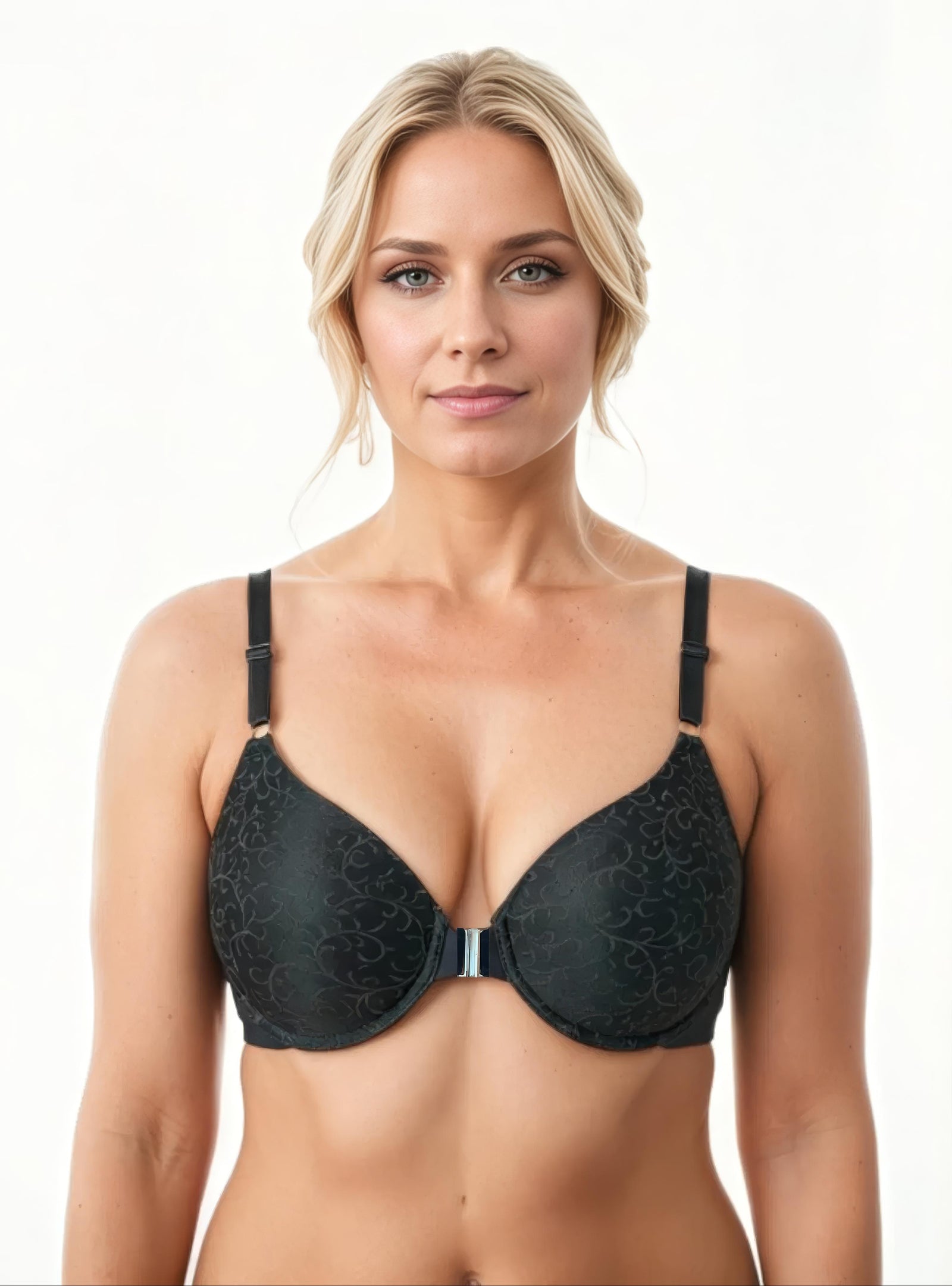
For women who are tired of traditional bras that dig, roll, show lines, or create side bulge, the answer is often a more supportive construction rather than a tighter bra. Full-coverage bras and smoothing bra designs can provide a more secure hold while helping clothing lie cleanly across the back and sides.
This is especially useful when overflow appears near the underarm. A cup with better side coverage can guide tissue comfortably forward instead of letting it spill over the edge. Wider, smoothing back panels can also help distribute support more evenly than narrow bands that concentrate pressure in one spot.
Wire-free bras can be an excellent choice when comfort is the priority, but fit still matters. A supportive wire-free design should keep you comfortably contained through normal movement, not simply feel soft when you first put it on. Depending on your bust shape and size, you may prefer flexible cups, structured fabric, a longline base, or a front-closure design that is easier to put on and take off.
Shapeez designs its smoothing bra and shapewear solutions around this kind of real-life fit concern: support that feels comfortable, coverage that stays put, and a smoother look without piling on extra layers. The best option depends on your preferred neckline, how much coverage you want, and whether you need everyday support, lounge comfort, or a polished foundation under fitted clothing.
If you are constantly pulling cups up, pushing tissue back in, loosening your straps, or avoiding certain tops because your bra creates a visible line, it is worth reassessing your fit. You do not need to wait for a major body change or a special occasion. Everyday comfort is reason enough.
Give yourself permission to try a different size, silhouette, or coverage level. A bra that contains you comfortably can change how your clothes fit, how freely you move, and how you feel by the end of the day. Bye bye bulge and spillover starts with a bra that gives your body the room and support it deserves.